

Editor's PiCK
Lee Jun-seok: "Bitcoin? Trump Prioritizes America... Korea Faces 'Kimchi' Discrimination" [Cointerview x Yeouido①]
공유하기
- Representative Lee Jun-seok pointed out that South Korea's virtual asset industry is falling behind in global competition due to excessive regulation-centric policies.
- He expressed concern that the government's regulatory uncertainty is causing reverse discrimination against domestic exchanges and companies, accelerating the outflow of capital and technology overseas.
- He emphasized the urgency of improving the Korean coin listing environment to enhance global competitiveness.
- The article was summarized using an artificial intelligence-based language model.
- Due to the nature of the technology, key content in the text may be excluded or different from the facts.
Exclusive Interview with Lee Jun-seok, Reform Party Member
Coin Industry, Already Part of National Competitiveness
Trump Advances with 'America First' Policy
Korea Stuck in a Closed, Regulation-Centric Approach
'Kimchi Coin' Discrimination Across Domestic Exchanges and Industry
"Regulatory Uncertainty and Authorities' Caution"... Urgent Policy Support Needed
Investors' Funds Moving Overseas... 'Discrimination' Situation Must Not Be Neglected
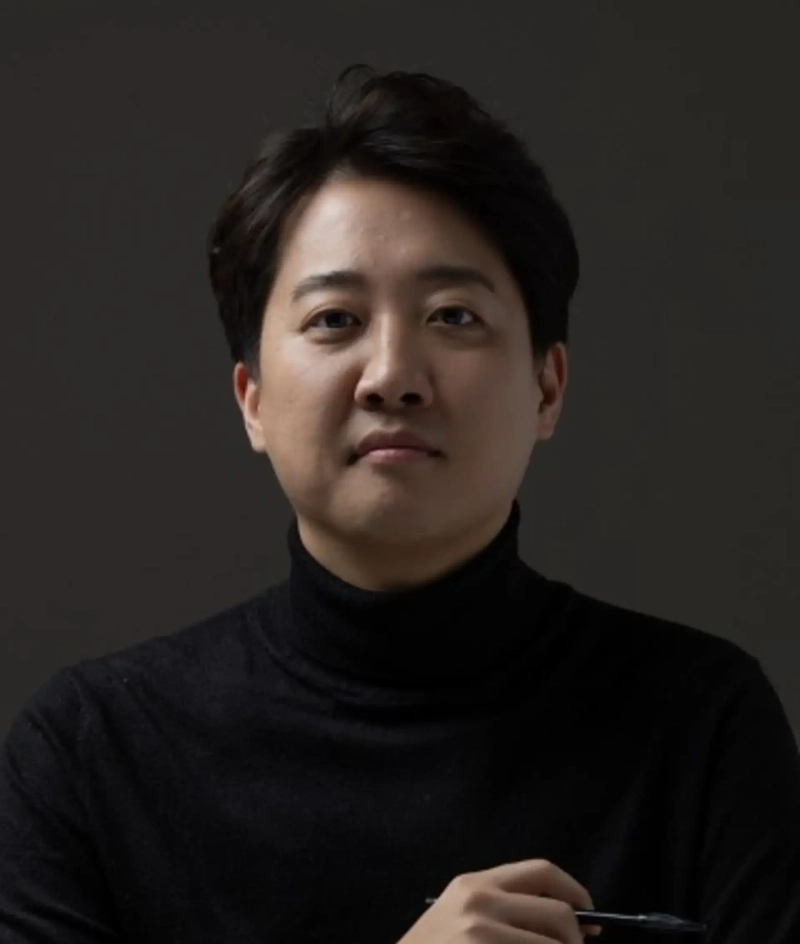
"U.S. President Donald Trump has established a virtual asset (cryptocurrency) task force under the U.S. Securities and Exchange Commission (SEC). In contrast, Korea is falling behind in the global market with its regulation-heavy policies. This is true not only for virtual assets but also for various advanced industrial sectors."
Lee Jun-seok (photo), a member of the Reform Party, pointed out in an exclusive interview with Bloomingbit on the 3rd that the closed and regulation-centric policy approach of past governments is undermining the future driving force of South Korea, including the virtual asset industry.
Lee stated, "At one time, South Korea was a key nation in the virtual asset industry, but as some media and political circles dismissed the potential of the virtual asset industry as speculation, Korea has lost its status as a key nation," adding, "The mainstream focus on suppressing risk factors rather than supporting innovative industries is a major problem."
He continued, "Due to government regulations, reverse discrimination against domestic virtual asset companies has occurred, lowering the competitiveness of the industry itself. Furthermore, domestic projects (virtual asset-related companies and personnel) are being transferred overseas," adding, "As the global virtual asset industry has become part of national competitiveness, we can no longer neglect the 'discrimination' situation."
Lee Jun-seok, a member of the Reform Party, is well known for having foreseen the potential of the virtual asset industry and directly investing in it since its inception. As a result, among the more than 15 million domestic virtual asset investors, Lee is recognized as a 'genuine expert' who deeply understands the virtual asset field. It is not uncommon to find investors in each virtual asset community affectionately calling him 'Jun-seok hyung.'
Amid the 'Trump 2.0' era, which advocates for pro-virtual assets, we asked Lee about the current state and improvements needed in domestic virtual asset policies.
"Government Regulations Fail to Reflect Global Industry Trends... Closed and Regulation-Centric"
Lee first criticized the domestic regulations so far, saying, "They have failed to reflect the rapidly evolving global industry trends, trying to forcibly fit virtual assets into the existing financial regulatory framework."
He pointed out, "The virtual asset policies of past governments have remained in a closed and regulation-centric approach," adding, "This regulatory environment has caused difficulties in the issuance and listing of Korean coins, leading to a decline in the competitiveness of the industry itself."
He continued, "To avoid falling behind in global competition, discussions on comprehensive negative regulatory measures for the virtual asset market should take place in the public sphere," adding, "Authorities are still focusing heavily on investor protection in operating virtual asset policies. However, excessive regulation not only accelerates the outflow of capital and technology overseas but also poses a risk of weakening competitiveness."
Korean Exchanges Face 'Kimchi Coin' Disadvantages and Discrimination... "Cause is Government Regulatory Uncertainty"
In the case of the U.S., which currently leads the virtual asset market, since President Trump's inauguration, the 'America First' policy has shown a tendency to empower U.S.-based virtual asset companies.
For example, President Trump and First Lady Melania Trump launched their official meme coins, 'Official Trump' and 'Melania Coin,' on the U.S.-issued virtual asset 'Solana,' and major U.S. exchanges like Coinbase and Kraken listed them immediately upon release.
In contrast, in the domestic industry, reverse discrimination against 'Kimchi Coin' (virtual assets related to Koreans or Korean companies) is a reality. In the case of a major domestic exchange, Exchange A, the proportion of Kimchi Coins among the virtual assets listed in the past three months was only in the 10% range. Another major domestic exchange, Exchange B, had no Kimchi Coins listed during the same period.
Lee pointed out that the cause of this phenomenon is 'government regulatory uncertainty.'
He diagnosed, "Due to the limited business environment caused by regulatory uncertainty, companies that should be active across the virtual asset industry, including exchanges, are continuing defensive operations," adding, "In contrast, overseas exchanges are leading global trends by quickly attempting new services based on flexible regulations."
He continued, "President Trump is likely to prioritize national interests in all fields, including virtual assets, based on America First. Our country also needs to improve the coin listing environment," adding, "Predictable policies should support Korean projects to be listed on domestic exchanges first, and based on this, global competitiveness should be enhanced."
However, he added, "Rather than focusing on giving preferential treatment to domestic coins, it is necessary to approach it from the perspective of creating an environment where they can compete fairly with foreign coins."
"Domestic Virtual Asset Industry is Falling Behind in Global Competition... Urgent Development Discussions Needed"
Lee predicted, "If the domestic virtual asset industry is left unattended like this, it will fall behind in global competition, and domestic investors and funds will flow overseas, posing a significant risk of being excluded from the global digital financial competition."
He added, "For example, even in the current stock market, the government is belatedly introducing many policies to revitalize the domestic stock market, but consumers who have already judged it to have lost its appeal are increasing their overseas stock trading volume," adding, "The domestic virtual asset market also urgently needs innovative and flexible policy support in line with global trends."
Lee emphasized, "The government should strengthen communication with the industry to create an environment where companies can innovate freely and proactively clarify the regulatory framework to encourage technical and economic challenges. If not, in the long term, it will fall behind in global competition, and domestic investors who have not experienced innovative services will turn their eyes to overseas markets."
He continued, "In the upcoming second phase of legislation, I believe it is necessary to move away from the past regulation-heavy stance and prioritize discussions on the direction of industrial development and the approach to virtual assets itself, including corporate real-name accounts and provisions related to stablecoins, which are emerging as a core of the global financial market."
Youngmin Lee, Bloomingbit Reporter 20min@bloomingbit.io



![2025-12-24 [Javis] 'PICK News Image5 Reporter Taek'](https://media.bloomingbit.io/static/news/brief_en.webp?w=250)