

Humanity Protocol: "In the age of AI, we will build trust as a 'Proof of Humanity infrastructure'" [Cointerview]
공유하기
- Humanity Protocol announced that it aims to prevent side effects of the AI era, such as identity theft and fraud, through its blockchain-based proof of humanity infrastructure.
- By introducing Ethereum-based layer 2 and differentiated authentication technologies such as palm scan and zkTLS, the company ensures that users can securely verify only the information they wish.
- The company highlighted plans to strengthen collaboration with Korean enterprises and universities, focusing on expanding real-world use cases and ecosystem growth across various sectors.
- The article was summarized using an artificial intelligence-based language model.
- Due to the nature of the technology, key content in the text may be excluded or different from the facts.
Terence Kwok, CEO of Humanity Protocol Interview
Solving Side Effects of the AI Era with 'Proof of Humanity Infrastructure'
Utilizing Biometric Authentication Technologies Such as 'Palm Scan'
Sharing Only Desired Data with 'zkTLS'
Active Collaboration with Korean Companies and Universities

"As artificial intelligence (AI) develops at a tremendous speed, side effects like fraud, impersonation, and forgery are also increasing. Humanity Protocol aims to prevent such problems and build a trustworthy internet environment through its blockchain-based 'Proof of Humanity' infrastructure."
Terence Kwok, CEO of Humanity Protocol (see photo), emphasized in an interview with BloomingBit on the 25th that the increasingly chaotic online environment due to the proliferation of AI should be improved through a people-centered trust infrastructure.
We spoke with CEO Kwok to learn more about the future of the rapidly changing internet landscape under AI and the blockchain-based 'Proof of Humanity infrastructure' that Humanity Protocol envisions.
Improving the Online Environment with 'Proof of Humanity Infrastructure'
CEO Kwok stressed that in the age of artificial intelligence, it is becoming more critical than ever to have infrastructure that proves one's true humanity in the digital world. He predicted that, to prevent incidents of impersonation, fraud, and identity forgery using AI bots, more and more companies and platforms will adopt 'Proof of Humanity infrastructure.'
He stated, "On major platforms like Facebook and LinkedIn, there are numerous cases of identity theft, scams, and impersonation," and added, "Humanity Protocol has built a proof of humanity infrastructure as an Ethereum-based layer 2 blockchain." He expressed confidence that the infrastructure would be used in a wider range of fields in the future, and explained that "on Humanity Protocol, individuals can self-verify online personal information such as employment, education, nationality, and assets."
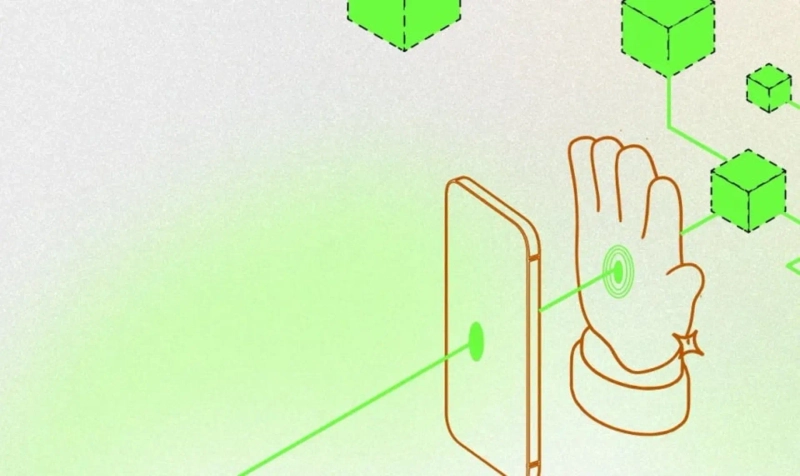
Humanity Protocol uses 'Palm Scan' technology as a medium for proof of humanity. The palm scan is a technology verified in the financial payment systems of various countries including the United States, China, and Japan, and has the unique advantage of being highly resistant to forgery thanks to individual biometric features.
CEO Kwok explained, "Since palm veins and patterns are unique for each person, it is a technology that has been utilized by Amazon in the United States and Tencent in China," adding, "Humanity Protocol also plans to introduce more authentication methods in the future."
Proving Only Desired Data with 'zkTLS'
Humanity Protocol differentiates itself from conventional Web2-based identity authentication systems in that it enables users to share and prove only the data they wish to, based on 'zkTLS' (zero-knowledge proof transmission layer security protocol).
Based on zero-knowledge proof, this system allows for data transfers between servers via TLS without exposing personal information. Unlike centralized corporations like Google and Facebook that require disclosure of all information, only the necessary data is transmitted for verification.
CEO Kwok stated, "With Humanity Protocol, users can share their information only at the desired time, and only with the desired person or company," noting that, "We operate a trust-based protocol that guarantees user privacy and information ownership."
He added, "Such a trust-based infrastructure is essential for the future development of the internet, and we will create real-world use cases not just in Web3, but across various fields."
Active Collaboration with Korean Companies and Universities
CEO Kwok also said the company plans to collaborate with Korean enterprises and universities requiring identity verification infrastructure. Recently, Humanity Protocol held a hackathon with Korea University and is in contact with major Korean conglomerates.
He stated, "We consider the Korean market to be extremely important—not just because of the robust digital asset investor base." He continued, "There are many excellent developers and entrepreneurs in Korea, and advanced technology research is actively conducted around universities."
He expressed gratitude for the support from many early Web3 communities in Korea and said, "We will continue our efforts to build a broader ecosystem by working with leading players in the Korean market."
Youngmin Lee, BloomingBit journalist 20min@bloomingbit.io





![2025-12-24 [Javis] 'PICK News Image5 Reporter Taek'](https://media.bloomingbit.io/static/news/brief_en.webp?w=250)