Show me the badge
Summary
- It said that if Democrats gain the upper hand in either chamber in the November US midterm elections, Trump administration policies will be blocked by Congress, increasing risks such as a federal government shutdown and fueling concerns over an ‘early lame duck.’
- With 35 Senate seats and all 435 House seats up for election, it said Republicans are unlikely to lose four or more Senate seats, but some closely contested races could flip to the Democrats.
- It said the performance of Trump-endorsed candidates and whether figures who claim to be ‘non-Trump’ win will have a major impact on the political and policy environment, intertwined with the Supreme Court’s expected ruling later this month on reciprocal tariffs and Trump’s grip on the party.
Forecast Trend Report by Period


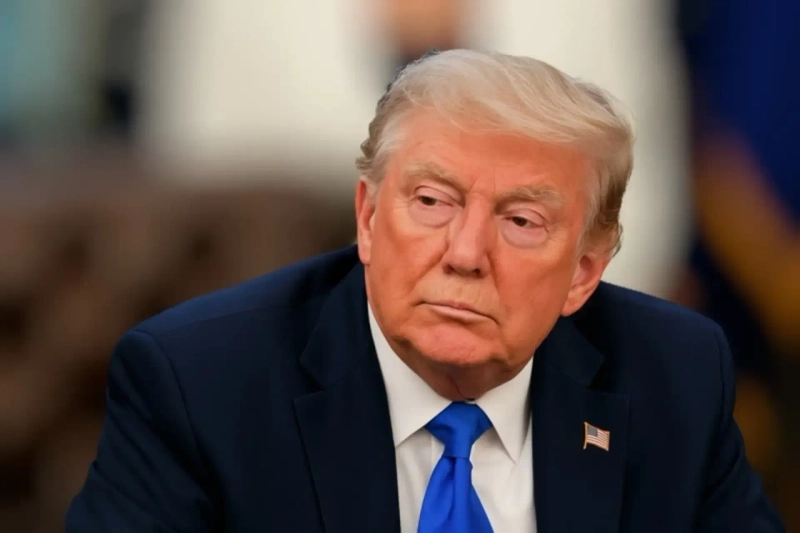
The US midterm elections scheduled for November will serve as a midterm assessment of Donald Trump’s second administration and a ‘weathervane’ for the direction of the next presidential race. In last year’s election, Republicans swept the presidency as well as both chambers of Congress. That has given the Trump administration a solid foundation to push ahead boldly even with policies likely to be controversial early on. If Democrats seize the upper hand in either the Senate or the House in the midterms, many policies will struggle to clear the hurdle of Congress. With frequent exposure to risks such as a federal government shutdown, concerns over an ‘early lame duck’ are expected to grow.
This year’s midterms will cover 35 Senate seats and all 435 seats in the House. The Senate (100 seats), whose members serve six-year terms, holds elections for one-third of its seats every two years. While 33 seats are normally up for regular election, this year voters will elect two additional senators to succeed Vice President J.D. Vance (Ohio) and Secretary of State Marco Rubio (Florida), whose seats have been filled under acting arrangements. Of the 35 seats, Democrats must defend 13, while Republicans must defend the rest.
In the Senate, Republicans hold 53 of the 100 seats. While it is not highly likely they will lose four or more seats, political analysts expect some seats to flip to Democrats. The most closely watched races include Georgia (Democrat Jon Ossoff), Maine (Republican Susan Collins), North Carolina (Republican Thom Tillis) and Michigan (Democrat Gary Peters), all of which have swing-state characteristics.
Michigan, which leaned heavily toward Republicans in last year’s presidential election, is a barometer of Rust Belt sentiment. With incumbent Sen. Peters retiring, the result is expected to reveal clearer partisan preferences. Attention is also focused on whether Sens. Collins or Tillis—who have at times broken with Trump and charted their own course—can win without Trump’s backing.
All 435 House seats are up for election. Republicans currently hold 220 seats—just barely above the majority threshold of 218. Rep. Marjorie Taylor Greene (R-Georgia) has also signaled she will retire in January. Democrats hold 213 seats, and two seats are vacant. Former House Speaker Nancy Pelosi (D-California), who has announced her retirement, said Democrats will reclaim the House majority this year.
Governors’ races will be held in 36 of the 50 states. Many states will also see turnover in key posts such as attorney general, and most state legislatures will be newly elected. Gubernatorial contests can also serve as a litmus test of public sentiment. In Georgia—home to many Korean companies—Gov. Brian Kemp (R) cannot run due to a three-term limit, and the two parties are expected to clash fiercely over the succession. The New York governor’s race, where Rep. Elise Stefanik (R-New York) has declared her candidacy, is also drawing keen attention.
If several Trump-backed candidates suffer heavy defeats, or if multiple figures who brand themselves as ‘non-Trump’ Republicans win, it could significantly affect Trump’s grip on the party, together with the Supreme Court’s forthcoming ruling—expected as early as this month—on reciprocal tariffs.
Washington=Lee Sang-eun, correspondent selee@hankyung.com

Bloomingbit Newsroom
news@bloomingbit.ioFor news reports, news@bloomingbit.io