Copper rallies again this year… Gold also keeps soaring
Summary
- Global investment banks said gold prices could rise to $5,055 per troy ounce, supported by expected policy-rate cuts and demand for an inflation hedge.
- They added that copper, following a 41.76% gain last year, could climb to $15,000 per ton amid AI infrastructure demand and U.S. tariff expectations.
- They noted that highly volatile silver has surged to $70 per troy ounce in a short period, prompting Citigroup and JPMorgan to refrain from issuing further forecasts.
Forecast Trend Report by Period


Commodities market outlook
Wall Street piles into bets on a broad gold rally
JPMorgan: “$5,055 per troy ounce”
Central banks and retail hoarding continue
Copper’s rally, up 41% last year, set to extend
May surge to $15,000 per ton
Demand rises on data centers and grid buildouts
Up 51% in three months… Silver the biggest gainer
Volatility so high the market has given up forecasting
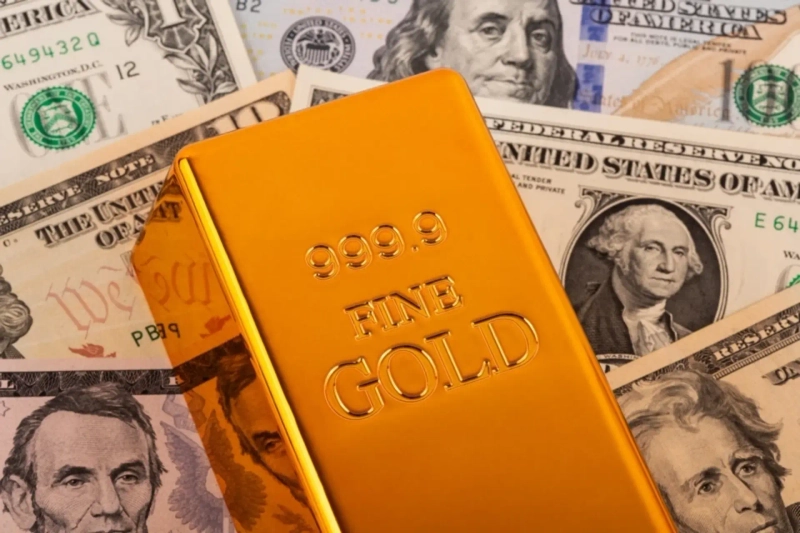
Global investment banks (IBs) expect the commodities rally that heated up equity markets last year to continue into the new year. With policy-rate cuts anticipated from the U.S. leading other countries, buying interest seeking an inflation hedge is expected to concentrate in gold. Copper, which has emerged as a key raw material for artificial intelligence (AI) infrastructure, is also forecast to post strong returns this year.
The $5,000 gold era is coming
According to the financial investment industry on the 1st, the U.S. “big five IBs” by market capitalization—JPMorgan, Bank of America, Wells Fargo, Morgan Stanley, and Goldman Sachs—have all projected that gold prices will rise from the end of last year ($4,319 per troy ounce). The most conservative call came from Wells Fargo at $4,700 per troy ounce. Goldman Sachs put it at $4,900, and JPMorgan forecast a rise to $5,055 by the fourth quarter this year. Gregory Shearer, an analyst at JPMorgan, said, “Since 2023, central banks have been reducing the share of dollars in their reserves and increasing gold purchases, and this trend is likely to reach 755t per troy ounce next year,” adding, “Gold will reach $5,055 per troy ounce by end-2026 and $5,400 by end-2027.”
The drivers behind gold’s strength include U.S. Federal Reserve (Fed) rate cuts, a weaker dollar, and rising gold demand from central banks. The view is that these supply-demand conditions are combining to push gold prices higher.
There was also a projection that gold could surge above $5,000 per troy ounce as retail investors step up gold hoarding in earnest. However, Goldman Sachs analyst Daan Struyven said, “Gold accounts for just 0.17% of U.S. retail investor portfolios,” adding, “For every 0.01%-point increase in that allocation by individuals drawn in by last year’s return (63.8%), gold prices would rise an additional 1.4% versus current forecasts.”
Silver that even Wall Street has given up forecasting
Industrial non-ferrous metals—posting performance comparable to gold last year—are also drawing attention as an attractive asset class. In particular, the standout is copper, which rose 41.76% last year. Copper prices have historically tracked manufacturing and construction cycles, but since the second half of last year they appear to have joined an “AI rally,” on the view that copper is being used in large volumes for AI infrastructure such as power grids and cooling facilities.
On the 5th of last month, Citigroup said, “Expectations that the Donald Trump administration will impose tariffs on copper imports starting in 2027 have triggered a sharp jump in demand to build copper inventories in the U.S.,” adding, “Copper prices are expected to rise to $13,000 per ton in the first half of this year and, depending on interest-rate conditions, as high as $15,000.”
Silver, which has shown extreme volatility this year, is an asset that even major players in the securities industry have effectively given up trying to forecast. Silver has more diverse industrial uses than gold, but its lower price and smaller market size have made it prone to extreme swings driven by speculative demand.
In particular, since October last year, its per-troy-ounce price has surged 51.3% in just three months, repeatedly reaching one-year price targets within days. In a November report last year, when silver was trading in the low-$50s per troy ounce, JPMorgan projected that “silver prices will gradually rise to $58 per troy ounce in the fourth quarter of 2026,” but in reality it surpassed that level on December 5.
Citigroup likewise said in October last year that “silver will rise to $70 within the next 12 months,” but it reached that level in just two months. Neither institution has issued follow-up forecasts for silver since.
Reporter Beomjin Jeon forward@hankyung.com

Bloomingbit Newsroom
news@bloomingbit.ioFor news reports, news@bloomingbit.io