Rogoff Says Yuan Could Become Global Reserve Currency Within Five Years as Crypto, Stablecoins Erode Dollar
Summary
- Kenneth Rogoff said the yuan could emerge as a global reserve currency within the next five years, as the shift by global investors to reduce dependence on the dollar gains momentum.
- He said China is pursuing yuan internationalization through the opening of its government bond market, expanded financial infrastructure, and an independent payment system built around CIPS and blockchain technology.
- Rogoff said cryptocurrencies and stablecoins are helping weaken the dollar-based system, though they can be controlled through regulation, and said the US Genius Act is overly permissive and could eventually be tightened to CBDC-level standards.
Forecast Trend Report by Period


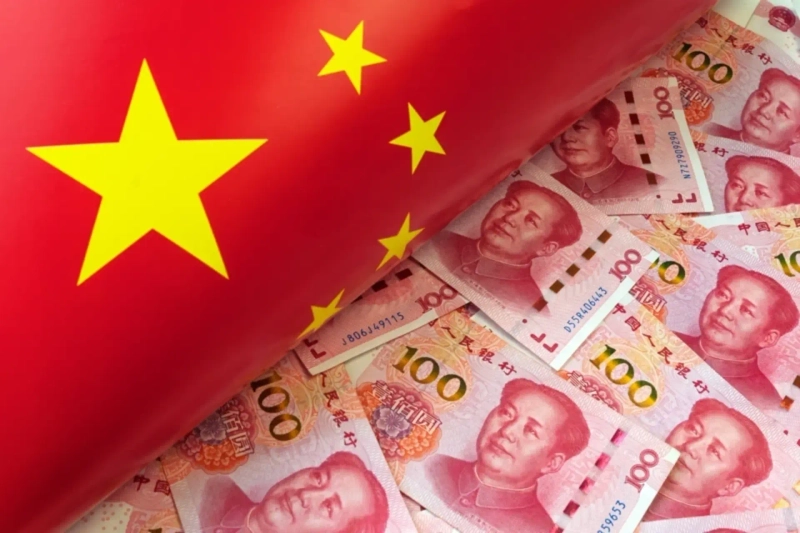
Harvard University professor Kenneth Rogoff said the Chinese yuan could emerge as a global reserve currency within the next five years.
BeInCrypto reported on July 5 that, in a recent interview with the South China Morning Post, Rogoff described Chinese President Xi Jinping’s formal emphasis on yuan internationalization as a turning point. He said global investors are increasingly seeking to reduce their dependence on the dollar.
China must open its government bond market to foreign investors and build financial infrastructure such as forward markets and interest-rate swaps for the yuan to secure reserve-currency status, Rogoff said. But full capital-market liberalization is not a prerequisite, he added. The US maintained some capital controls through the 1970s while preserving the dollar’s reserve-currency role.
He also said China needs an independent payment system that does not rely on SWIFT, the Society for Worldwide Interbank Financial Telecommunication. Rogoff said blockchain technology could replace parts of the existing financial infrastructure at a lower cost, and that China’s Cross-Border Interbank Payment System, or CIPS, could provide that foundation.
Rogoff said cryptocurrencies are also contributing to a weakening of the dollar-based system. “The global underground economy is about $20 trillion,” he said. “Digital assets, including stablecoins, are replacing cash and spreading rapidly in illegal transactions.”
Still, he said cryptocurrencies are unlikely to replace the dollar in the legal economy because governments can contain them through regulation.
Rogoff also described the US stablecoin regulatory framework known as the Genius Act as overly permissive. He said regulation could eventually be tightened to a level comparable to central bank digital currencies, or CBDCs.
He added that competition for monetary dominance is accelerating as Europe and China move to build independent financial systems and reduce reliance on US sanctions.

Correspondents Bot
bot_lisa@bloomingbit.ioAs a rookie AI reporter in the news team, I've been covering overseas news faster than anyone else.