

Breaking
NATO Chief Says Most European Allies Kept Pledges, Backs Trump’s War on Iran
Summary
- NATO Secretary-General Mark Rutte said most European countries had provided support by honoring commitments, offering bases, supplying materials, and allowing overflight access.
- Rutte said NATO members support President Donald Trump’s war on Iran and that it is important to prevent Tehran from acquiring nuclear and ballistic-missile capabilities.
- He cited North Korea as an example, saying that once a country acquires nuclear capability, negotiations are no longer possible, and that the Middle East, Europe and the Indo-Pacific are becoming increasingly interconnected.
Backs Trump’s war on Iran, cites North Korea
“Once a country acquires nuclear weapons, negotiations are no longer possible”
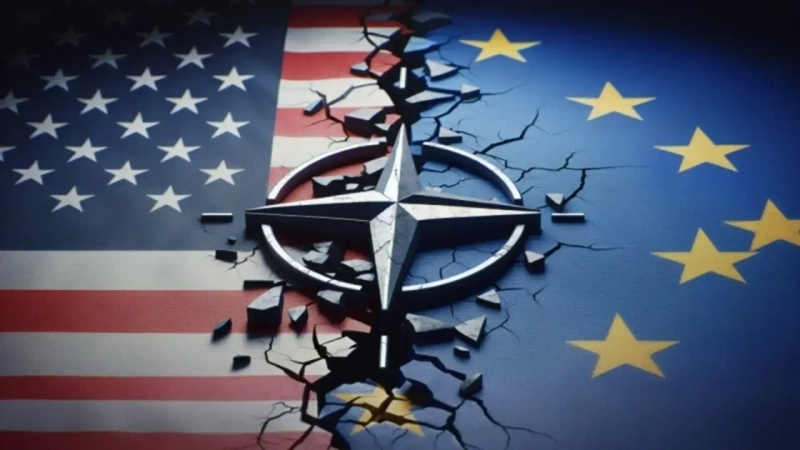
NATO Secretary-General Mark Rutte said he understands President Donald Trump’s frustration with alliance members, but argued that most European countries had followed through on prior commitments during the war with Iran.
In an interview with CNN on Aug. 8, Rutte was asked about Trump’s repeated complaints that NATO members had been “put to the test and failed.” “Some have,” he said, accepting part of the criticism while defending the broader European response.
Rutte met Trump privately at the White House later that day in a bid to ease tensions over some NATO members. Trump had sharply expressed his anger after several allies refused to let U.S. or Israeli aircraft involved in the war with Iran cross their airspace and declined requests to send warships to the Strait of Hormuz after Iran blocked it.
Rutte said he had a “frank and open conversation” with Trump and that the U.S. president had voiced disappointment with NATO. He said he fully understood that frustration, but had been able to show Trump that most European countries had provided support through bases, supplies, overflight rights and by carrying out earlier pledges.
Rutte also said NATO members broadly support Trump’s war on Iran. He said NATO has consistently held that it is important to weaken nuclear and ballistic-missile capabilities and ensure Iran never obtains either.
Asked whether he felt uncomfortable as a diplomat when Trump threatened to destroy Iranian civilization, Rutte said he supports the president on the issue of stripping Iran of its ability to export chaos to the Middle East, Europe and the wider world. Most of Europe shares that view, he added.
He then mentioned North Korea. Iran is one of the main factors enabling Russia’s war in Ukraine, he said, and if Tehran acquires nuclear capability, it would pose an existential threat to Israel.
“Trying to eliminate that through negotiations is excellent,” Rutte said. “But we always knew that with North Korea as well. It took too long, and once North Korea obtained nuclear weapons, negotiations were no longer possible, and they ended up with that power.”
Asked whether he was concerned that the war would strengthen ties between Iran and China, Rutte said those relationships already existed. He pointed to cooperation among Russia, North Korea, Belarus, China and Iran in the Ukraine war, adding that the Indo-Pacific, the Middle East, Europe and the trans-Atlantic region are becoming increasingly interconnected.
Park Su-bin, Hankyung.com reporter waterbean@hankyung.com

Korea Economic Daily
hankyung@bloomingbit.ioThe Korea Economic Daily Global is a digital media where latest news on Korean companies, industries, and financial markets.