Trump Heads to Beijing for High-Stakes Talks as Iran May Force US Concessions to China
Summary
- Trump is exploring the possibility of a strategic US-China grand bargain in Beijing, with trade and market opening at the center of the agenda.
- Musk, Jensen Huang and other US executives joined the trip, pointing to talks on self-driving cars, AI semiconductors, exports of US goods and broader access to China for financial companies.
- The article says US concessions could emerge on purchases of US farm goods, easing semiconductor export controls and arms sales to Taiwan in exchange for China’s cooperation on the Iran war.
Forecast Trend Report by Period


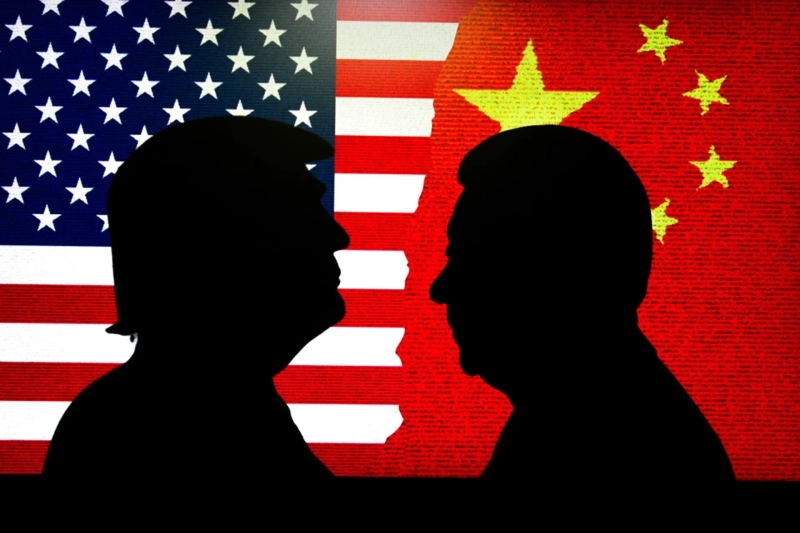
President Donald Trump arrived in Beijing on the night of May 13. He is scheduled to hold bilateral talks at 10 a.m. Beijing time on May 14. While the possibility of a strategic grand bargain between the US and China has been raised, the circumstances suggest Trump may struggle to secure everything he wants.
Trump has two core items on the agenda. The first is trade, which he has called his top priority. Since last year’s tariff war, Washington has made narrowing its trade imbalance with China a central goal, but it has yet to produce a clear breakthrough. Trump may see this as the time to reap the gains from that campaign. The two sides could announce steps including the creation of a bilateral trade committee.
The lineup of executives traveling with him offers a clearer picture of what Trump is seeking. Tesla Chief Executive Officer Elon Musk, who already operates a factory in China, wants looser regulation for self-driving cars and robotaxis.
The presence of executives from Cargill and Boeing also suggests deals are being prepared for exports of US goods in those sectors. A large contingent of financial-industry leaders, including executives from BlackRock, Blackstone, Mastercard, Visa and Citibank, also stands out. As Trump wrote on Truth Social on May 13, they could play a role in his push for China to open its markets.
Nvidia CEO Jensen Huang’s presence has drawn particular attention. It points to advanced artificial intelligence chip exports as a potential bargaining chip in the talks. The Trump administration initially blocked exports of Nvidia’s H200, its most advanced chip, before allowing them, but Beijing has taken a guarded stance by discouraging domestic companies from buying it. Because many believe Chinese firms ultimately need Nvidia chips to keep advancing, the talks could include partial easing of semiconductor export controls as part of a broader deal covering rare earths and critical minerals.
The second issue, and by far the bigger one, is Iran. Trump said on May 13 that Chinese President Xi Jinping is his friend and that the two have a good relationship. He initially said they would have a long conversation about Iran, then quickly reversed himself and said he did not need help. The first remark appeared to be the more revealing one.
The meeting had originally been scheduled for late March but was delayed by about six weeks because of the Iran war. That left little time to prepare for talks with China. Senior White House officials briefed reporters by phone on Sunday, and the overall impression was that while some trade items were ready, many of the other issues on the agenda were not far enough along to produce concrete results.
In Washington, some see even longstanding disputes such as trade becoming part of a bargain tied to the Iran war. That suggests Trump may not be in a position to press too hard. Xi also sent Vice President Han Zheng, rather than greeting Trump himself, a subtle sign that Beijing believes it holds the stronger position.
It is difficult to imagine China offering Trump no help at all on Iran. That would be a major loss of face for Trump and could also worsen US-China relations from Xi’s perspective. Beijing has preferred to keep Trump placated and steer ties toward a less confrontational path.
Iranian Foreign Minister Abbas Araghchi visited Beijing on May 6, his first trip there since the Iran war began, to coordinate positions. That raises the possibility that China could offer help on issues including keeping the Strait of Hormuz open, based on prior consultations with Tehran.
The question is what Washington would have to give up in return. Chinese purchases of US farm products and other goods, for example, could fall short of expectations. Figures in the tens of billions of dollars were being discussed on May 10, far below the $200 billion in purchases China pledged during Trump’s 2017 visit to Beijing.
The US also appears set to use large-scale arms sales to Taiwan as leverage against China. The message would be that if Beijing does not cooperate, more US weapons will flow to Taiwan. But Trump has already signaled that he intends to use that issue as a negotiating card by not approving additional arms sales he had planned to authorize. In practice, that leaves open the possibility that he could seek concessions on Iran while also taking a softer line on Taiwan and showing greater acceptance of China’s position.
Lee Sang-eun, Washington correspondent, selee@hankyung.com

Korea Economic Daily
hankyung@bloomingbit.ioThe Korea Economic Daily Global is a digital media where latest news on Korean companies, industries, and financial markets.