Crypto Trading Contest Turns Investing Into a 90-Minute Esports Spectacle With $10,000 at Stake
Summary
- Participants in a live cryptocurrency trading contest competed in a spectator-style investing event for a $10,000 prize, trading Bitcoin, Ether and PENGU.
- The event was described as an esports-style financial experiment built on infrastructure including social trading platform Legend, Polymarket and perpetual futures, combining high leverage with real-time trading.
- The WSJ said these spectator-style cryptocurrency trading contests are helping drive the spread of Gen Z investing culture, spectator finance and gamified investing, while also raising concerns about weaker risk awareness.
Forecast Trend Report by Period


Eight traders competed at a New York boxing gym
They battled for a $10,000 prize and a decorative katana
Event blended Gen Z investing culture with livestreaming
Spectator-style crypto trading is gaining traction
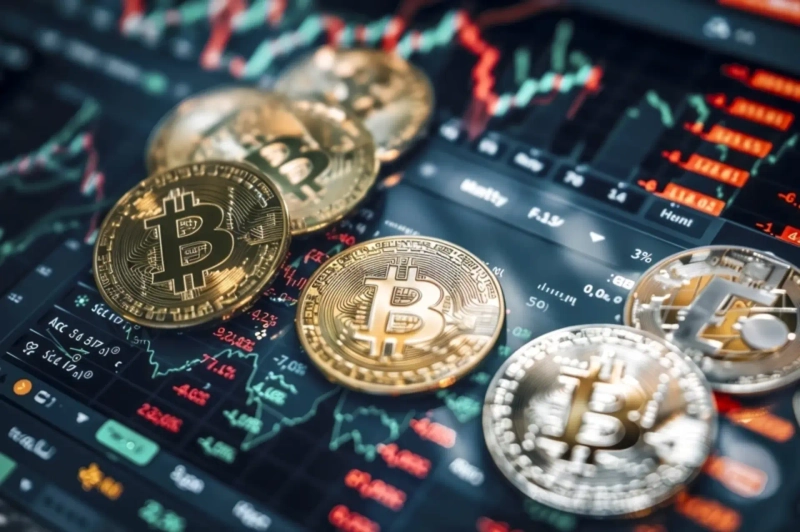
Crypto trading is increasingly being turned into a spectator event, broadcast live and staged like a boxing match. The format is drawing attention as finance merges with internet entertainment, social media and livestreaming culture.
The Wall Street Journal reported on May 15 that a live crypto trading competition was recently held at a boxing gym on Church Street in Lower Manhattan. Contestants bought and sold Bitcoin, Ether and PENGU, a penguin-themed memecoin, while competing for a $10,000 prize and a decorative Japanese sword.
The winner was James Parrillo, a partner at a venture capital firm. He competed under the name "Velvet Milkman" and entered the ring in a T-shirt emblazoned with "Legend." Parrillo listened to Phish's "Tweezer Reprise" through headphones to shut out the crowd and his rivals' reactions. One contestant known as "Jadudu," identified as being from South Korea, was shown slamming the table in frustration, but Parrillo never heard it.
The format resembled esports. Eight contestants each received $25,000 in simulated funds and traded across three 30-minute rounds. Rankings were determined by profit and loss, with the bottom half eliminated after each round. Drones flew overhead as spectators watched from balconies and nearby monitors, tracking trades and prediction-market betting tied to the event.
Parrillo's strategy was simple. He repeatedly bought and sold Bitcoin using 40x leverage. The Journal likened it to boxing's jab-jab-uppercut combination: straightforward, but dependent on timing. Parrillo won all three rounds and posted roughly $4,400 in profit. Afterward, he said he had been intensely focused and felt relieved when it was over.
The event amounted to an experiment in turning trading into a sport. It was hosted by social trading platform Legend, and Figment Capital, where Parrillo is a partner, owns a minority stake in the company. Parrillo had already believed trading contests could become a spectator sport before entering. Combining the internet, social media, livestreaming and finance is natural for Gen Z, he said.
Crypto is particularly well suited to the format. It trades around the clock, is accessible globally, and perpetual futures without expiry allow for heavy leverage. That makes trading screens easy to consume like a video game following price swings in real time. The Journal said live trading events have evolved from local underground gatherings into heavily produced spectacles around the world.
The contestants' behavior added to the competitive feel. Trevor Aaron, a Brooklyn-based trader, maxed out leverage on a Solana token and then played Doodle Jump so he would not fixate on the price chart. When he looked back at his screen, he had moved into first place. Kurt Gallo, a former esports player, traded perpetual futures linked to HYPE, the native token of decentralized exchange Hyperliquid. As he slipped in the rankings, he increased the risk and placed a photo of Hyperliquid co-founder Jeff Yan on his monitor to watch over the trade.
The atmosphere bore little resemblance to a traditional trading floor. Alcohol was served, and spectators debated the contestants' every move. Screens displayed live odds from Polymarket, showing whom the crowd was backing. People gathered around other monitors cheered and groaned as virtual profits appeared and vanished in an instant.
Commentator Hamza Parvez Butt said it was interesting to watch traders from a human perspective. Some wore headphones. Some appeared conscious of the cameras. One briefly fell asleep. The crowd was especially drawn to Jadudu, who was known for emotional reactions and pounding his keyboard. In the semifinal, a single trade knocked him from first place to fourth. As his path to the final narrowed, he buried his face in his hands.
The trend goes beyond one-off events and points to a broader shift in how finance is consumed. Earlier generations encountered markets through sober financial news and television experts. Internet-native investors want trading to be more entertaining, social and immersive. Parrillo said he knew it would not be fun if he were the only one trading, and the goal was to make the contest compelling.
The unanswered question is whether such competitions can become a lasting part of financial culture. Gains and losses generated at the event were based on simulated capital, not real money, and the format magnifies short-term volatility through high leverage and compressed timeframes. Spectator finance is proving effective at capturing younger investors' attention, but as investing becomes more entertaining, concerns are also growing that risk awareness could fade.
The Journal said trading is increasingly becoming staged content as social trading platforms such as Legend, prediction markets such as Polymarket and crypto venues offering perpetual futures come together. The New York event showed how finance is moving beyond numbers and charts toward a competition built around spectators, commentators, betting odds and star contestants.
Hwang Jung-soo, Hankyung.com reporter hjs@hankyung.com

Korea Economic Daily
hankyung@bloomingbit.ioThe Korea Economic Daily Global is a digital media where latest news on Korean companies, industries, and financial markets.