Xi Says US May Be in Decline; Trump Says He Was Congratulated in Beijing
Forecast Trend Report by Period


Reversal in leverage on display in Beijing
Xi warns on Taiwan while Trump praises China
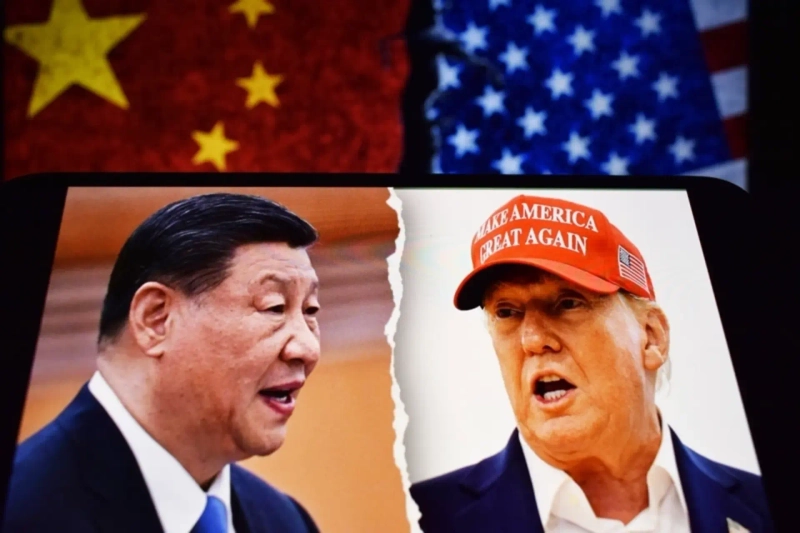
President Donald Trump’s visit to Beijing, the first by a U.S. president in nine years, laid bare a subtle shift in the balance of power between Washington and Beijing.
Trump said Xi Jinping described the U.S. as “perhaps a declining country.” Rather than confront the remark directly, Trump cast it as a reference to damage done under former President Joe Biden and highlighted what he called Xi’s praise for his own record.
The difference reflected the two leaders’ political priorities. Xi appeared to want little from the summit beyond locking in China’s position on Taiwan. Trump, by contrast, needed visible economic results as he faced pressure at home.
China pressed Taiwan, the US pressed the economy
Trump wrote on Truth Social on May 15 that Xi had referred to the U.S. as “perhaps a declining country.”
“When President Xi very elegantly stated that the United States could be a declining nation, he was referring to the tremendous damage done to us by Sleepy Joe Biden and the Biden Administration over the past four years,” Trump wrote. “On that point, he was 100% correct.”
Trump added that Xi had “congratulated” him on the “many tremendous successes” achieved by the Trump administration in a short period.
China’s Foreign Ministry did not include the phrase “declining country” in its official readout of the May 14 summit or in Xi’s public remarks. The Associated Press and other media outlets reported that Trump did not specify when Xi had made the comment or where it came from.
Even so, Trump’s response was in line with the conciliatory tone he maintained throughout the trip.
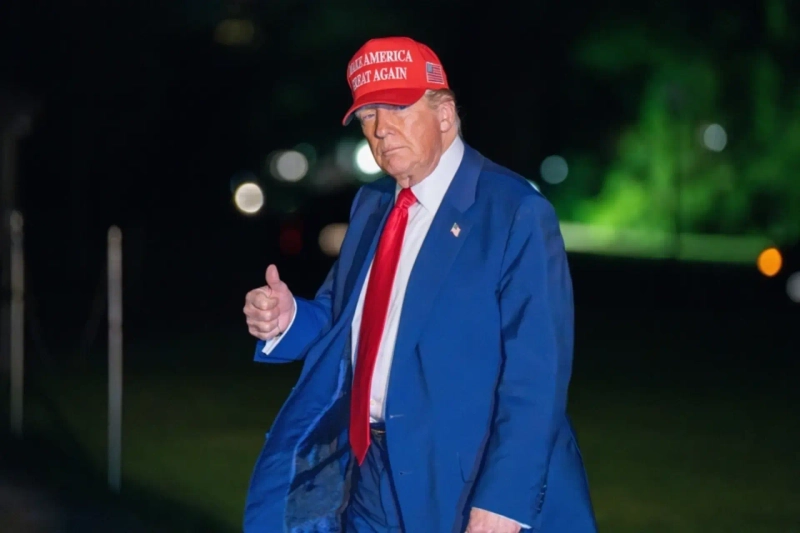
In opening remarks at the summit at Beijing’s Great Hall of the People on May 14, Trump said he and Xi had maintained “the longest and greatest relationship” of any U.S. and Chinese presidents. He called Xi “a great leader” and China “a great country.”
He also said he had “tremendous respect” for Xi and the Chinese people. Trump said the two countries could do “many big and good things” together for themselves and the world, adding that they would have “a fantastic future together.”
Even as Xi delivered a direct warning on Taiwan at the meeting, Trump avoided public language that could deepen tensions and instead emphasized friendship and cooperation.
He struck the same note on May 15, the final day of the trip. Trump said the U.S. was now “the most watched country in the world,” while adding that he hoped relations with China would become “stronger and better than ever.”
Public comments from senior U.S. officials also centered on managing friction rather than escalating it.
Secretary of State Marco Rubio said after the summit that U.S. policy on Taiwan “has not changed as of today, and it has not changed after the talks we had here today.”
Rather than answer Xi’s warning head-on, Rubio confined himself to reaffirming continuity in U.S. policy.
He also described ties with China as “America’s most important geopolitical challenge and most important managed relationship,” underscoring the need to keep tensions under control. The wording was notably restrained for an official widely viewed as a China hawk.
Xi and Trump to meet at least three more times this year
The behavior of the U.S. delegation, including administration officials and business leaders traveling with Trump, reinforced that message. According to China’s Foreign Ministry, Trump introduced the American executives accompanying him to Xi one by one during the summit. The executives told Xi they “highly value” the Chinese market, the ministry said.
After the summit, Tesla Chief Executive Officer Elon Musk described it as “great.” Against the backdrop of a tariff war and competition for technological supremacy, the moment suggested the U.S. message to China was centered less on security pressure than on market access and business opportunities.
Experts said China’s goal during the visit was to institutionalize Taiwan as the top condition in the U.S.-China relationship.
The South China Morning Post said Xi’s message on Taiwan was much tougher than at the 2017 Beijing summit. The newspaper said China was effectively demanding that the Taiwan issue be managed as a precondition for at least three years of “constructive strategic stability” during the remainder of Trump’s term.
The Wall Street Journal made a similar point, saying China was trying to define the terms of superpower relations by explicitly linking Taiwan to the broader framework of bilateral ties. The message to Washington was that Beijing would not accept both “constructive strategic stability” and what it sees as mishandling of Taiwan.
Experts said the summit also gave China grounds to argue in the future that any U.S. step involving Taiwan had damaged an understanding reached by the two leaders.
For Trump, by contrast, the Beijing trip was as much about securing visible economic gains as diplomatic symbolism.
Reuters reported that Trump is heading into the November midterm elections while facing pressure on his approval ratings from a prolonged war with Iran and rising living costs. That made meaningful trade outcomes from the China trip especially important.
The Trump administration has pressed China to increase purchases of U.S. farm goods, energy and aircraft. That also helps explain why the White House statement issued after the summit focused on economic issues.
Diplomatic circles viewed the summit as an asymmetric negotiation in which China prioritized Taiwan and the U.S. prioritized the economy.
The prevailing assessment was that China succeeded in formalizing Taiwan as a precondition for stability in bilateral ties.
Xi made clear in front of the U.S. president that Taiwan was not just one issue among many, but the top agenda item shaping the broader U.S.-China relationship.
Trump, meanwhile, refrained from publicly pushing back on Taiwan. He focused instead on presenting the prospect of wider Chinese market opening and larger purchases of U.S. goods as a political achievement. His repeated claim that Xi had “congratulated” him on his “tremendous success” appeared aimed at avoiding any impression at home that he had yielded ground in talks with China.
Xi and Trump are scheduled to meet at least three more times this year. Trump has invited Xi to the White House in September. The Asia-Pacific Economic Cooperation summit is set for Shenzhen, China, in November, followed by a Group of 20 summit in Miami in December.
Kim Eun-jung, Beijing correspondent, Korea Economic Daily, kej@hankyung.com

Korea Economic Daily
hankyung@bloomingbit.ioThe Korea Economic Daily Global is a digital media where latest news on Korean companies, industries, and financial markets.