Korean Companies Face Dual Legal Risk as US Sanctions Compliance May Breach Chinese Law
Summary
- Jipyong said the US-China summit shows Korean companies need complex compliance management and a strategic reset.
- Jipyong said dual compliance risk — where steps taken to comply with US sanctions could violate Chinese law — is becoming a constant factor across corporate transactions, investment and internal management.
- Jipyong said supply-chain and business-structure reorganization, data-governance design, and early positioning in areas such as expanding global artificial intelligence (AI) investment and shipbuilding, defense and batteries represent new market and investment opportunities.
Forecast Trend Report by Period


Beijing Summit After Nine Years Reshapes US-China Negotiating Dynamics
Xi’s Planned September Visit to Washington Marks the Next Potential Turning Point
US-China Tensions Expand Into Technology and Data Controls
Demand Rises to Reorganize Singapore and ASEAN Business Hubs
Focus Falls on Ship MRO and AI Infrastructure Investment
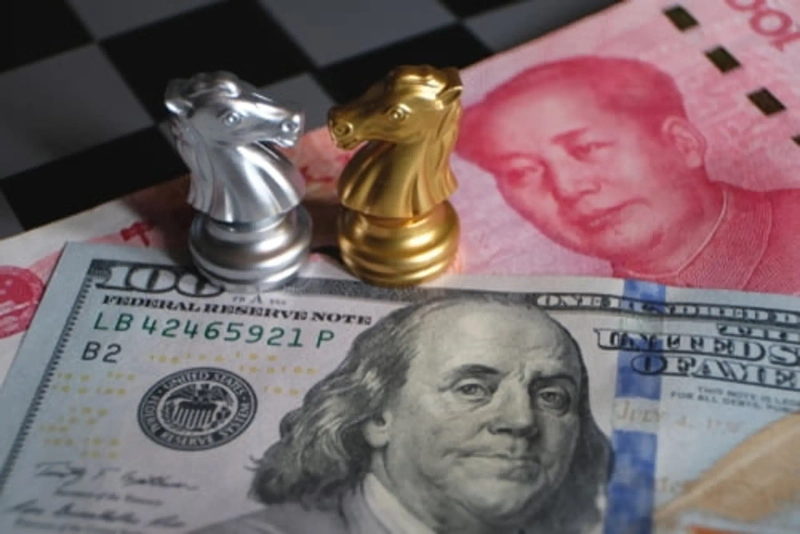
The US-China summit held during President Donald Trump’s state visit to Beijing on May 14-15 is emerging as more than an effort to patch up bilateral tensions. South Korean law firm Jipyong said the meeting marked a turning point that fundamentally altered the structure of US-China negotiations. Trump reinforced that view in an interview aboard Air Force One after the summit when he said, “This is the G-2.”
According to the South Korean legal industry on May 19, Jipyong said in a newsletter analyzing the summit that the meeting “made visible a fundamental shift in the US-China bargaining structure and created a new starting point that requires Korean companies to reset their global strategies.” The term G-2 has largely been avoided in US foreign-policy circles since the Obama administration because of concerns it sidelines allies while elevating China. It is also a core part of President Xi Jinping’s framework of a “new type of major-country relationship,” which he has pursued since 2013. Jipyong wrote that Trump’s voluntary use of the term had the effect of aligning the US president with Xi’s push for a framework of equal status. In the firm’s view, Xi achieved a substantial portion of what he sought at the summit.
Summit Ended Without Joint Statement
The summit ended without either a joint statement or a joint news conference. The US emphasized visible deal outcomes, including China’s pledge to buy about 200 Boeing aircraft and increase purchases of agricultural products and energy. China, by contrast, highlighted a vision for a “constructive strategic stability relationship” and put its warning on Taiwan at the forefront.
Jipyong said that split suggests the two sides were pursuing different messaging goals for domestic audiences. Boeing shares fell about 4% after the 200-plane purchase announcement because the number was far short of the 500 aircraft discussed in negotiations. Semiconductor export controls were not even placed on the agenda.
China Built Retaliation Tools Over Seven Years
If negotiations during Trump’s first term from 2017 to 2020 were defined by unilateral US pressure and China’s management of concessions, Beijing has spent the past seven years systematically building tools to change that structure. It gradually institutionalized export controls on critical minerals, including gallium and germanium in 2023, antimony and graphite in 2024, and a rare-earth licensing regime in 2025. It also completed a legal shield through the Anti-Foreign Sanctions Law in 2021, revisions to the Foreign Trade Law in March 2026, and State Council Decrees No. 834 and 835 in April 2026.
China is now confronting the US not through concessions but through retaliatory capacity and a broader set of response tools, the firm said. It described the summit as a moment that made a new balance of power visible to the world.
Trump invited Xi to the White House on Sept. 24. The timing coincides with the expiration of the one-year truce agreed at the APEC summit in Busan in October 2025. Another variable is whether the US proceeds with a $1.4 billion arms sale to Taiwan. Jipyong concluded that US-China tensions are more likely to harden into managed competition across sectors than to ease in the short term. The summit, it said, looked less like the end of a confrontation than a shift toward competition managed through continued friction.
Three Implications for Korean Companies
Jipyong said the biggest message for Korean companies after the summit is not easing tensions but the need for more complex compliance management and a strategic reset. It outlined three main tasks.
The most urgent is dual compliance risk. Measures taken to comply with US sanctions, including halting transactions, restricting supplies or suspending technical support, could be challenged under Chinese law as cooperation with foreign sanctions or enforcement of improper extraterritorial regulation. That creates a structural conflict in which complying with one legal regime can be judged a violation of the other. Jipyong said companies should design decision-making structures in advance on the assumption that compliance on one side could trigger a breach on the other, as these rules increasingly shape day-to-day transactions, investment and internal controls.
Restructuring supply chains and business models is another core task. Korean companies no longer face a simple binary choice of staying in China or leaving, Jipyong said. A new standard is emerging in which businesses are redesigned around multiple hubs: a China headquarters or production base, a Singapore or ASEAN relay base, and a US-facing entity, with each location handling compliance under different national regimes. The firm also said tighter Chinese controls on cross-border data transfers are leading to more cases in which South Korean headquarters cannot access data held by Chinese subsidiaries, leaving companies unable to submit materials in US regulatory investigations. That makes advance data-governance planning essential.
US-China tensions also present opportunity alongside risk. Jipyong said expanding global investment in artificial intelligence, growth in US-centered data centers, the reshaping of LNG and nuclear-power supply chains, and rising global defense demand are creating new markets and investment opportunities for Korean companies. It identified strategic areas that require early positioning, including cooperation with the US in ship maintenance, repair and overhaul, a replacement supply-chain role in bio contract development and manufacturing, and expanded battery production in North America.
US-China conflict is shifting beyond tariffs and trade into a structure in which technology, security, data, energy, finance and environmental regulations are increasingly interconnected, Jipyong said. The key, it added, is building an integrated response system that combines legal, trade, industrial, financial and policy analysis.
Heo Ran, Hankyung.com reporter why@hankyung.com
