ShardLab CEO Says Southeast Asia Is Emerging as a Key Market for AI, Digital Assets
Summary
- ShardLab CEO Kim Ho-jin said Southeast Asia is poised to emerge as a key market in the era of artificial intelligence (AI) and digital assets.
- He said Southeast Asia's digital economy has already surpassed $300 billion and grown more than 700% over the past decade, shifting from a consumer market to one that builds ecosystems.
- He said Bangkok could be one of the first places where AI- and digital-asset-based innovation becomes reality, as stablecoins, digital finance experiments and adoption of digital-asset-based payment systems expand in Thailand and other major countries.
Forecast Trend Report by Period


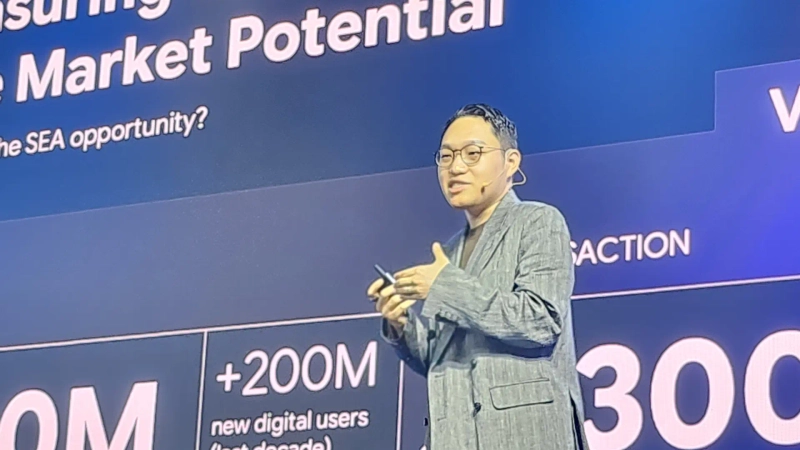
Kim Ho-jin, chief executive officer of ShardLab, said Southeast Asia is poised to emerge as a key market in the era of artificial intelligence and digital assets.
Delivering a keynote address at Southeast Asia Blockchain Week 2026, or SEABW 2026, at Bangkok's ICONSIAM, Kim said the next major chapter of Web3 could begin in Southeast Asia. The region is seeing more than user growth, with transactions and digital economic activity rising explosively.
Kim cited the region's population of about 700 million and the rapid expansion of its digital economy as key strengths. As mobile payments and digital finance spread quickly, Web3 services are becoming more closely tied to everyday economic activity.
"Southeast Asia's digital economy has already surpassed $300 billion and has grown more than 700% over the past decade," he said. "The region is no longer just a consumer market. It is becoming a market that builds products and creates ecosystems."
He identified stablecoins, localized wallets, real-world asset tokenization, and AI and digital identity infrastructure as the areas where the convergence of AI and digital assets could take shape fastest. In Thailand, the Philippines, Malaysia and Indonesia, efforts to institutionalize stablecoins and expand digital-finance experiments are already gaining momentum.
Major regulators, including the Bank of Thailand, are broadening experiments in programmable finance and stablecoins, Kim said. Large banks and financial firms are also accelerating the adoption of digital-asset-based payment systems.
He said Southeast Asia's QR-based payment culture could also support broader Web3 adoption. Because mobile and QR payments are more deeply embedded in daily life than credit cards, digital-asset-based payment systems could connect naturally with existing consumer habits.
"National QR payment networks such as Thailand's PromptPay are already embedded in everyday life," Kim said. "Bangkok is a city where global tourism, finance and technology talent come together, making it one of the first places where AI- and digital-asset-based innovation could become reality."
