PiCK
Bitcoin Falls Back to $73,000s as US-Iran Clash Reignites, Shifting Focus to Downside Protection
Forecast Trend Report by Period



Bitcoin remained under pressure on May 28 as renewed military clashes between the US and Iran compounded uncertainty over interest rates fueled by war-driven inflation concerns. Analysts said Bitcoin’s near-term direction may depend on whether it can retake $74,000. For now, they said, the market favors protecting against further losses rather than chasing a rebound.
As of 6:06 p.m. on May 28, Bitcoin was trading at $73,233 on Binance's USDT market, down about 3.24% from a day earlier. On Upbit, it changed hands at 108.31 million won. The kimchi premium, which measures the price gap between domestic and overseas exchanges, stood at minus 1.66%.
Military clashes flare again as caution builds ahead of PCE data
Expectations for ceasefire talks have done little to calm investors as military tensions between the US and Iran intensified again, adding to broader market caution. Global equities initially rose on hopes for negotiations and optimism over semiconductor earnings, but risk appetite weakened after reports of US airstrikes and Iranian retaliation.
Bloomberg reported on May 27 that US Central Command carried out airstrikes on Iranian military targets. US forces also shot down four Iranian one-way attack drones launched toward commercial vessels and struck a drone-launch unit in Bandar Abbas near the Strait of Hormuz.
Iran retaliated immediately. The Islamic Revolutionary Guard Corps struck a US Air Force base used in the attack after the American strike on the outskirts of Bandar Abbas. Although Washington and Tehran had placed a memorandum of understanding on ending the war on the negotiating table, airstrikes and reprisals have continued, clouding the diplomatic outlook.
Inflation and interest-rate concerns are also weighing on the market. A prolonged conflict and higher energy prices are stoking inflation fears, while US consumer sentiment has shown signs of strain. The University of Michigan's consumer sentiment index fell to a record low of 44.8, pointing to weakening household confidence.
Investors are now watching the April core personal consumption expenditures price index, due at 9:30 p.m. Korea time on May 28. The market expects the gauge to have risen 3.3% from a year earlier. Core PCE is a key inflation measure for the Federal Reserve when assessing policy, including interest-rate decisions.
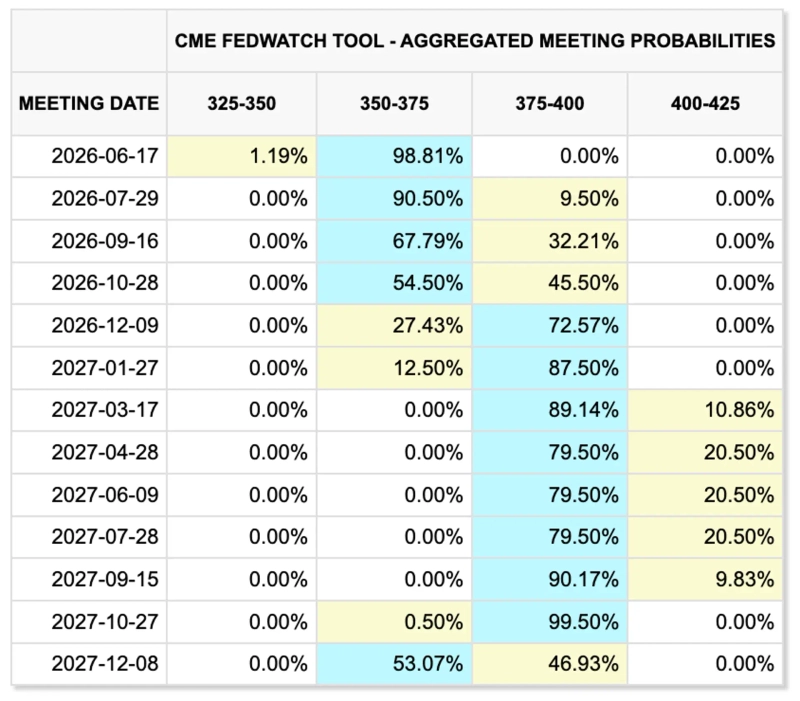
According to CME FedWatch, as of 6 p.m. on May 28, fed funds futures showed a 27.43% probability that the benchmark rate would remain at 3.50% to 3.75% through year-end and a 72.57% chance of one additional increase to 3.75% to 4.00%.
ETF outflows and Middle East tensions deepen concerns over spot demand
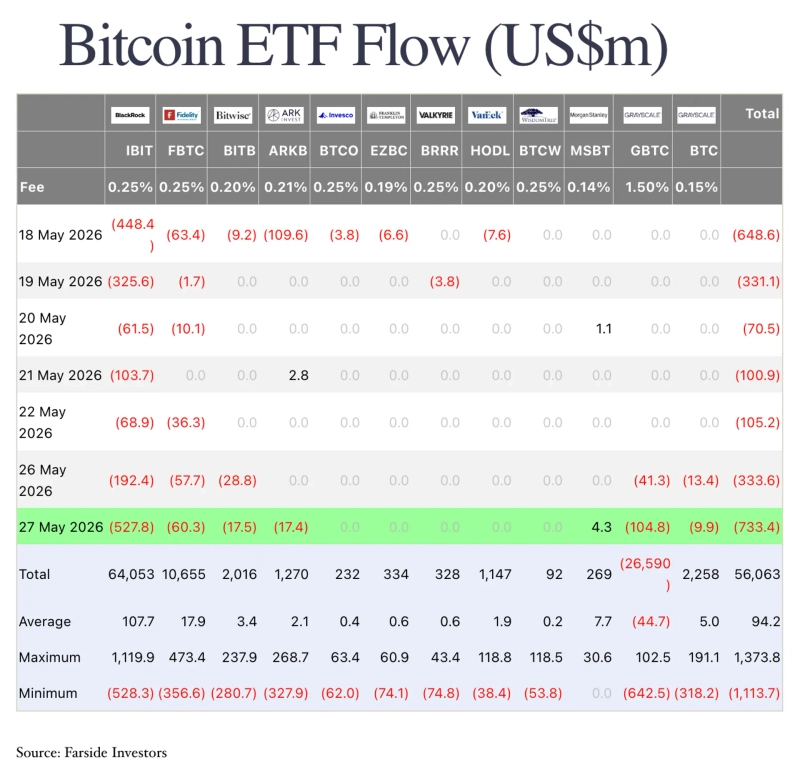
US spot-Bitcoin exchange-traded funds recorded net outflows of $1.2563 billion last week, and the withdrawals have continued since then. Mounting tension in the Middle East after the US airstrikes on Iran also hit sentiment. The total cryptocurrency market lost about $80 billion in value over the past 24 hours, falling to its lowest level since mid-April.
Bitfinex said in a weekly report that Bitcoin had remained unstable in the mid-to-upper $70,000 range ahead of the US April PCE inflation report. The exchange said the move looked less like a healthy correction and more like a deepening bearish phase. It also cited a Coinbase premium of minus $140 as a sign of weak US spot demand. If that trend persists, Bitfinex said Bitcoin could face additional downside pressure toward $72,000.
Glassnode said confidence in a clearer market direction is fading. In its latest weekly report, the on-chain analytics firm said liquidity constraints had persisted, with the US 10-year Treasury yield rising to 4.51% in the final week of May and the dollar index holding above 99. Falling oil prices are a positive factor, Glassnode said, but it remains too early to conclude that macro pressure has eased. The firm also said Bitcoin's implied volatility has fallen across all maturities. Without a recovery in spot buying, Bitcoin could drift back into a broad trading range.
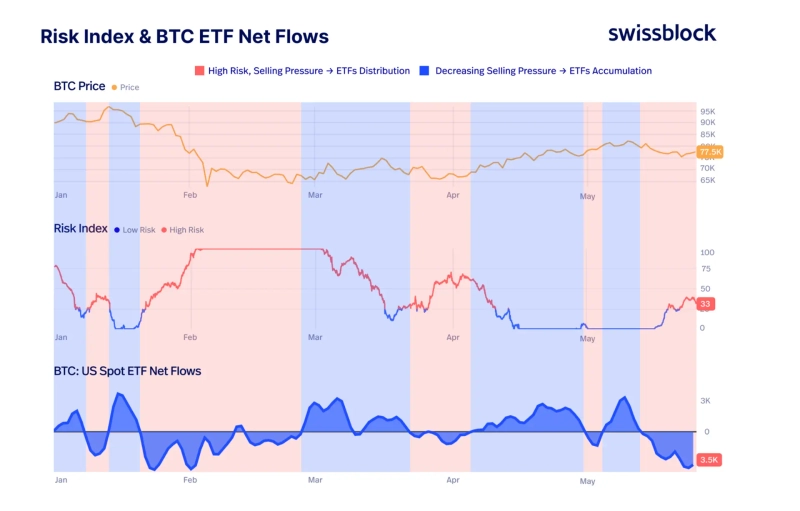
The crypto market is also showing pronounced relative weakness even as US stocks hit record highs. Wintermute said recent trading showed a decoupling from equities, with Bitcoin and Ether falling while Wall Street benchmarks climbed to all-time highs. The market maker added that the institutional buying that drove last month's rebound was fading quickly. For the short-term bullish case to hold, institutional inflows need to resume.
Broader market resilience also appears limited. 10x Research said bearish signals in Bitcoin were capping direction across the wider digital-asset market. The firm added that it was still too early to describe the latest move as a broad recovery.
Bitcoin retreats to the $73,000s as traders prioritize downside protection
As Bitcoin slid back into the $73,000 range, analysts said traders should focus more on protecting against further losses than betting on a near-term rebound. A failure to reclaim $74,000 could leave the token exposed to more selling pressure.
Ayush Jindal, an analyst at NewsBTC, said Bitcoin remained in a short-term bearish phase after slipping below support at $75,000. On the one-hour chart, a descending trendline resistance has formed near $74,850, he said. If Bitcoin stays below $74,000, the next support levels are $73,500 and $73,200. A deeper decline could drag it toward $72,000.
Fear is also rising again. Alex Kuptsikevich, chief market analyst at FxPro, said the total crypto market capitalization had fallen to $2.46 trillion, pushing it toward the lower end of its range even as US stocks climbed to record highs. Bitcoin has also broken below its 50-day moving average near $77,000, while the Fear & Greed Index has dropped to 22, returning to extreme fear territory. If cryptocurrencies act as a leading indicator of global risk sentiment, he said, that may signal the early stages of summer profit-taking.
Rakesh Upadhyay, an analyst at Cointelegraph, said Bitcoin was rejected near its 20-day exponential moving average of $77,431, indicating that sellers were emerging even during weak rebound attempts. If support in the $76,000 to $74,289 range breaks, Bitcoin could slide further toward $70,500. If it regains $77,431, he said, the chances of a climb toward $82,000 and $84,000 would increase.
Kang Min-seung, Bloomingbit reporter minriver@bloomingbit.io
