Shin Hyun-song’s Message Is Clear: Rebuild Your Portfolio for Tightening
Forecast Trend Report by Period


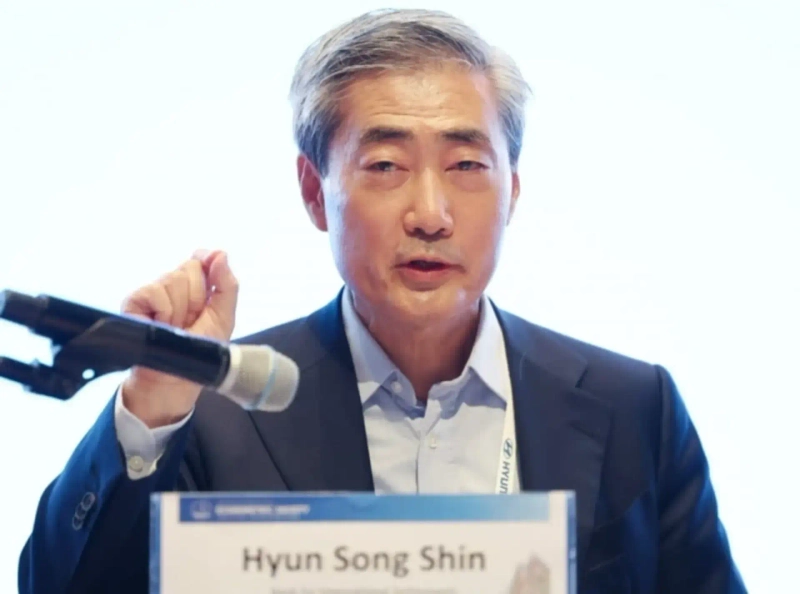
Clear signals this direct from a Bank of Korea governor are rare. At his debut Monetary Policy Board meeting on May 28, Shin Hyun-song delivered a concise and unmistakable message to markets. He kept the benchmark interest rate unchanged while signaling further increases, pledged to resist one-way moves in the exchange rate and raised the issue of reforming the offshore non-deliverable forward market. In effect, he presented markets with three realities: higher rates, defense of the won and a reworking of the won system.
He also sent a warning to investors. The message was to move past market illusions and prepare for the costs of tighter policy. In practical terms, that means four things: concentrate stock holdings in semiconductor companies with solid earnings, keep bond maturities short, stop chasing the dollar and reduce debt.
◆ Hold in Form, Hike in Substance
The Bank of Korea held the benchmark rate at 2.50%, extending the pause to an eighth straight meeting. But Shin’s language was not that of a central banker settling in for a prolonged hold. Rates stayed where they were, yet the signal was unmistakably hawkish. That was the essence of the decision.
The two dissenting votes in favor of a rate increase were no surprise. Shin described them as “a strategic difference within the same framework and the same understanding.” This was not a disagreement over direction. The tightening path has effectively been set, with the central bank adjusting only the pace. The base case is for two rate increases this year, in July and October or November, taking the benchmark rate to 3.0%.
Three remarks from Shin’s briefing stand out. First, he said, “The path ahead is clear.” Such direct language is unusual for a BOK governor at a news conference. Second, he said, “We will not tolerate one-way moves in the exchange rate. We have the tools and the will.” That amounted to a public declaration of policy intent that went beyond verbal intervention. Third, he said, “The NDF market’s tail is wagging the dog.” By raising structural problems in the offshore forward market at his first briefing, Shin signaled a medium- to long-term policy direction tied to the internationalization of the won.
◆ Time to Rebuild a Portfolio’s Core
The implications for personal finance are straightforward: this is the moment to rebuild the core of a portfolio. The signal is to shift to a tightening-resistant stance. In equities, that means stripping out leverage and concentrating on semiconductor shares backed by earnings.
The clearest clue is in the stock market, especially the semiconductor sector. Shin pointed to the gap between first-quarter real gross domestic product growth of 1.7% and gross domestic income growth of 12.3%. In other words, the economy earned far more in global markets even while selling the same volume of output. The leading driver was AI semiconductors. The BOK has explicitly said it sees the chip cycle not as a temporary rebound but as a structural effect that will last for a considerable period.
Shin also warned against debt-fueled stock investing, saying tighter policy “bends the demand curve.” When prices fall, margin loans and leveraged exchange-traded funds can trigger forced selling, creating the risk that a modest correction turns into a broader selloff.
In bonds and savings products, investors should keep maturities short. Long-dated bond positions are a burden when rates are rising because bond prices fall as yields rise. Until the terminal rate becomes clearer, preserving liquidity through cash management accounts and short-term deposits is the more prudent approach.
In real estate, deleveraging is essential. Shin identified housing prices in the Seoul metropolitan area and household debt as financial stability risks. Tight supply may support prices, but higher rates will squeeze borrowers’ cash flow. The key variable in property investment now is not the pace of gains but the level of interest rates. Investors should first calculate whether they can withstand a benchmark rate near 3%. Before a possible July rate increase, the last line of defense is to refinance floating-rate loans into fixed-rate debt and repay principal early to build a buffer against interest costs.
Chasing the dollar also looks risky. Shin said the central bank would not tolerate one-way moves and had both the tools and the will to respond, effectively capping further upside. If the BOK raises rates and narrows the gap with the U.S., pressure on the won could ease quickly. Increasing dollar exposure near current highs amounts to a direct bet against the central bank. The conclusion is clear: build defense through cash and short-term rate products, focus equity holdings on earnings-driven stocks, and reduce exposure to long bonds, leverage and highly indebted real estate investments.
◆ Signaling a Faster Tightening Path Than the Fed
Federal Reserve Governor Lisa Cook said on May 28 that “inflation is moving in the wrong direction” and that the Fed is prepared to raise rates if the disinflation it expected does not materialize in time. With the Fed considering a renewed tightening turn, the possibility that the BOK could move first is becoming more real.
Narrowing the U.S.-South Korea rate gap, now 1.0 to 1.25 percentage points, is directly tied to stabilizing the won and containing import prices. Shin said at a BIS governors’ meeting that South Korea would become “not simply a participant that accepts what happens externally, but one that directly shapes the flow.” The remark pointed to a changing role for South Korea’s central bank on the global monetary policy stage.
Lee Sim-ki, senior editorial writer, Korea Economic Daily, sglee@hankyung.com
