Hyundai Motor Group Affiliate Unions Move Toward First-Ever 90,000-Worker Joint Strike
Forecast Trend Report by Period


All 38 unions to convene, with first meeting set for June 4
Solidarity between parent-company and subcontractor unions spreads after Yellow Envelope law took effect
"Union risk is rising across manufacturing"
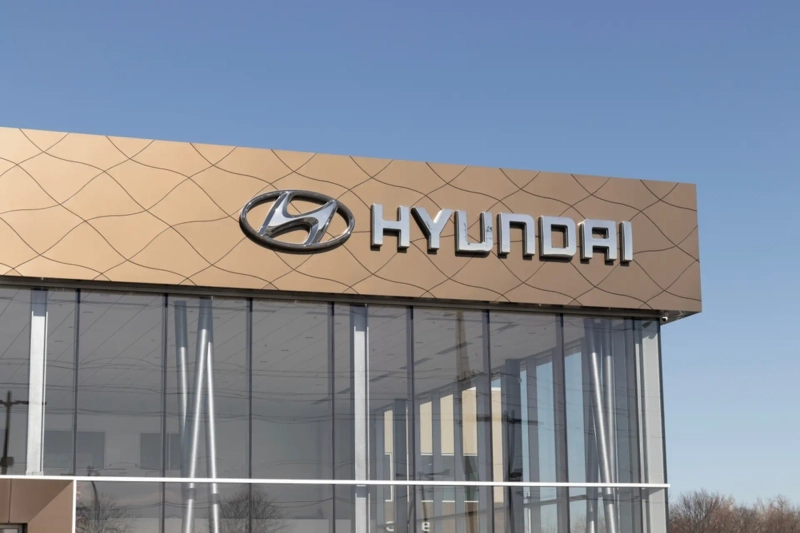
Labor unions at Hyundai Motor Group affiliates are moving to launch a joint struggle for the first time. The effort covers 38 unions across the group, including Hyundai Motor and Kia as well as affiliates in auto parts, steel and logistics. It is the first case since the revised labor law known as the Yellow Envelope law took effect in March that parent-company and subcontractor unions have formed a united front. Because the law is designed to require primary contractors to engage in collective bargaining, Hyundai Motor Group could become the starting point for broader labor coordination across Korean industry, according to labor and industry officials.
On May 28, Kia's union, which is affiliated with the Korean Metal Workers' Union, sent an official notice to 38 union branches and chapters at group affiliates under the title, "Discussion on a 100,000-worker struggle by group company labor unions for victory in 2026," labor and industry officials said on May 29. The list included unions at the group's core affiliates, including Hyundai Motor and Kia, parts makers Hyundai Mobis, Hyundai Transys and Hyundai Wia, steelmaker Hyundai Steel, and logistics unit Hyundai Glovis. Unions at smaller affiliates such as Hyundai Kefico, Hyundai BNG Steel and Hyundai Mseat were also included. Total union membership stands at 87,452.
In the notice, the unions said Hyundai Motor Group had delivered record earnings while pushing to cut production and jobs at group factories. They presented extending the retirement age to 65, introducing a 4.5-day workweek and ensuring job security during the shift to artificial intelligence as key agenda items. The unions are scheduled to hold their first meeting on June 4 to discuss a detailed plan.
Industry and labor officials say the decisive backdrop to the joint action is the Yellow Envelope law, which took effect in March. The revised law defines a primary contractor that effectively controls and determines the working conditions of subcontracted or affiliate workers as an employer and requires it to negotiate directly. Hyundai Motor Group had previously refused to bargain with affiliate unions on the grounds that it was not their direct employer. That argument has become harder to sustain since the law took effect, prompting unions to build a joint front linking parent-company and subcontractor workers.
The structure of the auto industry also gives the unions leverage. Vehicle production is interconnected from raw material supply to parts assembly, logistics transport and final assembly. If Hyundai Steel stops producing steel sheets, or if Hyundai Mobis and other parts makers halt output, auto production would be disrupted immediately. One industry official said unions were using the fact that a stoppage at even one affiliate could shut down the entire production line as a bargaining weapon.
Pressure for collective bargaining is spreading across industry. On May 28, the Korean Metal Workers' Union's non-regular workers' branch at GM Korea's Bupyeong plant, its GM parts logistics branch and its Bupyeong industrial complex branch declared a joint struggle against GM Korea. Subcontractor unions at Hyundai Mobis have also formed a united front against the sale of the company's lamp business unit. At Kakao, unions at five entities including Kakao and Kakao Pay approved strike authorization votes, bringing the tech group's first-ever joint walkout closer.
Gil-seong Yang and Woo-seop Kim, Hankyung.com reporters vertigo@hankyung.com

Korea Economic Daily
hankyung@bloomingbit.ioThe Korea Economic Daily Global is a digital media where latest news on Korean companies, industries, and financial markets.