Lee Says Elevated Won-Dollar Rate Is Temporary
Summary
- President Lee Jae-myung said the recent won-dollar exchange rate is indeed high, but he sees it as a temporary phenomenon.
- Lee said the current-account surplus, Middle East tensions, the sharp rise in stock prices and a higher foreign ownership share are affecting the exchange rate.
- Lee said dollar demand tied to foreigners' internal rebalancing is a major short-term factor, but the trend will be hard to sustain and the stock market will eventually regain balance.
Forecast Trend Report by Period


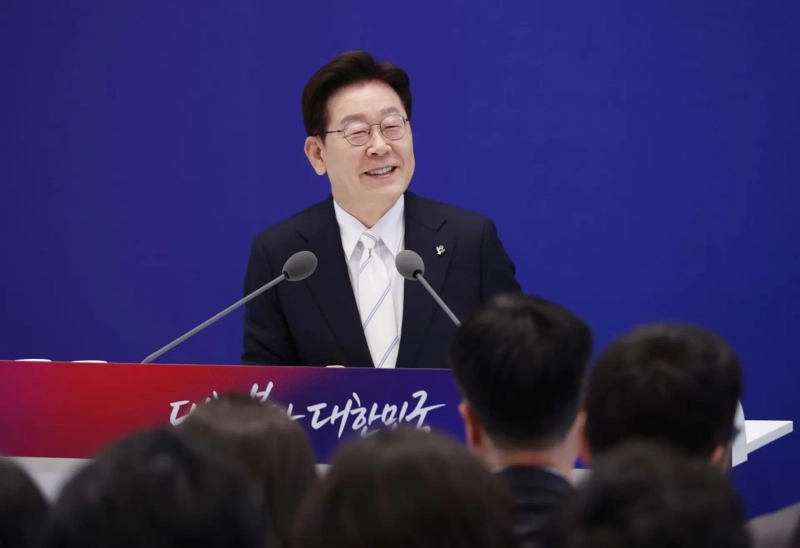
President Lee Jae-myung said on June 8 that the recent rise in the won-dollar exchange rate is high but temporary. The won was trading around 1,550 per dollar earlier in the day after climbing sharply in recent sessions.
At a news conference marking his first year in office at the presidential office, Lee said it is difficult to set a target exchange rate, though there may be a rough sense of a fair level. "This does not look structural," he said. "It should be viewed as temporary."
Lee said foreign-exchange supply factors remain strong because of an unprecedented current-account surplus. "Supply is abundant," he said. "So there are many factors driving down the won's value."
He also pointed to instability caused by tensions in the Middle East as a factor pushing the exchange rate higher.
Another factor is the rapid rise in South Korean stocks over a short period, Lee said. Foreign ownership in the domestic stock market has increased by about 2 to 3 percentage points. For investment funds, that has left South Korean holdings occupying too large a share of their portfolios.
He gave an example of a fund with an internal guideline of 2.5% for South Korean assets whose weighting had risen to 6% or 7%.
That is forcing what he described as internal rebalancing. Funds need to sell to bring those weightings back in line. Selling Korean stocks creates dollar demand because the proceeds must be converted out of won.
Lee said that is probably the biggest short-term driver of the move.
Even so, he said the trend is unlikely to continue indefinitely and that South Korea's stock market will eventually regain balance. He added that he did not know the level where that adjustment would happen, joking that he would be buying stocks aggressively if he did. Still, he said the broader direction is possible to gauge.
Kim Hyung-kyu and Lee Esther, Hankyung.com reporters khk@hankyung.com

Korea Economic Daily
hankyung@bloomingbit.ioThe Korea Economic Daily Global is a digital media where latest news on Korean companies, industries, and financial markets.