[Analysis] Bitcoin Whales Bought Aggressively as BTC Slid to $60,000
Summary
- Bitcoin whales stepped in with large-scale dip buying as BTC plunged to the $60,000 level.
- On-chain data showed the Exchange Whale Ratio rose to 61.6%, while total 11,422 BTC in withdrawals was recorded over the past five days.
- Woominkyu said the $60,000 to $61,000 range could act as a key support level, with more than 11,000 BTC having left exchanges.
Forecast Trend Report by Period


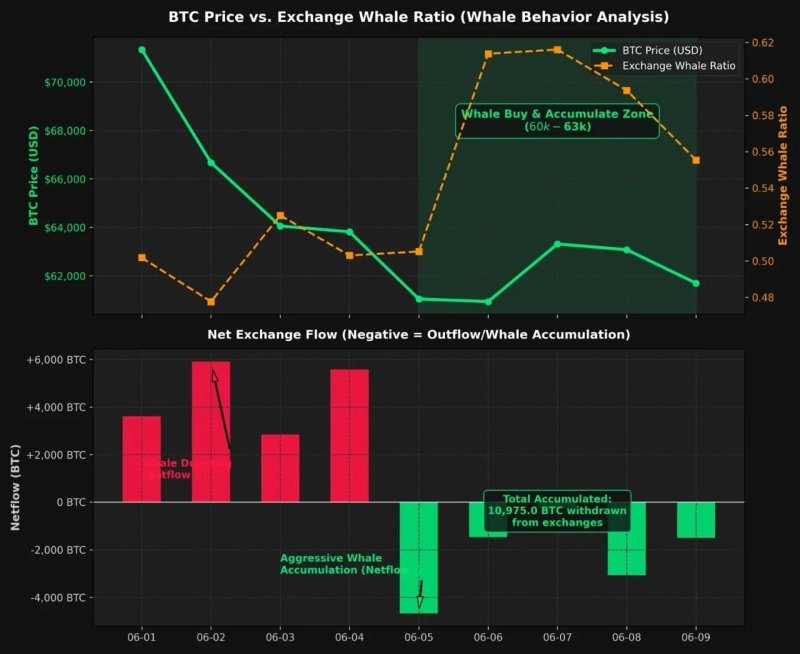
Whale investors appear to have stepped in with aggressive dip buying as Bitcoin fell to the $60,000 level.
CryptoQuant contributor Woominkyu wrote on June 10 that recent on-chain data shows large investors actively accumulated Bitcoin while retail traders were gripped by fear.
He said the key turning point in the latest selloff came over the previous two to three days. During that period, dormant wallets that had been inactive for a long time moved large amounts of Bitcoin to exchanges, driving Inflow Coin Days Destroyed, or CDD, up to 2.16 million.
CDD is a metric that rises when long-idle Bitcoin starts moving. That activity appears to have added to downward pressure when Bitcoin was trading near $71,000.
After Bitcoin fell into the $60,000 to $61,000 range, however, whale buying became more pronounced.
The Exchange Whale Ratio rose to 61.6%. That indicates whales accounted for a sharply larger share of major exchange transactions, suggesting they absorbed panic selling in the market.
Over the past five days, whale investors withdrew a total of 11,422 BTC from exchanges. At current prices, that amounts to about $700 million.
Those holdings were moved to cold wallets, and netflow swung sharply deeper into negative territory. That means the supply of Bitcoin available for immediate sale on exchanges has declined.
Woominkyu described the recent pattern as a typical transfer of holdings from weak hands to strong hands. With more than 11,000 BTC leaving exchanges, he wrote, the $60,000 to $61,000 range could serve as a key support level for Bitcoin.
He added that fear still dominates the market, but on-chain data shows long-term investors and whales continue to accumulate.
