Fed’s June Dot Plot Turns More Hawkish as Warsh Omits Rate Path
Forecast Trend Report by Period


Warsh does not submit a rate forecast in the dot plot
Dot-plot distribution shifts broadly higher
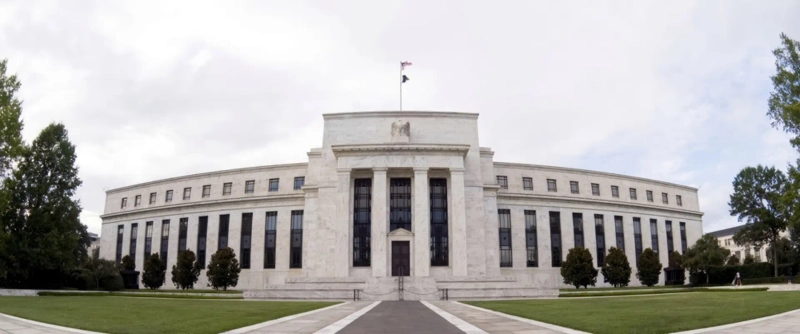
The Federal Reserve’s June dot plot, released on June 17, underscored policymakers’ resolve to keep interest rates higher for longer.
The dot plot was the first Summary of Economic Projections, or SEP, published since Chair Kevin Warsh took office. Warsh’s own dot was not included. The Fed said 18 officials submitted forecasts at this meeting, down from 19 in March.
What caught the market’s attention was not the number of dots but their direction. Fed officials projected a median policy rate of 3.8% at the end of this year, up 0.4 percentage point from 3.4% in March. With the current target range at 3.50% to 3.75%, the shift effectively scaled back expectations for rate cuts this year.
The upward revision was not limited to 2026. The projected policy rate at the end of 2027 was raised to 3.6% from 3.1%, while the 2028 projection was lifted to 3.4% from 3.1%. That suggests the Fed expects inflation pressures to persist longer than previously thought and is prepared to keep rates elevated for years.
The distribution of dots was also hawkish. In March, a sizable share of officials expected rates in the low-3% range. In June, the dots shifted broadly higher. The largest group of officials projected a year-end rate of 3.875%, implying a target range of 3.75% to 4.00%. Three officials projected 4.125%, or 4.00% to 4.25%, and one projected 4.375%, or 4.25% to 4.50%. In effect, many officials signaled rates could stay near current levels, while some still left room for further tightening.
The dot plot was read as especially hawkish because of the change in the inflation outlook. The Fed raised its forecast for this year’s personal consumption expenditures inflation rate to 3.6% from 2.7%. It also lifted its core PCE forecast to 3.3% from 2.7%. By contrast, it lowered its unemployment-rate forecast to 4.3% from 4.4% and trimmed its growth forecast only modestly, to 2.2% from 2.4%.
That shows the Fed views the risk of renewed inflation acceleration as far more serious than the risk of recession. Despite concerns about slower growth, policymakers do not see the economy as weak enough to warrant rushing into rate cuts.
The numbers reinforce that message. The Fed raised its PCE inflation forecast by 0.9 percentage point in a single update, while cutting its growth forecast by only 0.2 percentage point. That highlights the central bank’s priority on price stability rather than economic stimulus.
The SEP was also notable because it was compiled without a dot from Warsh. Even without the new chair’s official view, the 18 submissions from other officials still pushed the overall rate path higher.
Park Shin-young, New York correspondent, Hankyung.com nyusos@hankyung.com

Korea Economic Daily
hankyung@bloomingbit.ioThe Korea Economic Daily Global is a digital media where latest news on Korean companies, industries, and financial markets.