Tools for Humanity Targets South Korea Ticketing With World ID Anti-Bot Push
Summary
- Tools for Humanity said it will use its World ID-based Concert Kit to block macro-driven ticket hoarding and improve fairness in the event ticketing market.
- TFH said this year's goal is to expand World ID integrations with South Korean companies across dating apps, gaming ecosystems and business platforms to build more real-world use cases.
- Park said he aims to establish World ID in South Korea as a complementary layer that adds trust on top of existing identity-verification infrastructure while increasing the value of proof-of-human infrastructure in the AI era.
Forecast Trend Report by Period


Interview with Park Sang-wook, Tools for Humanity's Korea chief
Company pushes to integrate World ID with South Korean businesses
Focuses on ticketing solution aimed at blocking macros
'We want to lead the mainstream adoption of a proof-of-human layer'
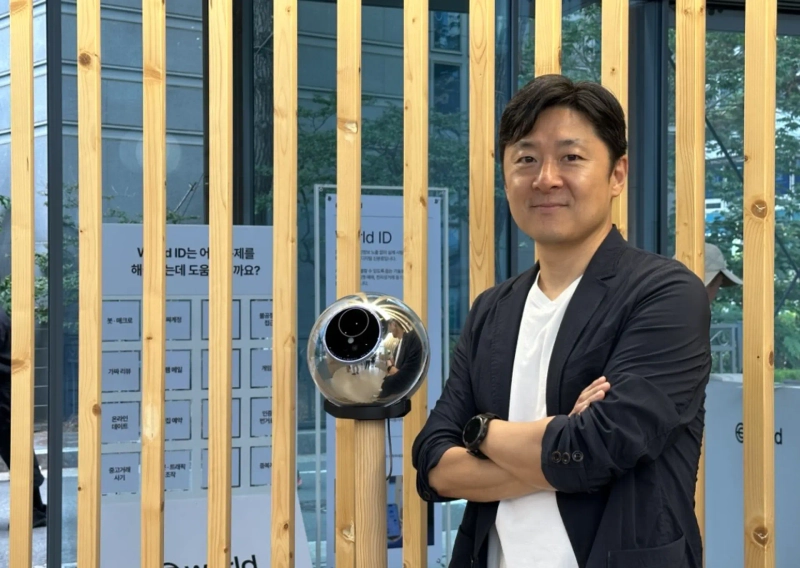
Artificial intelligence and automated macro programs are worsening scalping and bulk-buying in the K-pop concert and sports industries. Tools for Humanity, the developer of the blockchain-based proof-of-human project World (WLD), said it aims to address chronic problems in South Korea's ticketing market with World ID technology that verifies whether a user is a real and unique person.
Park Sang-wook, the company's Korea chief, told Bloomingbit in an interview on June 18 that this year's core local initiative is introducing Concert Kit in South Korea. The product is designed to block macro-driven ticket hoarding at the source and give real fans a fair chance to buy tickets. The company is focused on creating practical use cases for World ID, he said.
Concert Kit is a solution designed to prevent macro-based ticket hoarding, a longstanding issue in the concert and sports industries. It does not replace existing ticketing platforms such as Ticketlink and NOL Ticket. Instead, it works as a separate verification layer. If an agency or artist registers ticket allotments or certain ticket codes for selected fans on Concert Kit, fans can verify that they are real people through World ID and receive a booking code. They then use that code to complete payment on an existing ticketing site. That allows organizers to filter out macro bots without making sweeping changes to their systems.
The product has already been tested globally. During a World event in April, the company blocked more than 100,000 bot requests and allocated tickets to 1,000 real fans, Park said. Rock band 30 Seconds to Mars also plans to use Concert Kit to distribute part of its ticket allotment to World ID users. Park added that the goal is to secure at least one or two similar ticketing partnerships in South Korea this year.
Tools for Humanity plans to start with ticketing and expand World ID into other areas where trust is closely tied to service quality. The company is holding broader discussions with South Korean businesses, drawing on global integrations with services including dating app Tinder and gamer-focused brand Razer. Once those integrations are in place, users will have a clearer reason to sign up for World ID. Creating more use cases through meetings with a wide range of domestic companies is one of this year's goals, Park said.
A partnership with South Korean business and career platform RocketPunch is also within reach. As AI agents advance, it has become increasingly important to determine who is actually human online, Park said. He added that a partnership with RocketPunch, which centers on interactions among real people, would provide a strong real-world use case for World ID. Beyond that, Tools for Humanity plans to roll out security tools for the AI era, including Deep Face, designed to detect deepfake video during video conferences, and AgentKit, intended to distinguish automated bots from human agents.
The company is also refining its offline strategy. In the early stages, it focused on expanding the World ecosystem by deploying Orb iris-scanning devices. More recently, it has shifted toward participating in AI-related events such as Smart Tech Korea 2026 to explain the need for World ID directly. World Space Seoul, the company's only flagship space in Asia, is also expected to become a symbolic venue where users can experience integration services developed with South Korean companies.
World ID now has more than 18 million users. South Korea has a well-developed identity verification infrastructure, Park said, so World ID is likely to take hold as a complementary layer that adds trust on top of existing systems rather than replacing them. As AI and automation tools become part of daily life, the value of infrastructure that can distinguish real humans will only increase, he added.

Bloomingbit Newsroom
news@bloomingbit.ioFor news reports, news@bloomingbit.io