Trump Threatens Harder Strike on Iran as Ceasefire Talks Hit Snag on First Day
Summary
- Follow-up talks on the US-Iran ceasefire MOU hit turbulence on the first day over the Lebanon front and the Strait of Hormuz.
- Iran added to the strain on negotiations by signaling it could reblock the Strait of Hormuz and impose transit fees, citing Israel’s airstrikes in Lebanon.
- The nuclear talks remain a central hurdle as the US and Israel stick to their position of preventing Iran from obtaining nuclear arms, while Iran says it will not give up its right to enrich uranium.
Forecast Trend Report by Period


Follow-up talks begin in Switzerland after ceasefire MOU
Iranian delegation briefly leaves venue
Lebanon, nuclear program and Strait of Hormuz emerge as hurdles
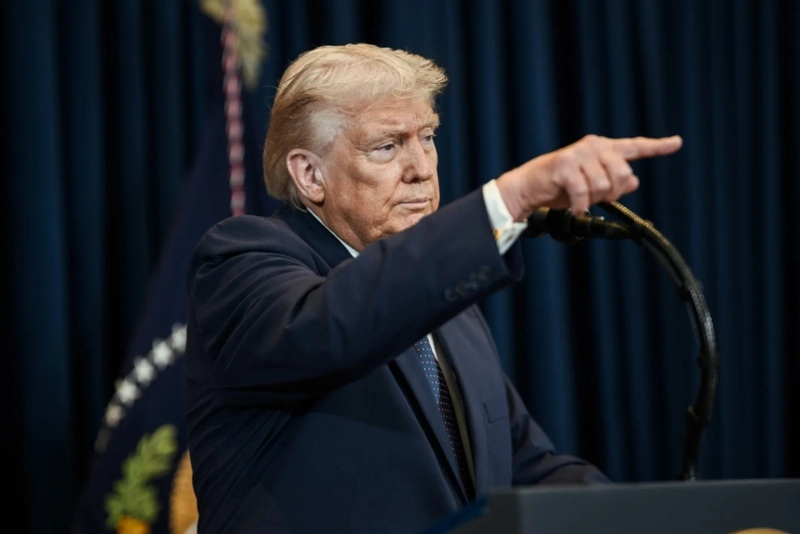
The US and Iran opened follow-up talks aimed at ending the war in the Middle East, but the negotiations hit turbulence on the first day. President Donald Trump warned of further attacks on Iran, prompting reports that the Iranian delegation had left the venue. The Lebanon front and Tehran’s nuclear program also emerged quickly as early sticking points.
US and Iranian negotiators met on June 21 at the Bürgenstock Resort near Lucerne, Switzerland, to discuss how to implement a recently signed ceasefire memorandum of understanding, or MOU. Vice President JD Vance led the US side, while Iranian Parliament Speaker Mohammad Bagher Ghalibaf headed Tehran’s delegation.
The opening mood initially appeared constructive. Vance called the meeting a “historic” one and said it would determine whether relations in the Middle East could be changed permanently or revert to old patterns. He added that major progress had already been made in recent hours and that he expected further advances within the next few hours.
Trump’s remarks then rattled the talks. In a social media post, he said Iran must immediately stop provocations by its proxies in Lebanon. Otherwise, he wrote, the US would hit Iran “much harder” than it did last week. The message was aimed at Hezbollah, the Iran-backed armed group in Lebanon.
Iran pushed back immediately. State-run IRNA reported that the Iranian delegation left the building where the talks were being held after meeting with mediators from Qatar. The negotiations did not appear to have collapsed, however. AFP, citing a diplomat familiar with the matter, reported that the Iranian side remained engaged and had not told mediators it intended to leave the venue. Reuters, citing an Iranian source, reported that the talks had been paused temporarily but not ended.
Tehran also refused to back down. Ghalibaf said the US would do well to choose its words carefully and that Iran’s military was ready to respond in other ways. Foreign Ministry spokesman Esmail Baghaei said it would be impossible to move to negotiations on a final agreement unless the war in Lebanon ends.
The MOU included a halt in fighting between Israel and Hezbollah, but continued clashes in Lebanon have added strain to the talks. Iran has cited Israeli airstrikes in Lebanon as a grievance and raised the possibility of reblocking the Strait of Hormuz. Because the MOU was focused on reopening transit through the waterway, the Lebanon issue is now feeding directly into the Hormuz dispute.
Israel has also maintained a hard line. Prime Minister Benjamin Netanyahu said Israel would not retreat from its position of preventing Iran from obtaining nuclear arms and keeping military pressure on Hezbollah. He said Israel would remain in a security zone in southern Lebanon for as long as necessary and would never allow Iran to possess nuclear weapons.
The nuclear issue remains a central obstacle in the follow-up talks. The US did not include specific steps in the MOU to prevent Iran from obtaining nuclear arms, leaving those discussions to the next phase of negotiations. The handling of highly enriched uranium, the duration of any enrichment freeze, the dismantling of nuclear facilities and international verification are all issues on which the two sides will struggle to reach agreement.
Iranian President Masoud Pezeshkian said on June 21 that Tehran has no intention of developing nuclear weapons. At the same time, he said it would not give up its right to enrich uranium. Trump, in a phone interview with a Fox News reporter, responded that Pezeshkian should watch what he says.
Terms for transit through the Strait of Hormuz are also emerging as another source of conflict. Iran plans to keep the waterway open free of charge only during the 60-day follow-up negotiation period. After that, it intends to effectively impose transit fees under the guise of providing services. The US insists that free passage must continue.
Trump has also repeated that if the negotiations break down, the US could take control of the Strait of Hormuz and take 20% of the oil that passes through it. Senator Lindsey Graham told CBS that he expects diplomacy with Iran to fail and that, in that case, Trump would take control of the strait and charge fees for its operation.
Iran said the first round of talks focused more on implementing the MOU and the situation in Lebanon than on the nuclear program. The US wants to speed up follow-up negotiations toward a ceasefire, but the Lebanon front, the Strait of Hormuz and the nuclear issue have become entangled, throwing the talks into turbulence from the outset.
Hong Min-seong, Hankyung.com reporter mshong@hankyung.com

Korea Economic Daily
hankyung@bloomingbit.ioThe Korea Economic Daily Global is a digital media where latest news on Korean companies, industries, and financial markets.