Korean Shipper’s $7 Billion VLCC Bet Pays Off After Hormuz Reopens
Summary
- South Korean shipper Janggeum Sun became the world’s largest VLCC owner after a $7 billion investment before the war.
- After the Strait of Hormuz reopened, demand for Middle Eastern crude shipments and freight rates surged, raising expectations for better earnings at Janggeum Sun.
- Janggeum Sun posted strong profits during the war, supported by its equity partnership with MSC, high VLCC earnings, and a continued rise in the Shanghai Containerized Freight Index.
Forecast Trend Report by Period


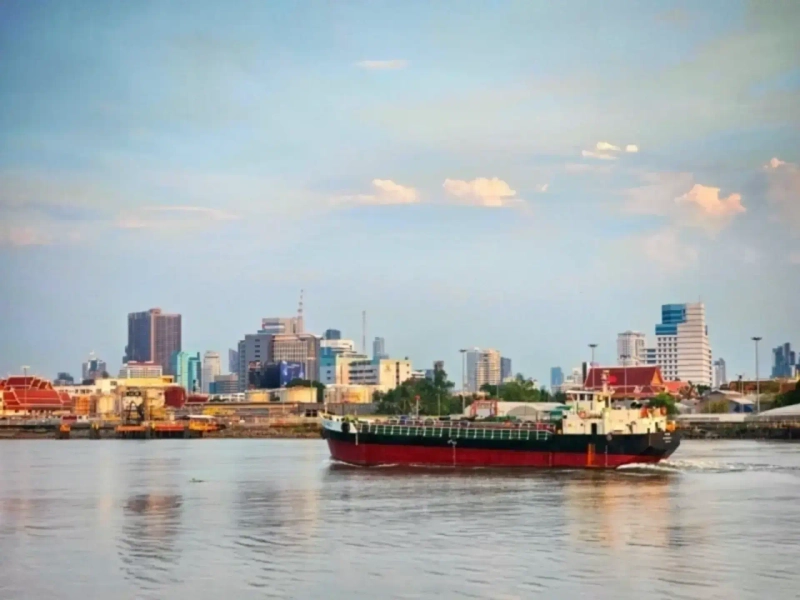
With the Strait of Hormuz reopened after more than three months of closure, South Korean shipping company Janggeum Sun has drawn attention from overseas media. Before the US-Iran war, the company invested $7 billion to build the world’s largest fleet of very large crude carriers, or VLCCs. The rebound in demand to transport Middle Eastern crude is expected to keep tanker rates elevated for now, boosting the company’s earnings.
The Wall Street Journal reported on July 2 that more than 10 Janggeum Sun tankers had passed through the strait after it reopened, calling the company one of the biggest beneficiaries of the Middle East war. When the Strait of Hormuz was blocked, traders rushed to ship crude from the US and other countries to Asia instead of Middle Eastern oil, sending tanker rates higher. With the war over and the waterway reopened, demand for Middle Eastern crude shipments has climbed, sustaining the rally in tanker rates.
Janggeum Sun leases VLCCs and container ships to refiners and trading companies. After the pandemic, it expanded VLCC purchases through affiliate Janggeum Maritime. From December 2025 through early 2026, it snapped up used VLCCs. Group affiliates including Janggeum Maritime are known to own about 160 crude carriers. More than half are believed to be VLCCs, equal to about 10% of the global VLCC market of roughly 700 to 800 ships.
A substantial portion of the money Janggeum Sun used to buy VLCCs before the war was provided by Gianluigi Aponte, founder of Mediterranean Shipping Co., according to the report. Janggeum Maritime is also pursuing a plan to sell a 50% stake to MSC and jointly manage the company.
The tie-up could create synergies because MSC is strong in container shipping while Janggeum Maritime specializes in tankers. Jang Ga-hyun, vice chairman and the son of Janggeum Sun Chairman Chung Tae-soon, owns 100% of Janggeum Maritime.
Janggeum Sun and its affiliates are estimated to have posted hefty profits during the war. Shipping consultancy Clarkson Research said average daily VLCC earnings hit about $385,000 in March, the highest since it began compiling the data in 2000.
Freight rates also remain high. The Shanghai Containerized Freight Index rose 117.95 points last week to 3,239.64 from 3,121.69 a week earlier, marking a ninth straight weekly gain. Freight rates on Middle East routes reached $4,592 per TEU, nearly 3.5 times the $1,327 recorded in late February before the war broke out. The Journal said some in the shipping industry have raised concerns that Janggeum Sun, after securing a large number of tankers, could try to artificially support freight rates by keeping some vessels out of service.
Roh Yoo-jung, Hankyung.com reporter yjroh@hankyung.com

Korea Economic Daily
hankyung@bloomingbit.ioThe Korea Economic Daily Global is a digital media where latest news on Korean companies, industries, and financial markets.