KT’s Park Unveils $13 Billion Plan to Bolster Telecom, Build AI Platform Company
Summary
- KT said it will strengthen its infrastructure competitiveness by investing 12 trillion won ($8.7 billion) in security and networks over the next three years and 6 trillion won ($4.3 billion) in AI data centers and submarine cables.
- KT said it aims to build 1 gigawatt of AI data center capacity within five years and target the AI usage-based billing market through Token Factory.
- KT said it plans to create new growth engines through synergies with affiliates by launching a stablecoin-based digital finance platform and introducing hyper-personalized services.
Forecast Trend Report by Period


KT CEO Park Yun-young briefing
$8.7 billion over three years for security and networks
More spending planned for AI data centers and submarine cables
Token Factory and stablecoin initiatives
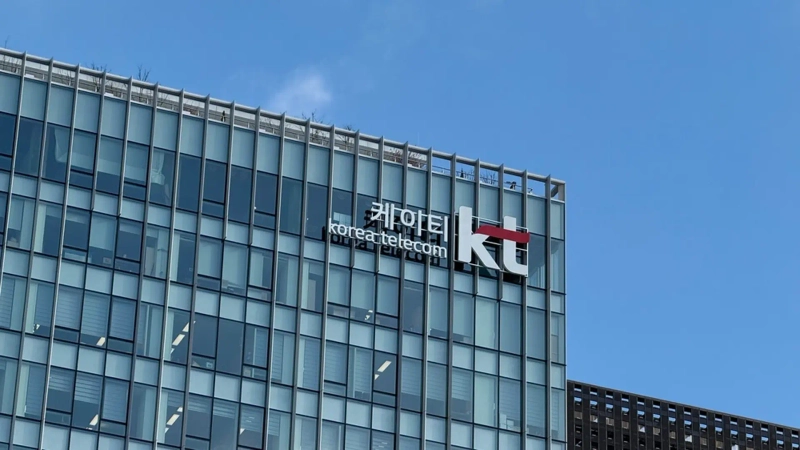
KT Corp. Chief Executive Officer Park Yun-young outlined a plan to reinforce the company’s telecom network and security capabilities while making AI transformation, or AX, its next growth engine. He said the goal is to remake KT into an “AX platform company.”
Park presented KT’s new management strategy at a press briefing in Seoul’s Gwangjin District on July 6. The plan centers on expanding the company’s role as a national telecommunications infrastructure provider for the AI era. KT aims to move beyond connecting people with people and people with data, extending its business to links between people and AI, and AI and AI.
Park said he spent more than 100 days after taking office inspecting major operations including security, networks, customer touchpoints, submarine cables and research and development. He said that process helped shape a strategy focused on restoring customer trust while laying the groundwork for future growth.
Strong fundamentals with $8.7 billion for security and networks
Park said KT’s new vision starts with “strong fundamentals.” He described security, information technology and network competitiveness as the foundation a telecom operator needs to build a sustainable AI business.
KT plans to invest about 12 trillion won, or $8.7 billion, over the next three years in information security, IT and networks. Of that, 4 trillion won, or $2.9 billion, will go to information security and IT innovation. The company has integrated security operations that had been divided between its network and IT units into a companywide system. It also separated the roles of chief information security officer and chief privacy officer to deepen specialization, and doubled its security workforce.
The new security framework will be built around a zero-trust principle that verifies every access attempt, whether internal or external. KT also plans to strengthen information security capabilities across its affiliates, including through a talent development program with Seoul National University.
KT will invest about 8 trillion won, or $5.8 billion, in networks over three years. The spending is aimed at improving service quality for customers while preparing for next-generation technologies including 6G, satellites and data center interconnection, or DCI. KT said it sees earlier commercial opportunities for 6G in business-to-business services and satellite connectivity than in consumer services.
KT Targets 1 Gigawatt of AI Data Center Capacity
KT said it will expand AI data centers, or AIDC, based strictly on confirmed demand. The company set a target of building a total of 1 gigawatt of AIDC capacity within five years. Total investment is about 5 trillion won, or $3.6 billion. In the Seoul metropolitan area, KT plans to add supply in locations where power and permitting conditions are already secured. Outside the capital region, it will begin construction only after confirming tenant demand.
KT said its long experience operating data centers is its biggest differentiator. Running high-density GPU servers reliably requires cooling technology, power efficiency and building design expertise. The company plans to combine its operating know-how, including liquid cooling, with its wired and wireless network, submarine cable and DCI capabilities to attract global AIDC customers.
KT also plans to sharply expand submarine cable capacity to handle rising international data traffic. The investment totals about 1 trillion won, or $720 million. The company aims to increase capacity from about 38 terabits per second to more than 128 terabits per second. For large new submarine cable projects, KT said it is actively reviewing partnerships with end users including global technology companies.
Token Factory Targets AI Usage-Based Billing
One of KT’s most prominent new businesses is Token Factory. The initiative is based on the view that demand will rise as AI services shift from flat-rate subscriptions to usage-based billing and companies seek better ways to manage AI costs. Tokens are the basic units used when AI models process text inputs and outputs.
Token Factory is a platform that connects multiple AI models, automatically routes queries to the model best suited to a customer’s request or task, and calculates usage. It is designed to address usage control and cost management by employee and department when corporate clients use models such as ChatGPT, Gemini and Claude together. KT said it can apply the telecom billing and settlement capabilities it has built over many years directly to this business.
Park said billing is Token Factory’s key advantage. “There is probably no one better at billing than telecom carriers,” he said. “We have the capability to bill customers across a wide range of rate plans and bundled products.”
KT also said it plans to go beyond simple brokerage and lower token generation costs by optimizing GPU and NPU resources. The company plans to deploy technology that matches the most suitable model to the context and purpose of each query and reduces token consumption as AI agents become more widespread.
The business’s success will depend on whether KT can prove it delivers meaningful cost savings for corporate clients rather than simply reselling AI models. To attract companies that can contract directly with global AI model providers, KT will need to show clear value as an integrated platform combining model routing, security, settlement and AIDC infrastructure.
From Digital Finance to Hyper-Personalized Plans
KT is also preparing a stablecoin-based digital finance platform built on the capabilities of its affiliates. The plan is to combine K Bank’s customer base and BC Card’s payment and settlement infrastructure with KT’s network and security technology, covering the full process from issuance and custody to remittances and real-world use. The company is conducting an internal proof of concept in line with developments in related legislation.
KT’s B2B AX business will focus on four key sectors: finance, public services, manufacturing and healthcare. For financial companies, KT plans to provide AI agents and AI contact centers. For the public sector, it will propose sovereign AI-based services tailored to demand for data sovereignty. In manufacturing and healthcare, the company said it will pursue opportunities centered on physical AI and government-backed pilot projects.
KT also plans a broad overhaul of its consumer service system. Moving away from provider-led pricing structures, the company will introduce hyper-personalized services that allow customers to design their own plans and benefits. It said it will digitize the entire process, from sign-up to consultation, using data analysis to deliver tailored experiences.
KT will also expand partnerships with global and domestic technology companies. Along with continuing its cooperation with Microsoft Corp., the company plans to work with global AI firms including Alphabet Inc.’s Google and Palantir Technologies Inc., as well as South Korean AI companies including Upstage, Rebellions and Saltlux. The strategy is to widen options for customers rather than tie KT to any single partner.
“The target of connectivity is expanding from people-centered to AI-centered in the AX era, but KT’s essence as the company responsible for South Korea’s connectivity does not change,” Park said. “We will further strengthen the fundamentals of telecom and build solid growth on that foundation so South Korea can leap forward as an AX powerhouse.”
Hong Min-seong, Hankyung.com reporter mshong@hankyung.com

Korea Economic Daily
hankyung@bloomingbit.ioThe Korea Economic Daily Global is a digital media where latest news on Korean companies, industries, and financial markets.