Summary
- Ark Invest said Bitcoin's capitulation phase neared its final stretch in the second quarter and that on-chain data showed some early signs of a bottom.
- Ark Invest said long-term holders (LTH) lifted their Bitcoin holdings to a record high, absorbing selling from short-term investors during the downturn.
- Ark Invest said net outflows from US spot Bitcoin ETFs and rising funding costs for Bitcoin DAT companies pose risks by weakening a key source of demand and reducing buying power.
Forecast Trend Report by Period



Ark Invest said Bitcoin's capitulation phase was nearing its end in the second quarter of 2026.
In its second-quarter 2026 report, The Bitcoin Quarterly, published on July 17, the US asset manager wrote that "seller exhaustion" was emerging even as Bitcoin digital asset treasury, or DAT, companies remained under stress.
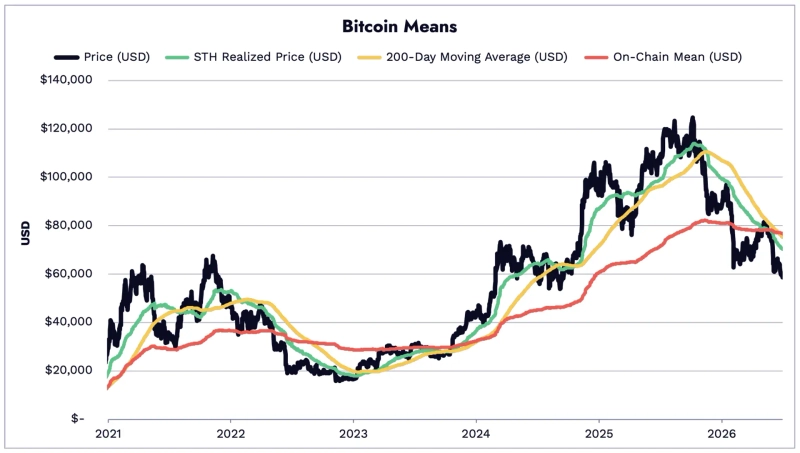
Bitcoin fell about 14% in the second quarter alone, the report said. Its quarter-end close of $58,544 was below all major price indicators, including the short-term holder realized price of $70,327, the 200-day moving average of $75,371 and the on-chain average price of $76,660. Ark Invest said that pattern has repeatedly appeared during past bear markets.
On-chain data showed some signs of a bottom, according to the report. In particular, the share of Bitcoin supply held at a loss rose to about 54%, surpassing the roughly 46% share held at a profit for the first time in this cycle.
Realized losses also briefly exceeded realized gains in the second quarter, pushing the profit-to-loss ratio down to about 0.82. Ark Invest interpreted that as a washout signal, indicating a final stage of investor capitulation rather than a fresh leg lower.
Accumulation by long-term holders continued. Holdings by long-term holders, defined as those that have held Bitcoin for at least 155 days, reached a record 14.85 million Bitcoin in the second quarter. That was up about 313,000 Bitcoin from the end of the first quarter. Ark Invest said long-term holders absorbed coins sold by short-term investors during the decline.
Institutional demand weakened. US spot Bitcoin exchange-traded funds recorded net outflows for seven straight weeks in the second quarter. Total quarterly net outflows reached about 71,000 Bitcoin. The report said ETF outflows were weakening a key source of demand that had supported Bitcoin prices.
Funding conditions for Bitcoin DAT companies also deteriorated. Strategy, the world's largest corporate Bitcoin reserve company, was a leading example. According to the report, Strategy's perpetual preferred stock Stride fell to around $74 in the second quarter before trading around $84 at quarter-end.
Ark Invest said preferred shares trading well below par signaled higher funding costs for Bitcoin DAT companies. That could weaken the capacity of leveraged DAT companies to keep buying Bitcoin.
