Russian Refinery Shutdowns Raise Diesel Crunch Fears as Prices Jump 28.7%
Summary
- Russian refinery strikes and a full diesel export ban have sent global diesel prices up 28.7% over the past month.
- China and the U.S. are expanding diesel exports to fill the gap left by Russia, while South Korea is missing the opportunity because of limits on petroleum-product exports.
- A European heat wave and the summer holiday season are pushing diesel demand toward its peak, raising the risk of a diesel crunch.
Forecast Trend Report by Period


Global diesel prices jump 28.7%
Russia bans exports after Ukrainian drone strikes
European heat wave and holiday travel lift demand
China and the U.S. expand exports to fill the gap
South Korea misses out because of export curbs
Global diesel prices are swinging again after Ukrainian drone strikes shut down refining facilities in Russia, the world’s second-largest exporter. Anxiety over the Middle East and seasonal peak demand have intensified competition for cargoes, especially in Europe. Some in the market are warning that a diesel crunch could follow the jet-fuel shortage that emerged in June.
Supply disruption fears materialize
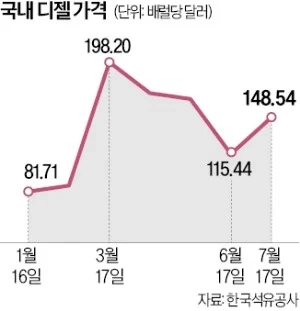
According to the Korea National Oil Corp., diesel prices in South Korea stood at $148.54 a barrel on July 17, up 28.7% from $115.44 a month earlier. Prices had surged to $292.8 a barrel in April on the fallout from the Middle East war, before falling back to around $110 in early July on hopes for a ceasefire agreement. By mid-July, however, they had started climbing again.
The industry says concerns over the global supply chain for petroleum products are driving prices higher. While tensions in the Strait of Hormuz have eased, helping crude shipments move more freely, refining capacity has become the key bottleneck. JPMorgan said in a recent report that global production of refined fuels has fallen about 10% from the level before the Middle East war began.
Russia’s export controls have dealt the biggest blow to diesel supply. The country had been exporting about 800,000 barrels a day, or 12% of global export volumes. Over the past two months, at least 19 refining facilities have been hit by Ukrainian drone attacks. Russia then imposed a full ban on diesel exports on July 9, citing the need to secure domestic supply.
Markets are increasingly bracing for a repeat of the jet-fuel disruption seen earlier this year. At the time, Russia halted jet-fuel exports through the end of the year, setting off a global scramble for cargoes. Australia and New Zealand sought to secure supplies from South Korea, creating a seller’s market in which suppliers could effectively name their price.
Demand surges, while South Korea is constrained by regulation
Demand is rising as supply tightens. July and August are typically the peak season for diesel consumption as road travel jumps during the Northern Hemisphere holiday period. An unusual heat wave across Europe, where dependence on Russian energy remains high, is adding to the risk of fuel shortages.
Global competitors are moving quickly to fill the gap left by Russia. China resumed exports of jet fuel, diesel and gasoline in May. The U.S. is also increasing shipments to Europe even as domestic middle-distillate inventories fall to their lowest levels in years.
South Korea’s refining industry, by contrast, has been unable to capitalize. As of May, the country’s diesel exports totaled 12.7 million barrels, down 27.9% from a year earlier. The government has limited petroleum-product exports to last year’s level to prevent excessive domestic supplies from being shipped overseas. One refinery official said European buyers are making inquiries for diesel, but export restrictions are forcing companies to turn them away.
Ahn Si-wook, Hankyung.com reporter siook95@hankyung.com

Korea Economic Daily
hankyung@bloomingbit.ioThe Korea Economic Daily Global is a digital media where latest news on Korean companies, industries, and financial markets.