Semiconductor Peak? Strategist Says a Second Major Uptrend Is Taking Shape
Summary
- Park Moon-hwan said recent pressure on semiconductor stocks was little more than a short-term sentiment factor, while AI infrastructure investment and memory demand growth are set to continue.
- He said the wider use of long-term supply agreements (LTAs) could help the semiconductor industry break from its old oversupply-and-bust cycle and move into a more stable growth phase.
- He also said demand and growth prospects for semiconductor test consumables such as those made by TSE will gain attention as HBM and high-performance memory expand.
Forecast Trend Report by Period


Focus on rising AI infrastructure spending over short-term headwinds as memory demand keeps growing
Wider use of long-term supply agreements could reshape the chip industry's boom-and-bust cycle
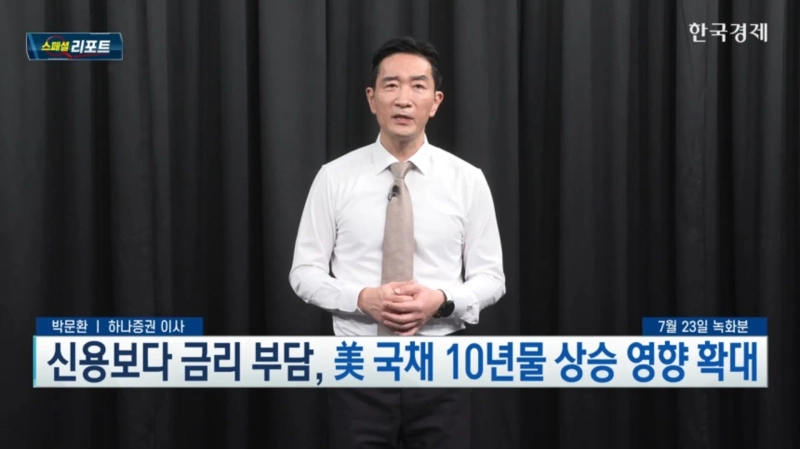
Recent volatility in semiconductor stocks has been driven mostly by short-term swings in market sentiment, according to Park Moon-hwan, a director at Hana Securities and a WowNet partner. Changes in AI investment patterns and the broader use of long-term agreements, or LTAs, could instead open a new phase for the chip market.
Park pointed to the recent release of Moonshot AI's open-weight model Kimi K3 in China and the controversy over AI model distillation. While some investors have raised concerns about weaker semiconductor demand, the shift toward the AI-agent era will require more computing power and memory, he said. In his view, the market is overreacting to sentiment shocks rather than technological change.
He also flagged a recent wave of large corporate bond sales by big technology companies. As funding for AI infrastructure shifts from retained earnings to external borrowing, interest rates are emerging as a key variable for the semiconductor cycle, Park said. The recent correction in chip stocks was driven in large part by concerns over higher rates and rising financing costs.
Still, he maintained a positive long-term view. Demand for data centers and memory semiconductors will continue to rise as AI and humanoid robots spread more widely, he said. Even the current scale of investment may not be enough to meet future demand, leaving the semiconductor industry with ample room for further growth.
Park also identified the expansion of long-term supply agreements across the chip industry as a major shift. While such contracts could weigh on earnings estimates in the short term, they can secure more stable supply and pricing over time, changing the industry's fundamentals, he said. That could help the sector move beyond the old cycle of sharp drops caused by oversupply and enter a more stable growth phase.
Among beneficiaries of the AI chip trend, Park highlighted TSE, a maker of semiconductor test consumables. Demand for key items such as probe cards and test sockets will rise alongside the expansion of HBM and high-performance memory, he said. As the AI era gathers pace, growth in the semiconductor testing segment could become more pronounced.
Park Moon-hwan's "Market Focus" airs at midnight on the second and fourth Fridays of each month on Korea Economic TV and the WowNet YouTube channel.
Park Kwon-min, Korea Economic TV reporter reice@hankyungtv.com

Korea Economic Daily
hankyung@bloomingbit.ioThe Korea Economic Daily Global is a digital media where latest news on Korean companies, industries, and financial markets.