BOK Governor Shin to Brief Parliament July 29 as Rate-Hike Burden Comes Under Scrutiny
Summary
- Bank of Korea Governor Shin Hyun-song will tell parliament on July 29 about the burden the recent benchmark rate increase has placed on households and self-employed workers, while outlining the direction of future monetary policy.
- The BOK said a 0.25-percentage-point increase in the benchmark rate would raise annual interest costs for self-employed borrowers by about 1.8 trillion won and increase the average burden per vulnerable borrower by 560,000 won.
- Shin said he would work closely with the government and financial authorities on debt restructuring for vulnerable borrowers, the use of fiscal policy and financial policy, the timing of additional rate increases, and measures to stabilize the won-dollar exchange rate and promote the internationalization of the won.
Forecast Trend Report by Period


First BOK policy briefing on July 29 with People Power Party lawmakers attending
Lawmakers to press on burdens facing households and self-employed after benchmark rate increase
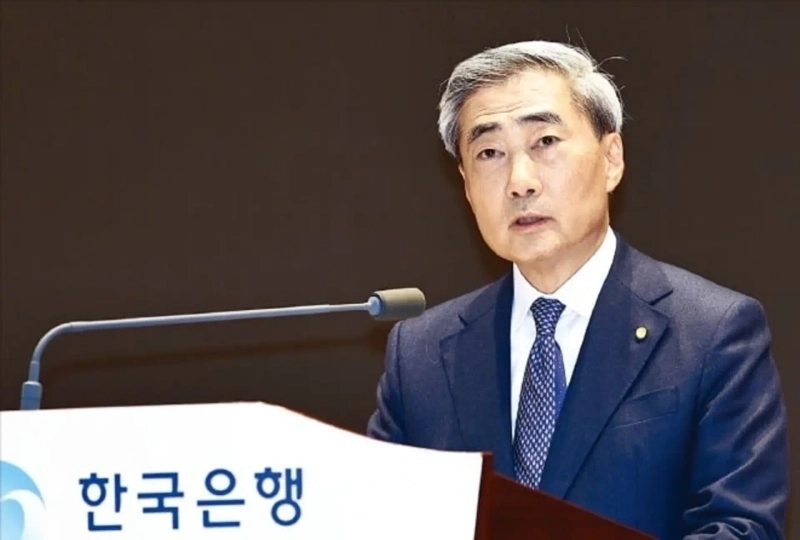
Bank of Korea Governor Shin Hyun-song will give a policy briefing to the National Assembly on July 29. With People Power Party lawmakers attending for the first time, questioning is set to focus on the burden higher interest rates are placing on households and self-employed workers, as well as the path of further monetary policy.
According to the financial industry and political circles on July 28, the National Assembly’s Finance and Economy Planning Committee will hold a plenary session on the morning of July 29 to receive briefings from the Bank of Korea, the Ministry of Planning and Budget and the Ministry of Finance and Economy. Shin will also attend to explain recent monetary policy, economic conditions and financial-market issues.
The session will be the first such briefing attended by People Power Party lawmakers. A previous briefing on July 6 was led by the Democratic Party after People Power Party lawmakers stayed away amid a dispute over standing committee assignments. The deadlock followed the Democratic Party’s rejection last month of the People Power Party’s demand to chair the Legislation and Judiciary Committee. The rival parties agreed to reconvene on July 29 to review pending issues at the central bank.
Lawmakers are set to zero in on the effects of the latest benchmark rate increase. The BOK’s Monetary Policy Board raised the benchmark rate by 25 basis points to 2.75% from 2.50% on July 16.
Higher rates are adding to the burden on self-employed workers and vulnerable borrowers. The BOK estimates that a 25-basis-point increase in lending rates would raise annual interest payments for self-employed borrowers by about 1.8 trillion won ($1.3 billion). The average burden per borrower would rise by 560,000 won ($405). For self-employed borrowers with multiple debts, annual interest payments would increase by 1.1 trillion won ($797 million), while the average burden per borrower would climb by 650,000 won ($471).
South Korea’s economy is forecast to grow by more than 3% this year on a semiconductor boom, but concerns persist that the gains are not spreading widely. Signs of polarization are also becoming clearer. The average delinquency rate on household loans at the country’s five biggest banks stood at 0.33% at the end of the second quarter, up 0.01 percentage point from the end of the first quarter. That was the highest level since the first quarter of 2016. The delinquency rate on loans to small and medium-size enterprises rose to 0.58% at the end of the second quarter from 0.49% at the end of last year. Manufacturing employment has also been declining.
At a July 16 news conference, Shin said vulnerable borrowers were “always on our mind” and that coordination with the government and financial authorities was “very important.” He added that measures such as debt restructuring are sometimes needed to ease hardship for vulnerable groups unable to repay debt, though they must be carried out at an appropriate level because of moral hazard concerns. Shin also said fiscal and financial policies that can deliver targeted effects are more suitable than monetary policy and stressed that the central bank would remain in close communication with the government and financial regulators.
Lawmakers are also expected to ask about the timing of any additional rate increase. At the July 16 briefing, Shin said he would closely watch second-quarter gross domestic product and gross domestic income, as well as July core inflation and consumer living-cost inflation.
Measures to stabilize the foreign-exchange market are also likely to draw attention. The won has recovered by nearly 100 won against the dollar, but the exchange rate remains above 1,450 won per dollar. Shin is expected to reiterate his plan to expand the international use of the won through the recently launched 24-hour foreign-exchange market and an offshore won settlement system due to be introduced early next year, with the aim of structurally reducing exchange-rate volatility.
Shim Sung-mi, Korea Economic Daily reporter smshim@hankyung.com

Korea Economic Daily
hankyung@bloomingbit.ioThe Korea Economic Daily Global is a digital media where latest news on Korean companies, industries, and financial markets.