Kim Yong-beom Says Korea Stock Swings Aren’t Solely Due to Leveraged ETFs
Summary
- Kim Yong-beom, senior presidential secretary for policy, said the rise in volatility in South Korea’s stock market cannot be blamed solely on single-stock leveraged ETFs.
- He said structural factors amplifying volatility include the Korean market’s high share of derivatives trading and an investor composition centered on retail traders.
- He said the recent increase in market volatility reflects a combination of factors, including market debate over the AI revolution, China’s CXMT listing, and reports that state-owned companies there are developing their own lithography equipment.
Forecast Trend Report by Period


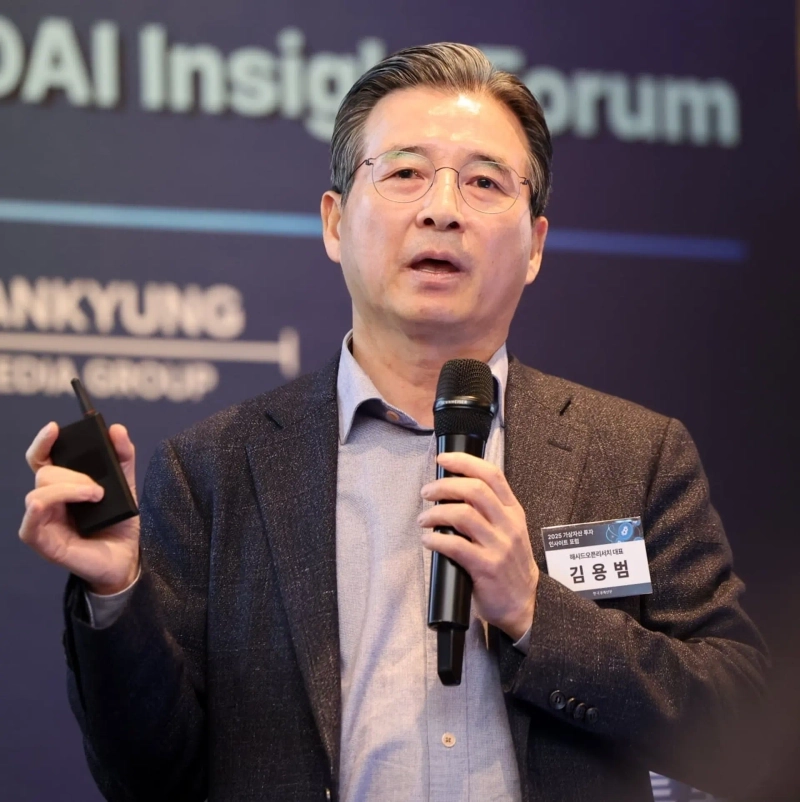
Kim Yong-beom, senior presidential secretary for policy, rejected criticism on July 28 that single-stock leveraged exchange-traded funds are the main driver of volatility in South Korea’s stock market.
“Not everything is because of leveraged ETFs,” Kim said at a briefing in Sao Paulo, where he is accompanying President Lee Jae-myung on a state visit to Brazil. “There are structural characteristics in our capital market and distribution market that amplify volatility.”
Kim said swings of about “10” in global stock markets can appear as “20” or “30” in South Korea because of the market’s own characteristics. The Financial Services Commission is making additional changes to the leveraged ETF framework, he added. The commission and the Financial Supervisory Service also plan to examine broader structural factors behind the market’s unusually sharp volatility.
Among those structural factors, Kim pointed to South Korea’s high share of derivatives trading and its investor composition. Retail investors account for one of the highest shares of trading in the world in the Korean stock market, setting it apart from advanced markets such as the US, where institutional investors play a larger role.
“We need to take a serious look at these issues,” he said.
Kim also argued that the direct trigger for the recent jump in volatility was the market’s divided view of the artificial intelligence revolution.
“The AI revolution is real. Nobody doubts that now,” he said. “But there is skepticism over whether the massive investment by Big Tech companies leading the AI revolution is sustainable. I think the market is debating that internally.”
He also cited the recent listing of China’s ChangXin Memory Technologies, or CXMT, and news that Chinese state-owned companies are developing their own lithography equipment. Those developments resemble the “DeepSeek shock,” Kim said.
While volatility has been more pronounced in South Korea, the past two to three months have not been unique to the country, he added. The term “DeepSeek shock” refers to the selloff in US technology stocks early last year after Chinese startup DeepSeek released a lower-cost AI model.
Han Jae-young in Sao Paulo, Korea Economic Daily reporter, jyhan@hankyung.com

Korea Economic Daily
hankyung@bloomingbit.ioThe Korea Economic Daily Global is a digital media where latest news on Korean companies, industries, and financial markets.