Exclusive: Bill Gates to Visit South Korea as Seoul, US Deepen SMR Alliance
Forecast Trend Report by Period


Next-generation nuclear partnership gathers pace
Gates to discuss cooperation with Prime Minister Han Seong-sook
SK, HD Hyundai and others to advance project talks
South Korea seeks bigger role in equipment supply and EPC
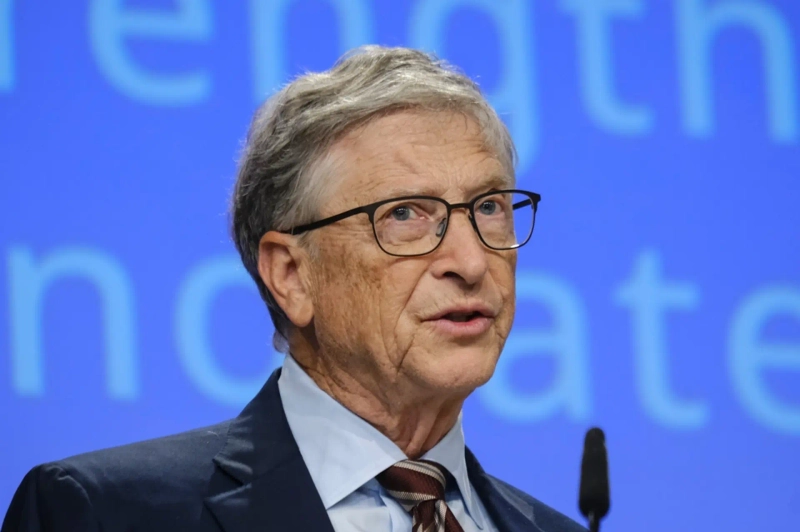
Bill Gates, founder of small modular reactor developer TerraPower and chair of the Gates Foundation, will visit South Korea next month to meet Prime Minister Han Seong-sook. Energy cooperation, including SMRs, will top the agenda. Gates is also set to meet companies including SK and HD Hyundai to flesh out cooperation on SMR projects. The government is separately seeking to move up its timeline for securing SMRs as a power source for large artificial intelligence data centers.
Back in South Korea a year later for SMR talks
Gates is due to arrive in South Korea on Aug. 14 for talks with Han, according to industry officials on July 29. The request for the meeting came first from Gates' side. An earlier effort to arrange talks with President Lee Jae-myung was changed to a meeting with the prime minister because of scheduling conflicts. SK Group, a major TerraPower shareholder, is coordinating the agenda and attendees. During the visit, Gates will also meet South Korean companies including SK and HD Hyundai to discuss SMR cooperation. A central topic will be expanding the role of South Korean companies in TerraPower projects.
Gates founded TerraPower in 2008 and remains its board chair. The company is developing Natrium, a Generation IV reactor based on a sodium-cooled fast reactor that uses liquid sodium as coolant. When Gates met President Lee and Industry Minister Kim Jung-kwan in August 2025, he said SMRs could offer an effective answer to rising electricity demand from the AI and semiconductor industries. He also met SK Group Chairman Chey Tae-won, HD Hyundai Vice Chairman Chung Ki-sun and Samsung Electronics Chairman Jay Y. Lee to review ways to expand the Natrium reactor supply chain and advance commercialization.
Over the past year, that cooperation has shifted into the execution stage. In March, TerraPower received a construction permit from the US Nuclear Regulatory Commission for Kemmerer Unit 1 in Wyoming. It began main reactor construction in April. The approval marked the first construction permit for a next-generation commercial-scale nuclear plant in the US.
South Korean participation is also taking clearer shape. Korea Hydro & Nuclear Power bought $40 million of TerraPower shares held by SK Innovation in January. SK Group invested $250 million in 2022 to become a major TerraPower shareholder.
Progress has also been made in equipment and construction. HD Hyundai Heavy Industries was selected in May as the preferred bidder to supply key equipment for the Reactor Enclosure System, a core component of the Natrium reactor. Doosan Enerbility was chosen to manufacture and supply major equipment including the core barrel and guard vessel.
In step with the government's nuclear expansion push
Gates' visit comes as the government accelerates efforts to foster the SMR industry. Global electricity consumption by data centers is projected to rise to 945 terawatt-hours in 2030 from 415 terawatt-hours in 2024 as AI adoption spreads. In South Korea, a mega project is under way to build 18.4 gigawatts of AI data center capacity by 2035.
With AI data centers and semiconductor plants expanding, securing power has become a bigger priority, prompting the government to define a larger role for nuclear energy and SMRs. On July 23, it announced its policy direction for developing next-generation SMRs and said it would launch a government-wide support system linking development, demonstration, licensing and commercialization. The plan calls for public-private SMR projects and a domestic manufacturing supply chain and nuclear fuel ecosystem to shorten the commercialization timeline. A special law to support SMR technology development and commercialization will take effect in September.
Bae Kyung-hoon, deputy prime minister and minister of science and ICT, said at a July 20 briefing marking his first year in office that electricity is critical to operating AI data centers. The government is seriously weighing how to accelerate its existing SMR procurement timetable, he added.
Lee Young-ae / Kim Hyung-kyu, Hankyung.com reporters 0ae@hankyung.com

Korea Economic Daily
hankyung@bloomingbit.ioThe Korea Economic Daily Global is a digital media where latest news on Korean companies, industries, and financial markets.