Summary
- Senate Democratic Leader Chuck Schumer introduced a bill to create an independent anti-corruption bureau that would investigate and punish federal corruption, including President Trump’s cryptocurrency business.
- Congress said Trump reported $1.4 billion of more than $2 billion in 2025 investment gains as tied to cryptocurrency, and alleged that the Trump family holds more than $1 billion in cryptocurrency funds linked to foreign governments.
- Amid conflict-of-interest concerns surrounding Trump’s cryptocurrency business, the CLARITY Act has emerged as a factor in advancing a US digital-asset market structure bill, though uncertainty remains because the measure would require Republican support and could still face a veto.
Forecast Trend Report by Period


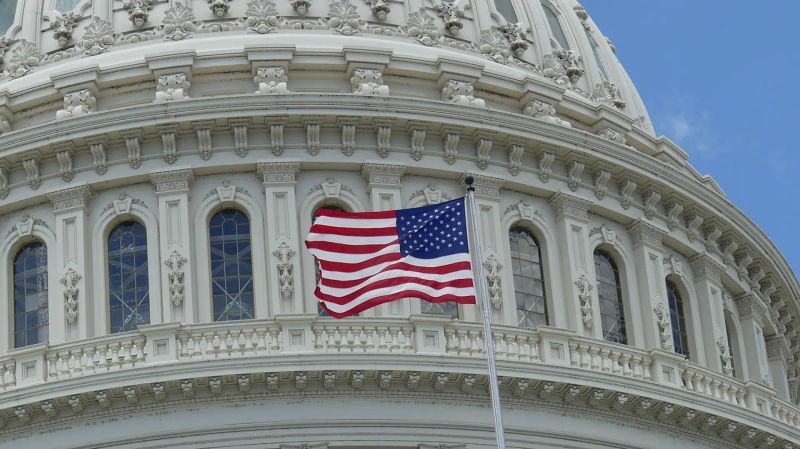
Senate Democratic Leader Chuck Schumer has introduced legislation to create an independent anti-corruption bureau that would investigate and punish corruption at the federal level, including President Donald Trump’s cryptocurrency business.
Cointelegraph reported on July 30 that Schumer introduced the Anti-Corruption Bureau Creation Act. If enacted, the new agency would have the authority to investigate, enforce against and prevent corruption within the executive branch.
The bill states that Congress found Trump reported more than $2 billion in investment gains in 2025, with $1.4 billion tied to cryptocurrency. It also alleges that the Trump family holds more than $1 billion in cryptocurrency funds linked to foreign governments.
At a Public Citizen forum, Schumer said the agency would have real enforcement power. It would be made up of seven bipartisan commissioners confirmed by the Senate, and would establish legal tools for private citizens and state governments to recover funds lost to corruption. He also said the measure would merge today’s fragmented oversight system into a single anti-corruption agency capable of responding to corruption anywhere.
The proposed bureau would consolidate the functions of the Federal Election Commission, the Office of Government Ethics and the Office of Special Counsel under one organization. Senators Andy Kim, Alex Padilla and Jeff Merkley joined as co-sponsors.
The bill was introduced as conflict-of-interest concerns surrounding Trump’s cryptocurrency business have emerged as a factor in deliberations over the CLARITY Act, a US digital-asset market structure bill. Still, the measure would require Republican support to pass. Even if it clears both chambers, Congress would need a two-thirds majority to override a Trump veto.
The Senate has also yet to set a vote on the CLARITY Act ahead of lawmakers’ monthlong district work period. Coinbase Chief Executive Officer Brian Armstrong said on July 29 that the bill was “at the 1-yard line,” and Senator Cynthia Lummis has also called for a prompt vote.
