Iran Hard-Liners Seen as Risk Even if US Reaches Hormuz Deal
Forecast Trend Report by Period


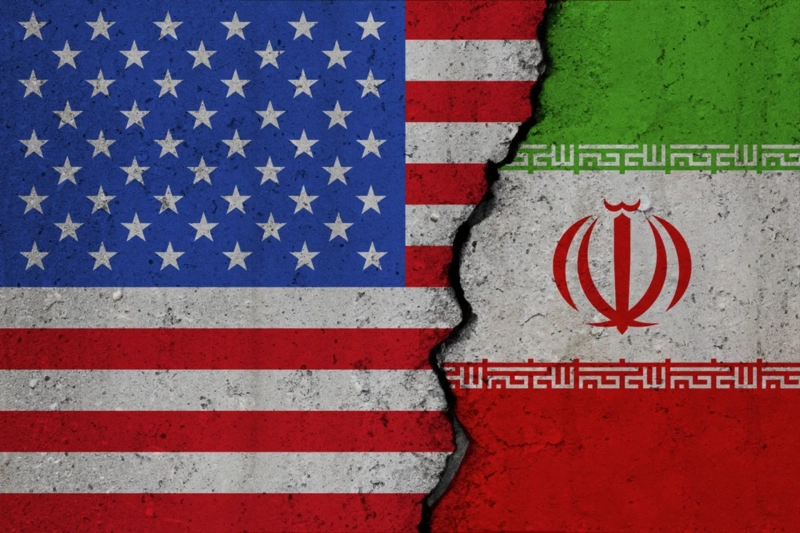
Arab mediators are worried that even if the US and Iran strike a deal to reopen the Strait of Hormuz, Iranian hard-liners may refuse to abide by it, the Wall Street Journal reported on August 6.
Citing mediators, the newspaper said Iran's negotiating team accepted a proposal over the weekend to divide shipping lanes through the strait, with inbound traffic routed near Iran and outbound traffic directed toward Oman. The talks became more complicated after the Islamic Revolutionary Guard Corps demanded clearer terms on Iran's role and a greater share of the benefits.
Mediators said Iran's negotiators have become more candid about the limits of their ability to enforce any agreement. They are also under intense pressure to secure immediate economic gains from a deal.
The negotiators also told mediators that the Revolutionary Guard has gained domestic support after fending off US attacks and could resume attacks on ships if an agreement's terms are not favorable enough.
US conservative media have pointed to the power struggle inside Iran as a reason the negotiations have stalled. In that view, diplomats leading the talks are clashing with the hard-line Revolutionary Guard, which holds real power.
The Journal's report likewise painted a bleak picture, saying that even if Iranian diplomats reach an agreement with Washington, military hard-liners may not consider themselves bound by it and could act on their own.
The Wall Street Journal said the standoff between Iran's diplomatic camp and hard-liners has prevented agreements between Washington and Tehran from holding in a binding way, casting a shadow over the current diplomatic effort.
It added that Iran is continually balancing retaliation for the damage it has suffered, deterrence against further US attacks and the need to relieve economic distress through negotiations. Even so, the hard-liners appear to have seized the initiative.
As evidence, the report cited an incident in June, when Iran's military attacked a ship transiting the Strait of Hormuz shortly after the US and Iran signed a memorandum of understanding to end hostilities. Iran's military said at the time that the vessel had not followed a route designated by Tehran.
For both Iran's negotiating camp and its hard-liners, the immediate priority is securing full control over passage through the Strait of Hormuz.
Separately, the Associated Press reported on August 7 that President Donald Trump may have to do something out of character — compromise — if he wants to reach a deal with Iran to reopen the strait.
The US has launched repeated airstrikes around the waterway in an effort to force Iran to surrender control, but Tehran still retains the ability to attack ships passing through it.
Elliott Cohen, a former counselor at the State Department under President George W. Bush, told AP that Trump divides the world into winners and losers, and that compromise would make him look like a loser. That image would be difficult for him to accept, Cohen said.
Trump's own remarks suggest he is not yet prepared to make concessions to Iran. David Schenker of the Washington Institute for Near East Policy said mounting economic pressure could push Trump to compromise over the strait and that he appears to have revealed some of his thinking on resolving the crisis.
Ko Jung-sam, Hankyung.com reporter, jsk@hankyung.com

Korea Economic Daily
hankyung@bloomingbit.ioThe Korea Economic Daily Global is a digital media where latest news on Korean companies, industries, and financial markets.