AI Memory Boom Spreads Beyond HBM, Extending Tailwinds for Samsung and SK Hynix
Summary
- Investment in AI infrastructure is driving a surge in demand for HBM, DRAM, and NAND flash, prolonging the boom in memory semiconductors.
- Samsung Electronics and SK Hynix are set to sustain strong earnings as they benefit simultaneously from higher prices for HBM and conventional DRAM and NAND.
- A global investment bank said the memory supercycle could continue through 2030, supported by tight memory supply and robust AI demand.
Forecast Trend Report by Period


Researchers Forecast Prolonged Memory Boom
Demand Surges Beyond HBM to DRAM and NAND
Samsung, SK Hynix Poised to Benefit Across Product Lines
Goldman Sachs Says Memory Supercycle Could Last Through 2030
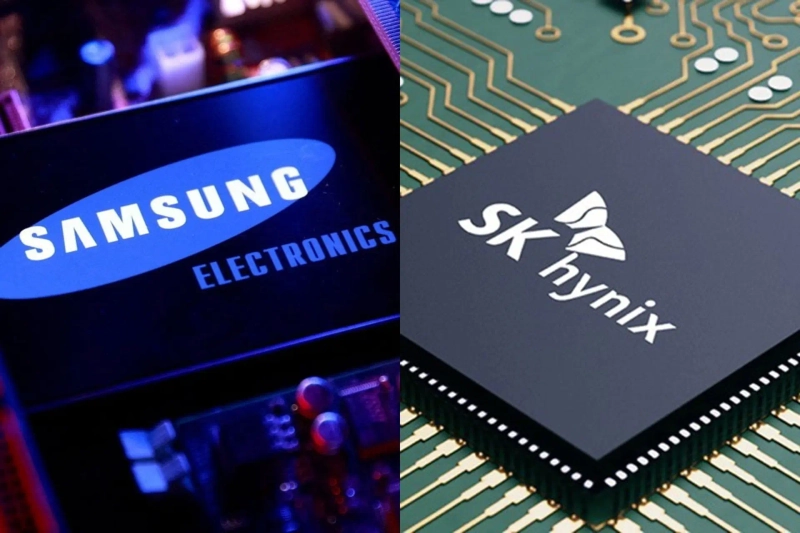
Heavy investment in artificial intelligence infrastructure is lifting demand beyond high-bandwidth memory, or HBM, to conventional DRAM and NAND flash, driving an unprecedented boom in the global memory market. Market research firms project that memory will lead this year’s explosive growth in the semiconductor industry. Demand for high-value memory used in AI is surging, while shortages and price increases are spreading to mainstream products, strengthening expectations that Samsung Electronics Co. and SK Hynix Inc. will deliver strong earnings for an extended period.
Memory to Account for 60% of Chip Market as DRAM and NAND Surge Together
A compilation of forecasts from research firms including Sigmaintel, Counterpoint Research and Omdia as of Aug. 10 points to steep growth in the global semiconductor market this year, led by memory. Sigmaintel projects worldwide semiconductor revenue of about $1.587 trillion this year, up 107% from a year earlier. Memory revenue alone is forecast at about $960 billion, up 290%, accounting for roughly 60% of total chip sales.
DRAM and NAND flash are both driving the expansion. Sigmaintel expects DRAM revenue to rise more than 300% this year from a year earlier, while NAND flash revenue climbs nearly 250%. The HBM market alone is projected to exceed $100 billion.
Other research firms are projecting a similar trajectory. Omdia raised its forecast for this year’s semiconductor revenue growth to 94.1% from a year earlier, saying AI demand is outpacing global semiconductor supply capacity. Omdia also expects memory chips to account for more than half of total semiconductor revenue.
Counterpoint Research projects the global memory market will quadruple this year from a year earlier to 1,500 trillion won ($1.08 trillion), then expand to 2,100 trillion won ($1.51 trillion) next year. While the firms differ in market scope and methodology, they point to the same conclusion: investment in AI infrastructure is overwhelmingly driving memory-market growth.
Demand is also shifting rapidly toward servers. Counterpoint projects server products will account for 56% of total memory revenue this year, up from 37% last year. That suggests AI data-center investment is reshaping the market so servers generate more than half of all memory sales.
HBM Buildout Tightens Commodity DRAM Supply as AI Demand Reaches NAND
Supply constraints are the key pillar of the memory boom. As Samsung, SK Hynix and Micron Technology Inc. aggressively expand HBM capacity, wafer supply for DDR products has fallen by a double-digit percentage. At the same time, demand for DDR used in AI servers is rising, leaving supply unusually tight across the DDR lineup, according to Sigmaintel.
HBM is more complex to manufacture than standard DRAM, and large-scale production is effectively limited to Samsung, SK Hynix and Micron. As AI accelerators from Nvidia Corp., Advanced Micro Devices Inc., Intel Corp. and Google require growing volumes of HBM, supply expansion has failed to keep pace with demand.
That push to expand HBM output is, in turn, worsening shortages in conventional DRAM and driving prices higher. Sigmaintel forecasts third-quarter DDR average selling prices at four to five times their level in the third quarter of last year.
An unusual price inversion has appeared in some products. Counterpoint said that surging demand for server chips, a production shift toward high-value products and supply constraints have pushed the per-gigabit price of some mainstream DRAM above HBM. That means some conventional chips now carry a higher unit price than HBM, even though HBM is more complex and costs more to produce.
AI-driven demand is also spreading to NAND flash. Demand for enterprise solid-state drives, or eSSDs, used to store data in large AI servers is rising so quickly that demand for eSSDs for AI servers could surpass NAND demand from consumer electronics.
Supply bottlenecks are not expected to ease quickly. Omdia said shortages are emerging not only in HBM, but also in advanced packaging and leading-edge process technology. TSMC’s advanced packaging lines are running at high utilization, while long lead times for related equipment are making it difficult to add capacity quickly.
Omdia projects bottlenecks across HBM, advanced packaging and leading-edge manufacturing will persist through at least 2027. Counterpoint also expects the memory upcycle to continue through the first half of 2027. It left open the possibility of price corrections after the second half of 2027, when new facilities begin ramping up in earnest.
Samsung, SK Hynix Face Multiple Tailwinds as Cycle Lengthens
The market backdrop remains favorable for Samsung and SK Hynix, which produce HBM, conventional DRAM and NAND flash. They are positioned to benefit both from HBM’s high profitability and from higher prices for commodity DRAM and NAND driven by supply shortages.
Samsung held the top spot in the global DRAM market in the second quarter with a 39% revenue share. Rising prices for conventional DRAM and a larger HBM share helped lift results. SK Hynix’s DRAM revenue rose 214% from a year earlier in the same period.
The main variable is competition from Chinese memory makers. Counterpoint said CXMT’s second-quarter DRAM revenue rose 716% from a year earlier. Taiwan’s Nanya Technology Corp. reported a 690% increase over the same period. CXMT, in particular, is expanding rapidly in conventional DRAM while Samsung, SK Hynix and Micron concentrate capacity on HBM and other higher-value products. Even so, the dominant view is that increased Chinese output will not be enough to resolve the global memory shortage in the near term.
Goldman Sachs said this memory cycle could prove stronger and longer-lasting than previous ones. The bank cited AI computing demand growing faster than supply, along with structural changes in the industry such as an increase in long-term supply agreements. It expects the memory shortage to continue through 2030.
Timothy Moe, Goldman Sachs’s Asia-Pacific strategist, said the market is concerned about the memory cycle, hyperscaler capital spending, capital-market fundraising and intensifying competition. Those factors are not significant enough to undermine the long-term boom scenario, he added.
Hong Min-seong, Hankyung.com reporter mshong@hankyung.com

Korea Economic Daily
hankyung@bloomingbit.ioThe Korea Economic Daily Global is a digital media where latest news on Korean companies, industries, and financial markets.