Nvidia Developing Nemotron 4 With at Least 1 Trillion Parameters to Challenge Top Open-Source AI Models
Summary
- Nvidia is developing Nemotron 4 with at least 1 trillion parameters to compete with the world’s leading open-source models.
- Nvidia said it formed a coalition to develop and share AI safety and cybersecurity tools and published a letter supporting open-weight models.
- Nvidia said it released Nemotron 3.5 Lightning and NeMo-Switchyard, an open-source model-routing library.
Forecast Trend Report by Period


"Nemotron 4" to have at least 1 trillion parameters
A rare open-source push by a U.S. company draws attention
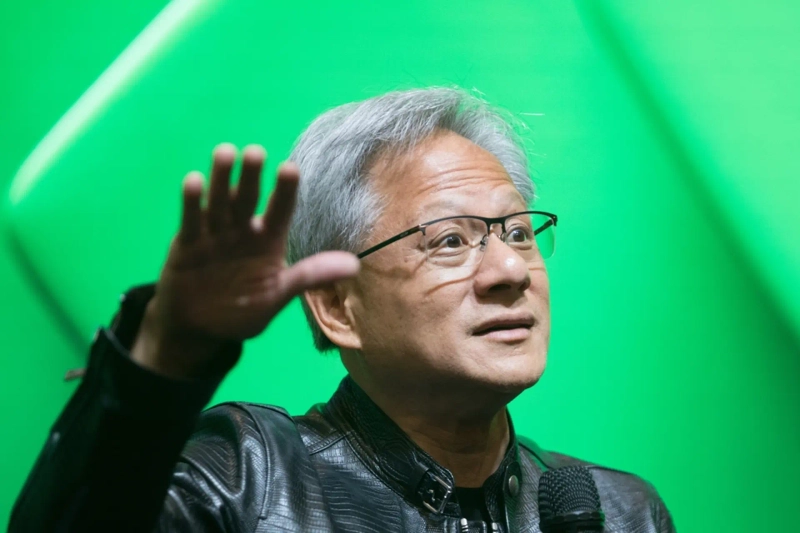
Nvidia is developing a new family of AI models called Nemotron 4 to compete with the world’s leading open-source models.
The Information reported on Aug. 11, citing Reuters, that the largest Nemotron 4 model under development will have at least 1 trillion parameters.
Nvidia has not set a release date for Nemotron 4 and has yet to complete final training. Employees told the outlet the model could be ready as early as late fall.
Open-source models have drawn more attention this year after China’s Kimi K3 neared the performance of leading AI models from Anthropic and OpenAI. Most U.S. AI labs, however, have not released open-source models.
Interest has also increased after recent hacking incidents involving autonomous AI agents were disclosed, because open-source models do not face restrictions on cybersecurity use.
Last month, Nvidia joined Microsoft and other technology companies to form a coalition to develop and share AI safety and cybersecurity tools. The group also published a letter supporting open-weight models to help keep innovation from moving overseas.
Separately, Nvidia on Aug. 11 unveiled Nemotron 3.5 Lightning, a new product for code review, tool use, security alert monitoring, billing-related questions and other tasks. It also released NeMo-Switchyard, an open-source model-routing library designed to automatically direct AI workloads to the most suitable model.
Open-source models disclose the full development process, including software source code, the data used for training, data preprocessing methods, training scripts and model architecture. Open-weight models, by contrast, do not disclose the full training process or training data. Instead, they release only the weights, or parameters, of an already trained model, allowing anyone to run it or fine-tune it.
Kim Jung-a, guest reporter at Hankyung.com, kja@hankyung.com

Korea Economic Daily
hankyung@bloomingbit.ioThe Korea Economic Daily Global is a digital media where latest news on Korean companies, industries, and financial markets.