PiCK
Wall Street Reverses on AI Spending as Kospi Triggers Buy-Side Sidecar
Summary
- The Kospi rose 3.68%, while foreign investors made net purchases of 3.4 trillion won ($2.45 billion) in electrical and electronics shares including semiconductors, helping drive gains in AI infrastructure-related stocks.
- Expectations for beneficiaries of AI infrastructure investment are expanding as companies continue AI investment and raise capital spending outlooks despite higher prices for AI hardware components such as memory.
- Expectations for a rebound in South Korean equities are growing as Wall Street increasingly says chipflation concerns were misplaced and as systematic funds regain capacity to buy stocks, reinforcing the market's role as a high-beta play on AI semiconductors and infrastructure.
Forecast Trend Report by Period


Closes up 3.7% at 6,579
Foreigners buy a net 3.4 trillion won ($2.45 billion), led by chip stocks
Wall Street is rapidly backing away from skepticism that "chipflation" — a sharp rise in semiconductor prices — would curb demand for artificial intelligence investment. Companies are bringing forward AI spending despite higher memory-chip prices, while cloud providers beyond Big Tech are raising capital expenditure further. An improving flow backdrop that recently drove a selloff in technology shares is also reviving expectations for South Korean equities, which are heavily exposed to AI infrastructure spending.
The Kospi closed 3.68% higher at 6,579.04 on Aug. 12, reclaiming its 20-day moving average for the first time in more than a month. Foreign investors led the advance with net purchases of more than 3.4 trillion won ($2.45 billion), focused on electrical and electronics shares including semiconductors. The Kosdaq also recovered from an early loss to finish 0.12% higher at 858.91.
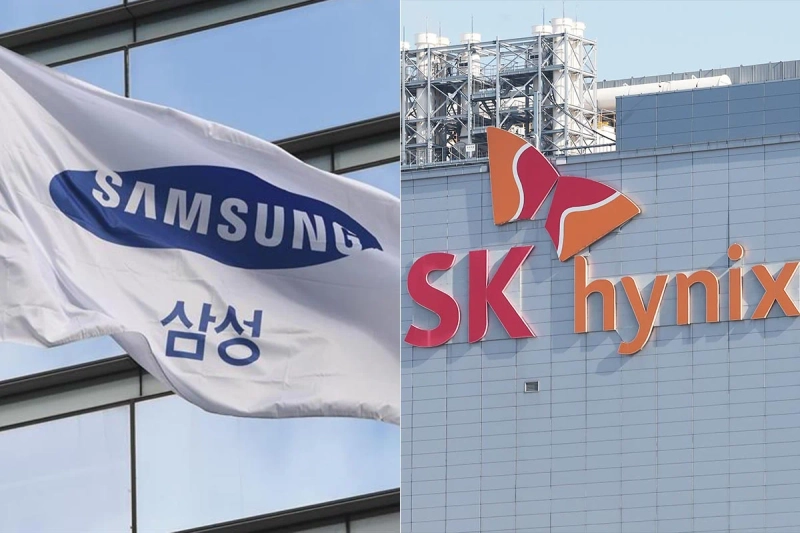
Samsung Electronics and SK Hynix, which drove the market's gains, surged 6.7% and 5.5%, respectively. Buying was also strong in AI infrastructure shares tied to semiconductor substrates, materials, parts and equipment, and power devices. Investor sentiment was buoyed after CoreWeave and Super Micro Computer reported overnight results that topped market expectations on revenue, margins and backlog, and lifted their capital spending outlook for this year.
CoreWeave's conference call helped calm recent fears that AI semiconductor demand had peaked. Asked whether it would expand long-term contracts across the supply chain, including memory, management said it was aggressively managing suppliers to secure the capacity customers need on time. It also said the value created by computing is rising faster than costs, and that margins on recently signed contracts were 5 to 10 percentage points higher than in the previous quarter.
News that AI-focused hedge fund Situational Awareness had sharply increased its stake in Japanese server-parts maker Taiyo Yuden also supported sentiment. Taiyo Yuden makes high-performance multilayer ceramic capacitors, or MLCCs, used in AI data centers. The stock jumped 7.5% in Japan on Aug. 12.
Wall Street has also begun reversing warnings that rising prices for AI hardware components, led by memory, would suppress demand. Morgan Stanley analyst Erik Woodring upgraded the U.S. information technology hardware sector to neutral from cautious on Aug. 10. In late June, he had warned that chipflation would weaken corporate IT spending and that investors should be careful with AI infrastructure names such as servers and storage. This time, he acknowledged that call was wrong.
The market backdrop is also turning more supportive for stronger fundamentals to feed through to share prices. Scott Rubner, Citadel Securities' head of equity derivatives, wrote in a report a day earlier that deleveraging had largely run its course. Lower volatility is also restoring the buying power of systematic funds.
South Korea's market is especially sensitive to that shift because it is a high-beta play on AI semiconductors and infrastructure investment. With chips accounting for a large share of the index, foreign flows and the benchmark itself can swing sharply with changes in global AI sentiment. That is why expectations for a rebound in South Korean equities are rising as confidence in AI investment improves.
Bin Nan-sae, Korea Economic Daily reporter binthere@hankyung.com

Korea Economic Daily
hankyung@bloomingbit.ioThe Korea Economic Daily Global is a digital media where latest news on Korean companies, industries, and financial markets.