PiCK
Kospi Drops as Much as 6.8% as Rising Yields Hit AI Trade; Samsung, SK Hynix Fall More Than 8%
Summary
- The Kospi fell as much as 6.8% intraday as rising global bond yields fueled concern over big tech’s AI investment burden.
- Samsung Electronics and SK Hynix each plunged more than 8%, with selling pressure intensifying after a sharp rally driven by expectations of stronger chip demand from expanding AI investment.
- Investors are no longer willing to pay the same premium for AI growth because of high interest rates and geopolitical risks, while sentiment toward chip stocks and broader risk appetite also deteriorated.
Forecast Trend Report by Period


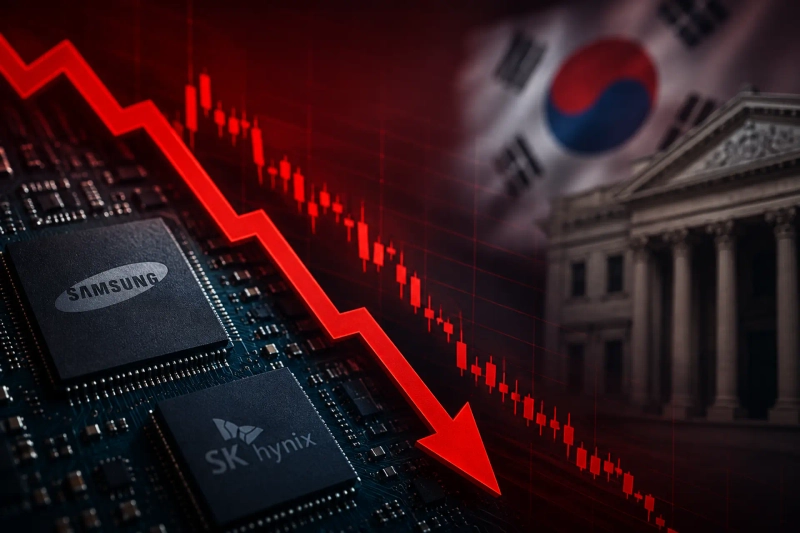
South Korea’s Kospi tumbled as concern mounted that rising global bond yields could make it harder for big technology companies to sustain heavy artificial intelligence spending.
The Kospi fell as much as 6.8% in intraday trading on Aug. 19 before paring some of the decline. Samsung Electronics Co. and SK Hynix Inc., two of the index’s biggest components, each slid more than 8%, dragging the benchmark lower.
Bloomberg said South Korean chip stocks sank as rising global bond yields heightened concern over the cost of AI investment for big tech. US Treasury yields have stayed elevated amid worries about inflation and expanding government debt, stoking fears that financing costs could rise for the technology giants leading the AI infrastructure buildout.
If rates remain high, borrowing costs for hyperscalers will increase. That would also add pressure to the massive capital expenditure they are directing toward AI infrastructure such as data centers and semiconductors. Recent earnings showed big tech’s AI spending remains solid, but markets are again questioning whether persistently high borrowing costs could curb further expansion over the longer term.
Samsung Electronics and SK Hynix were especially exposed to selling because both had surged on expectations that expanding AI investment would boost semiconductor demand. Selling pressure grew after investor enthusiasm drove sharp gains in the shares. The two companies’ market capitalizations had each recently exceeded $1 trillion.
In-yoon Chung, global chief executive officer at Fibonacci Asset Management Global, said the long-term outlook for AI growth remains intact. Still, investors are no longer willing to pay the same premium for AI growth because of high interest rates and geopolitical risks, Chung said. He added that profit-taking after the recent strong rally deepened the losses.
Deteriorating sentiment toward chip stocks was not confined to South Korea and spread across Asian markets. The Bloomberg Asia Semiconductor Index fell 3.2%, while Japan’s Kioxia Holdings dropped as much as 11% intraday and Taiwan Semiconductor Manufacturing Co. slipped about 2%. Semiconductor and AI-related shares in the US also weakened a day earlier.
Andrew Jackson, head of Japan equity strategy at Ortus Advisors, said AI stocks had hit another obstacle just as they were beginning to regain momentum. Doubts are growing over the massive debt carried by hyperscalers as long-term borrowing costs remain elevated, he said.
Geopolitical uncertainty over a potential war between the US and Iran also weighed on investor sentiment. Concern that rising Middle East energy prices could add to inflation pressure and prolong the run-up in global bond yields appears to have reinforced risk-off sentiment centered on South Korean semiconductor shares.
