PiCK
Won Strengthens Into 1,300s Against Dollar for First Time in 10 Months as More Downside Seen
Forecast Trend Report by Period


Expectations for Further Fed Rate Hikes Ease
Markets Price In 67.2% Chance of a Pause Next Month
Bigger US Buybacks of Long-Term Treasuries Seen as Positive Signal
Exporters’ Dollar Sales for Settlements and Shareholder Returns Add Pressure
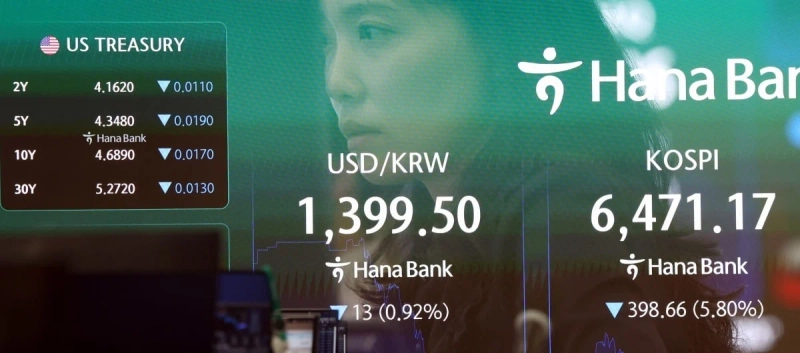
The South Korean won has strengthened into the 1,300-per-dollar range for the first time in more than 10 months, sharpening focus on whether the currency can extend its gains. Analysts say the won-dollar exchange rate had come under upward pressure as US-Iran negotiations dragged on, but fading expectations for additional US rate hikes and supply-demand factors including exporters’ dollar sales are now driving broader dollar weakness.
As of 8:30 a.m. in Seoul on Aug. 20, the won was trading at 1,389.0 per dollar. In daytime trading on Aug. 19, the won-dollar rate closed at 1,397.7, down 14.1 won from the previous session. It was the first close below 1,400 since Sept. 29, 2025, when it finished at 1,398.7, the first time in about 10 and a half months.
During the Aug. 19 session, the won strengthened to as much as 1,389.1 per dollar. In night trading, it rose further to 1,385.4 as lower US Treasury yields added to dollar weakness.
The recent weakening in the dollar reflects growing expectations that the Federal Reserve will leave interest rates unchanged next month. On Aug. 19, the dollar index, which measures the greenback against six major currencies, fell into the 99 range, slipping below 100 for the first time in three months.
CME FedWatch data showed fed funds futures were pricing in a 67.2% probability that the benchmark rate would be left unchanged in September. That was up from 63.9% at the previous close, indicating the odds of a pause had increased.
The move was also influenced by the US Treasury’s decision to more than double its buybacks of long-dated Treasuries maturing in 10 to 30 years between September and November, increasing the amount from a previous maximum of $2 billion to at least $4 billion. Markets took that as a signal that the Treasury was no longer willing to stand by as long-term yields surged. Long-term Treasury yields fell, and narrower rate gaps between the US and other major economies helped lift currencies including the euro and pound.
Dollar sales by exporters also contributed to the won’s gains.
With the won strengthening, exporters have had a more favorable backdrop for selling dollars to secure won funding. Market participants estimate that large exporter conversion flows led the drop in the won-dollar rate on Aug. 19. Companies typically sell dollars near month-end, but recently they have been offloading holdings on a more frequent basis.
Analysts say conditions may remain favorable for further won strength for the time being. Foreign investors’ net selling of domestic stocks has eased, and demand tied to shareholder returns at semiconductor companies is also building.
Park Sang-hyun, an analyst at iM Securities, said buying and selling flows remain mixed, but the easing pace of foreign net selling in South Korean equities is helping create a dollar supply-demand backdrop different from that seen in the first half. Continued won strength could also foster conditions supportive of foreign fund inflows.
Large shareholder return programs at Samsung Electronics and SK Hynix are also creating potential demand for the companies to convert dollar holdings into won. With cash generation improving amid a recovery in the semiconductor sector, any conversion of those holdings to raise won for sizable shareholder payouts could increase dollar supply in the foreign-exchange market.
Park said the two companies are expected to announce large shareholder return programs and will likely convert some of their foreign-currency holdings into won.
On Aug. 19, SK Hynix announced a plan to buy back and retire treasury shares worth 40 trillion won. Corporate conversion demand may also increase as companies prepare for interim corporate tax prepayments at the end of August and funding for the government’s three mega projects.
Noh Jeong-dong, Hankyung.com reporter, dong2@hankyung.com

Korea Economic Daily
hankyung@bloomingbit.ioThe Korea Economic Daily Global is a digital media where latest news on Korean companies, industries, and financial markets.