‘Shorting Could Hurt’: Treasury Yields Keep Climbing Despite Bessent’s Threat, Bitcoin Surges
Forecast Trend Report by Period


Expanded Treasury Buybacks Lose Their Punch Within a Day
Bessent Says They Could Grow Further, Floats ‘Treasury Twist’
‘The US Government Has Asymmetric Information’
Even After a Warning Not to Fight Washington,
Long-Term Yields Resume Their Rise; Bitcoin Surges
What’s Happening in Bonds and Broader Asset Markets Now
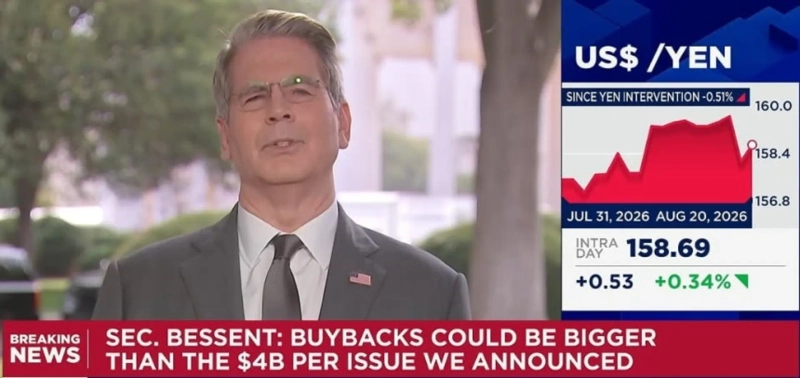
“People should ask themselves whether the US government knows something the market doesn’t.”
US Treasury Secretary Scott Bessent, charged with containing higher yields, effectively declared war on the bond market on Aug. 20. His remarks came a day after the Treasury announced it would more than double the size of its long-dated bond buybacks to at least $4 billion per operation from $2 billion.
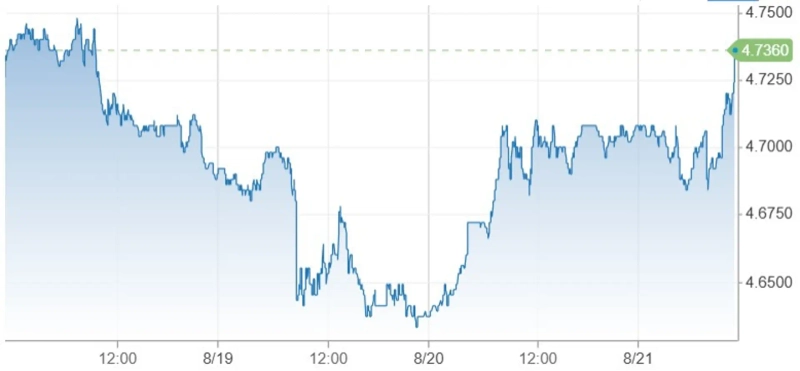
Long-term yields, which had fallen 7 to 10 basis points on the surprise buyback announcement a day earlier, quickly snapped back. The relatively illiquid 30-year Treasury yield fell to 5.18% after the announcement from about 5.28% beforehand, then recovered to around 5.25%. The benchmark 10-year yield moved from 4.69% to 4.63%, then climbed to 4.71%.
Bessent then stepped in again. He told CNBC that buybacks could exceed $4 billion per operation and that “we have a big toolkit.” He also explicitly used the term “Treasury Twist” to describe issuing more short-term debt and buying longer-dated bonds to press down long-term yields. Given Washington’s willingness to go that far, he said, investors should consider whether he may know something the market does not.
In effect, Bessent made clear that if long-term yields keep rising, the Treasury is prepared to respond more aggressively and on a larger scale. It was also a warning to bond investors that continuing to bet one-way on higher yields could prove painful.
Yields Rise Further, Gold and Bitcoin Jump
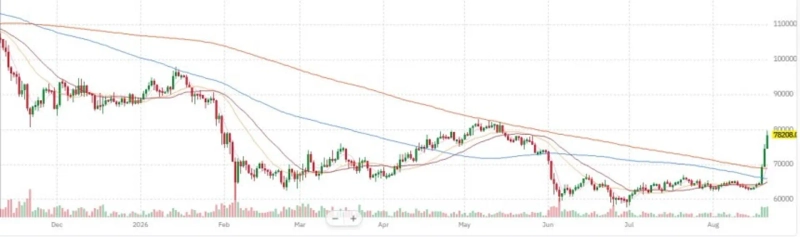
So far, the market still isn’t moving the way Bessent wants. Yields briefly softened after his remarks, then quickly resumed climbing. The 10-year yield rose as high as 4.736% on Aug. 22. Stocks came under pressure again, apart from some large semiconductor and AI hardware names with strong earnings visibility. The dollar weakened, while gold, Bitcoin, energy and commodities extended gains. Bitcoin in particular surged nearly 20% in two days, topping $78,000 for the first time since May.
Under the traditional market playbook, rising yields are negative for non-interest-bearing assets such as gold and Bitcoin. When yields rise but the dollar falls and gold and Bitcoin rally, it suggests this latest move in rates has a different character.
Ray Dalio, who has long warned of a debt crisis, said the expanded buybacks signaled US fiscal stress was nearing a critical threshold. On the current path, he said, a crisis could arrive within three years. He added that investors could reduce bond exposure, allocate 10% to 15% of a portfolio to gold and add a small amount of Bitcoin.
The move recalls last year’s debasement trade on Wall Street. That trade takes hold when investors worry that heavily indebted governments will erode fiscal discipline and debase their currencies, pushing money into stores of value outside fiat money. In that environment, more investors can shun long-dated Treasuries even at higher yields, leaving rates under upward pressure.
The Fading Safety Premium in US Treasuries
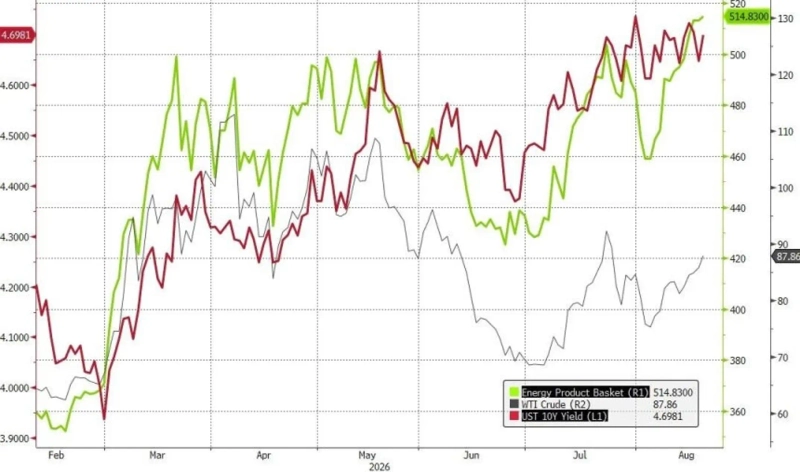
There are several reasons behind the recent rise in yields. The first is inflation concern. There is still no sign of a breakthrough in negotiations between Iran and the US, and crude prices remain elevated. That has shaken the disinflation path markets had expected, leaving uncertainty over whether the Fed could raise rates as soon as September.
Bessent said core inflation excluding food and energy is easing in both goods and services, and that there is no sign higher energy prices are feeding into core inflation through second-round effects. Even so, bond-market skepticism is unlikely to fade quickly before the Iran situation is resolved and the downtrend in inflation is confirmed again.
The more fundamental problem is the fiscal deficit.
Governments around the world are issuing more debt to cover interest costs, defense spending, aging-related welfare costs, tax cuts and industrial-policy support for AI. No one is talking about austerity, which is politically unpopular.
That burden feeds directly into higher yields. Bond investors demand greater compensation to absorb the heavy supply. If they expect supply to keep growing, they start betting now on lower bond prices, which means higher yields.
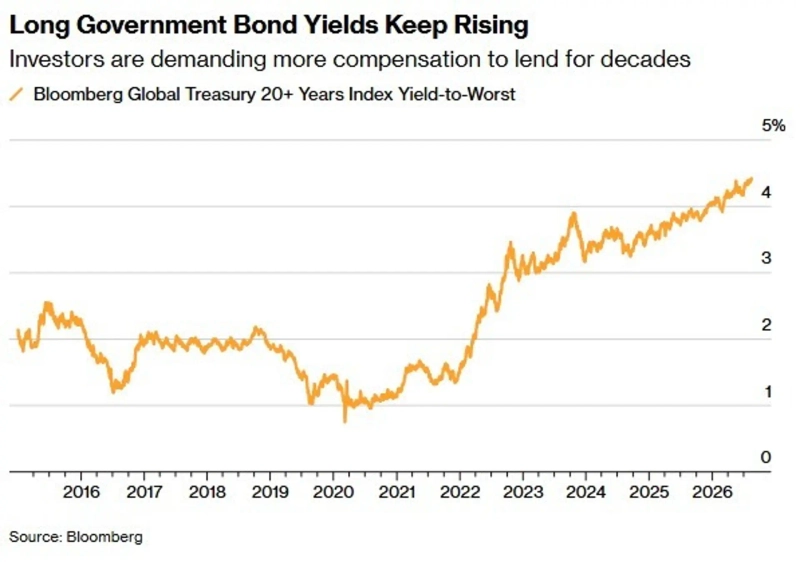
MIT professor Ricardo Caballero describes the shift as a move from a safety premium to an absorption premium. In the past, investors accepted lower yields simply because Treasuries were viewed as the world’s safest asset. Now they are demanding yields above high-grade corporate debt as compensation for absorbing the flood of issuance. He estimates that 30% of the 2.5 percentage-point rise in Treasury yields since 2015, or 0.75 percentage point, is due to that factor.
The burden is heavier at the long end. Investors want more compensation for taking on decades of uncertainty over inflation and future Treasury supply. That is why long-term yields are rising faster than short-term rates. It is not only a US story. Long-dated and ultra-long sovereign yields in Japan, Germany and the UK have also surged to their highest levels in years or even decades.
A third structural factor is record corporate fundraising for AI investment, which is also pushing Treasury yields higher.
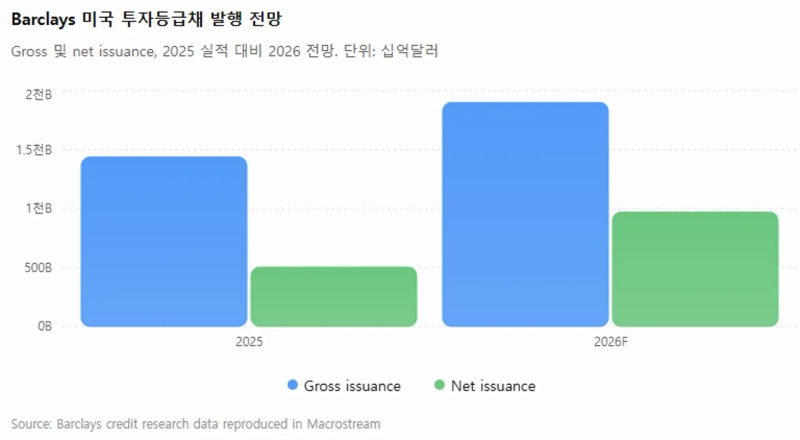
Barclays projects US investment-grade corporate bond issuance will rise 32% this year from a year earlier to a record $1.9 trillion. While governments flood the market with sovereign debt to fund record budget deficits, Big Tech companies and hyperscalers are lining up to borrow for AI data centers, semiconductors and power infrastructure.
Some investors have begun favoring AI companies over the US government. Jeffrey Sherman, deputy chief investment officer at DoubleLine Capital, said the rise in long-term Treasury yields reflects competition in the bond market between private-sector AI investment and government financing needs. Investors now face a choice between lending to the US government for 30 years or to Microsoft for five years, he said, and many will choose Microsoft. Companies, after all, at least generate revenue when they spend money.
Treasury, Not the Fed, Moves to Twist
Bessent, effectively America’s top salesman for Treasury debt, cannot afford to ignore that trend. The US move in late July to coordinate with the Japanese government on yen-support intervention in the foreign-exchange market came from the same logic. The aim was to avoid a situation in which Japan would have to sell large amounts of Treasuries to raise dollars for yen buying, pushing US yields even higher.
In the Treasury’s third-quarter borrowing plan released earlier in August, the market also picked up language suggesting the government may reduce long-term debt issuance in the future. The alternative would be issuing more short-term bills. If the supply of long-dated debt in the market shrinks, prices can rise and yields can fall.
Bessent had sharply criticized former Treasury Secretary Janet Yellen for using that strategy during the Biden administration, calling heavy reliance on short-term debt a gamble that raises rollover risk. But after the Trump administration took office, he carried the strategy forward.
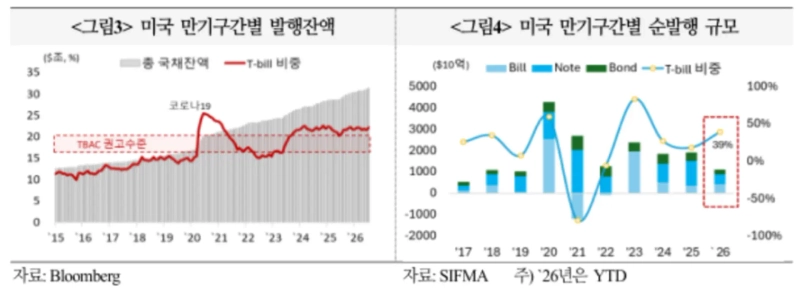
The Treasury may even increase the share of short-term issuance more aggressively. That is the idea behind the “Treasury Twist” Bessent mentioned directly in the interview.
Treasury Twist is a Treasury-led version of the Fed’s past Operation Twist. Operation Twist involved the Fed reducing short-term Treasuries and buying long-term ones to bring down long-term yields. Treasury Twist means the Treasury issues more short-term debt and uses the proceeds to buy longer-dated bonds, effectively swapping maturities.
The objective is the same: reduce the supply of long-term debt in the market, lower long-term yields and ease pressure on corporate investment and housing. With Fed Chair Kevin Warsh reluctant to expand the central bank’s balance sheet, the Treasury appears ready to take the lead in this twist strategy.
Even with larger buybacks, their impact is limited because they amount to just 2.4% of outstanding Treasury debt. By contrast, the Fed’s Operation Twist in 2011 and 2012 reached as much as 19%. For the Treasury to buy long-term debt on anything close to that scale on its own, it would have to reshape the maturity structure of issuance more heavily toward short-term borrowing.
Krishna Guha, vice chairman of Evercore ISI, said countries under strain often rely on short-term issuance. The US likes to think it is different, he said, but that difference will not necessarily last forever.
Bessent’s Answer: Grow Away the Debt
Bessent is well aware that reliance on short-term debt cannot rise indefinitely. That is why he first turned to expanded buybacks and verbal intervention.
But repeated use of this Bessent put is losing effectiveness. It could even backfire by pushing yields higher. A fourth issue is cracks in investor confidence.
Thomas Simons, Jefferies’ chief US economist, criticized the way the Treasury announced the expanded buybacks. The department said nothing about the change when it released its quarterly borrowing plan just two weeks earlier, then abruptly revised the buyback plan. In his view, that undercut the Treasury’s long-standing debt-management principle of being “regular and predictable.”
Guha described the move as a tactical guerrilla operation aimed at suddenly hitting Treasury shorts, inflicting losses and discouraging one-way positioning. But guerrilla tactics cannot continue forever. They may slow an overly rapid rise in yields, yet are unlikely to have a lasting effect on where yields settle months later if fundamentals point elsewhere.
Jay Barry, a rates strategist at JPMorgan, said the market will not trust expanded buybacks without meaningful fiscal consolidation. If the Treasury keeps avoiding a straightforward approach and strays further from predictable principles, term premium and long-term yields could rise further.
Bessent is not arguing that buybacks alone can solve the debt problem. Since the start of the Trump administration, he has repeatedly said the fundamental answer is to “grow our way out” of the debt burden. The logic is that if the US economy and tax revenue grow faster than debt, the debt load relative to gross domestic product can fall even if the nominal stock of debt keeps rising.
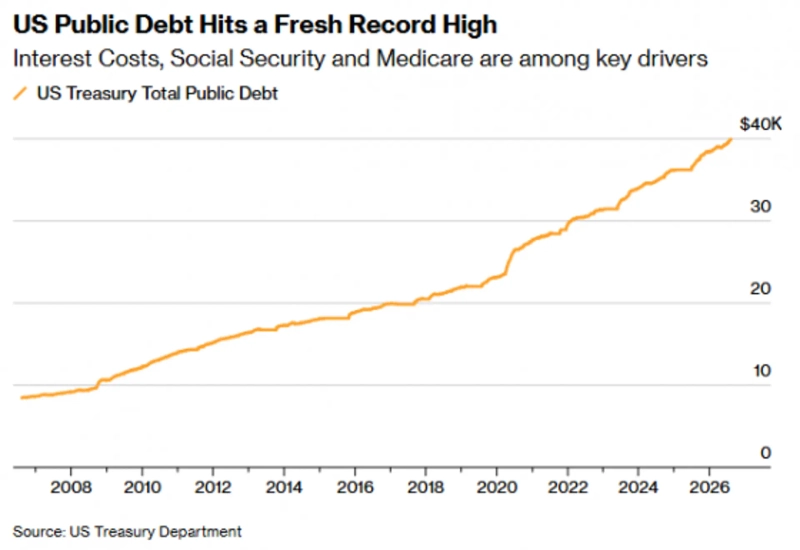
In the CNBC interview, Bessent said the $40 trillion national debt is not a particularly meaningful number by itself and that growth can relieve the debt burden. He said the recent widening in the fiscal deficit stemmed from expanded tax incentives meant to encourage corporate investment. That may reduce tax revenue in the short run, but in the long run it is a cost of investing in future growth by lifting productivity and broadening the tax base. In Bessent’s view, a nation’s wealth ultimately depends on how much it can raise the after-tax return on capital.
‘If It Gets Worse, the Fed Will Eventually Step In’
Bessent also acknowledged that massive corporate bond issuance for AI and data-center investment has created, for now, short-term competition for capital between the government and companies. But he argued that if the financing leads to higher productivity, it will expand supply in the economy and ultimately return as disinflationary growth. That view is similar to Warsh’s.
Bessent said he would soon discuss fiscal-consolidation measures with the White House Office of Management and Budget and that fiscal tightening would proceed alongside these efforts. He also said that, if needed, the Treasury would work with the Fed on bond-market problems.
Some in the market expect that if the current rise in yields cannot be contained, the Fed will eventually intervene directly. Charlie McElligott, Nomura Securities’ cross-asset strategist, said the expanded buybacks were like putting a bandage on a gunshot wound. If inflation and higher rates inflict serious enough damage on the real economy, he said, the Fed could ultimately turn to yield-curve control or direct quantitative easing.
Bessent Says It’s All Noise for Now
Bessent’s argument about growing out of the debt is internally coherent. The real question is how long the market is willing to wait. Productivity gains and stronger tax revenue take time. Rising Treasury and corporate bond supply, swelling interest costs and inflation pressure are all happening right now.
Investors are watching closely to determine whether the current rise in yields is temporary or whether 5% rates are becoming the new normal. Experts say it is still too early to call this a structural rupture in the Treasury market. Sherman said the first things to watch are whether the US 10-year yield breaks above 5% and stays there, and whether the entire yield curve shifts higher.
The speed of the move matters as much as the absolute level. If yields rise in an orderly way while US growth remains intact, asset prices may have time to adjust to the higher-rate environment. If they spike in a short period, however, other assets including stocks and corporate bonds could be forced into broad deleveraging.
It is also important to identify what is driving yields higher. If elevated rates become entrenched, the stock market may increasingly reward companies that can prove actual productivity and cash flow rather than those trading only on growth hopes. If distrust in government debt and fiat currency is what is pushing rates up, the debasement trade into stores of value outside the dollar, including gold, Bitcoin and commodities, could strengthen further.
Bessent said markets were reacting hastily because it is August and people do not have much to do. He dismissed the rebound in yields just one day after the Treasury expanded buybacks and stepped up verbal intervention as mere noise. He also said he would hold a press conference on Aug. 24 and that he had “asymmetric information” unknown to the market that could be used to pressure Iran economically.
September, when trading volumes typically revive, is just ahead. The next test is whether the market keeps betting on a move toward 5%, or whether Bessent’s “big toolkit” can slow that advance.
Bin Nan-sae, Hankyung reporter binthere@hankyung.com

Korea Economic Daily
hankyung@bloomingbit.ioThe Korea Economic Daily Global is a digital media where latest news on Korean companies, industries, and financial markets.