BOK Rate-Hike Cycle Seen Continuing Even if August Ends in Hold
Summary
- Economists said an August hold is the more likely outcome, but the Bank of Korea’s rate-hike cycle could still continue.
- Most economists said the benchmark rate could reach 3.00% by year-end, with the terminal rate rising to 3.25%-3.50% after an additional increase in the first quarter of next year.
- At this Monetary Policy Board meeting, markets are focused not only on the rate decision but also on the number of dissenting votes for a hike, which could be read as an important signal of further increases.
Forecast Trend Report by Period


Market expectations are split ahead of the Bank of Korea’s August rate decision, with some economists looking for a second straight increase and others expecting policymakers to pause after July’s move.
There is far less disagreement on the broader direction. Even economists forecasting a hold in August do not think the BOK’s tightening cycle is over. The dominant view is that additional increases could follow in the fourth quarter or the first quarter of next year, even if the central bank pauses this month.
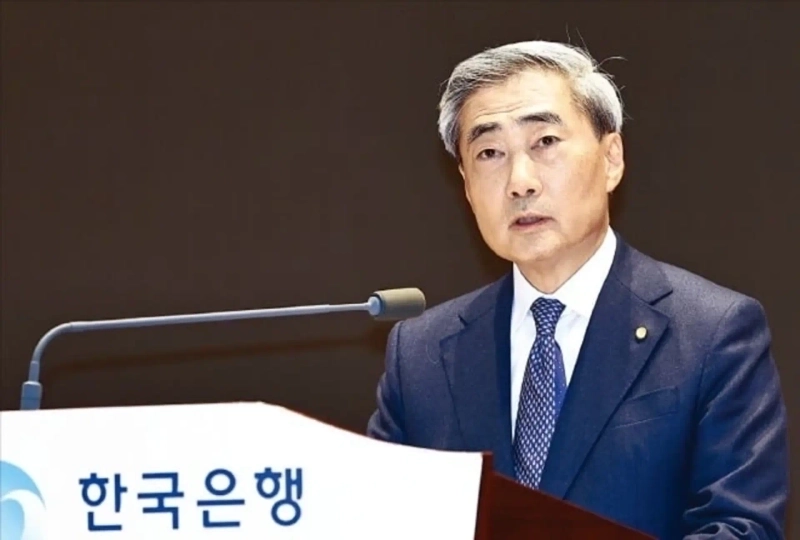
A Yonhap News survey of six economists published on Aug. 23 found that four expect the BOK’s Monetary Policy Board to keep the benchmark rate unchanged in August, while two predict a 25-basis-point increase.
The argument for a hold centers on timing. Economists in that camp say the BOK may use August to gauge the impact of its July rate increase rather than move again immediately. Slower consumer inflation in July and recent stability in the won-dollar exchange rate also reduce the pressure for back-to-back hikes.
Jang Min, a senior research fellow at the Korea Institute of Finance, said policymakers need more time to assess inflation trends after the July increase and uncertainty over US monetary policy. Consumer inflation remains above the BOK’s 2.0% target, but the recent downward trend leaves room for a pause.
Cho Young-moo, head of the NH Financial Research Institute, also leaned toward a hold, citing the burden of consecutive hikes, exchange-rate stability and the need to evaluate the effect of the previous increase. Ahn Ye-ha, a senior researcher at Kiwoom Securities, said falling exchange rates and weak stock prices mean conditions are not urgent enough to justify another immediate increase.
A pause would not necessarily signal easing. Economists expecting a hold said one or more board members could still dissent in favor of a hike. If at least two members support an increase, the Monetary Policy Board could leave rates unchanged while still sending a strong message that further tightening remains possible.
The case for a hike focuses on inflation and growth. Park Jeong-woo, an economist at Nomura Securities, said second-quarter growth and July consumer inflation both support another increase. With the medium- to long-term growth outlook improving and inflation still above target, the BOK could press ahead with consecutive hikes.
Ahn Jae-kyun, a research fellow at Korea Investment & Securities, said growth in the 3% range this year and inflation in the mid- to upper-2% range justify another move. He said a preemptive increase may be needed to stabilize inflation expectations if demand-side price pressures strengthen.
Economists were divided on the August decision, but their views on the broader path for rates were similar. Most agreed the tightening cycle would probably continue even if the BOK pauses this month.
Joo Won, head of research at Hyundai Research Institute, expects an August hold along with two dissenting votes in favor of a hike. He said the policy rate could stay at the current level through year-end or rise once more by 25 basis points.
Jang said there could be one or two additional increases this year whether the BOK holds or hikes in August. If the central bank pauses this month, it could raise rates again in October and November, with the cycle extending into the first quarter of next year.
Ahn Ye-ha expects another increase in October. He sees the policy rate at 3.00% by year-end and the terminal rate at about 3.25% after an additional hike in the first quarter of next year.
Economists forecasting an August hike also put the terminal rate in a 3.25% to 3.50% range. Ahn Jae-kyun said the BOK could raise rates in both July and August, assess the impact in the fourth quarter and then deliver one more increase in the first quarter of next year before holding rates at about 3.25%.
Park said another increase could follow in October after an August hike. He expects one more move in February next year, which would bring the tightening cycle to an end at 3.50%. While the exchange rate has stabilized, continued strains in the property market mean the timing of future hikes could depend on housing-market conditions.
The Federal Reserve’s rate path is seen as less hawkish than the BOK’s. Most of the economists surveyed expect the Fed to hold rates at its September Federal Open Market Committee meeting.
They said the Fed will likely weigh softer employment conditions and political constraints as it judges whether inflation has peaked. Uncertainty over oil prices remains, but many said price pressures are not strong enough to trigger an immediate rate increase in September.
The key issue at this Monetary Policy Board meeting will be not only the rate decision itself but also the number of dissenting votes favoring a hike. Even if the BOK holds steady, markets could interpret multiple hawkish dissents as a signal of more tightening ahead. If policymakers opt for back-to-back hikes instead, attention would likely shift in the fourth quarter to the effect of those moves and developments in the housing market.
Lee Song-ryeol, Hankyung.com reporter yisr0203@hankyung.com

Korea Economic Daily
hankyung@bloomingbit.ioThe Korea Economic Daily Global is a digital media where latest news on Korean companies, industries, and financial markets.