SK Hynix Leverage Bet Sours Into 69% Loss as WSJ Highlights Korea’s ‘Roller-Coaster Kospi’
Forecast Trend Report by Period


WSJ examines the fallout from a sharp selloff in South Korean stocks
Korean market described as the world’s “craziest stock market”
Report details retail losses, including from single-stock leveraged products
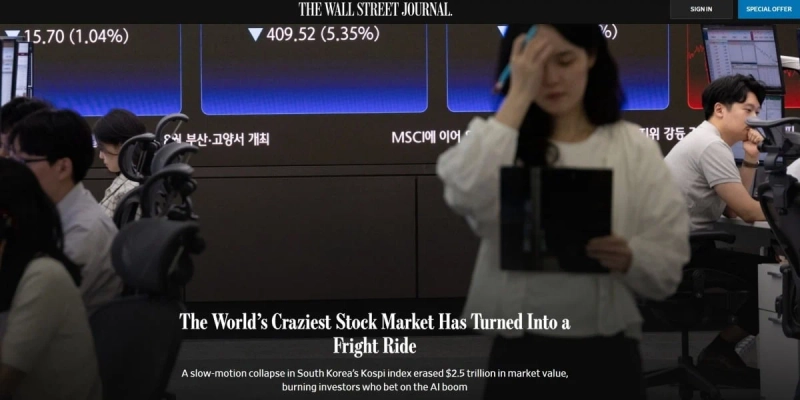
The Wall Street Journal reported that South Korea’s stock market, which had become one of the world’s hottest on the back of the artificial intelligence semiconductor boom, turned into a “fright ride” within just a few months. The newspaper focused on the market’s steep rise and fall and the boom in leveraged trading, quoting investors who said the market felt more like gambling than investing.
“I thought it would go up forever”
In an article published on Aug. 24 under the headline “The World’s Craziest Stock Market Has Turned Into a Fright Ride,” the Journal examined the wild swings in South Korean equities and the surge in retail trading.
South Korea was one of the world’s hottest stock markets for most of last year, buoyed by the AI boom, the Journal reported. Then it crashed. The Kospi more than tripled from last year, but tumbled about 40% over six weeks in June and July. Roughly $2.5 trillion in market value was wiped out during that stretch. The index has since rebounded about 20% from its low.
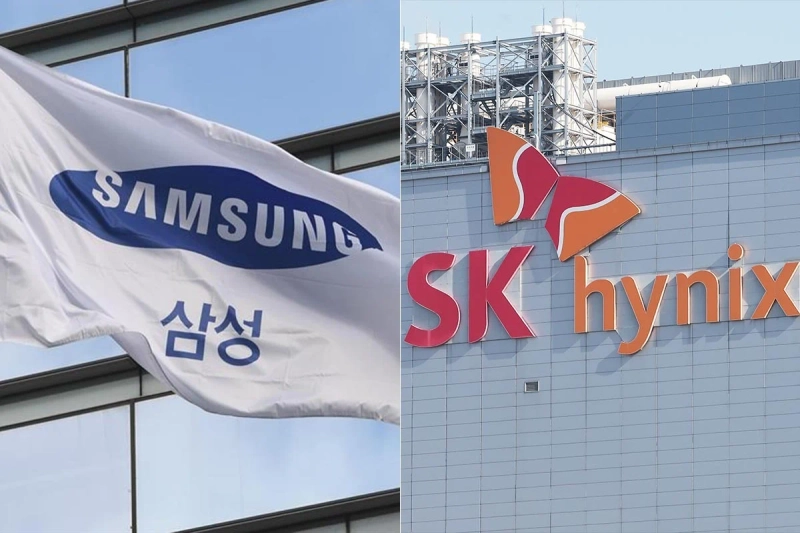
Jung Eui-jung, head of the Korea Stockholders Alliance, told the Journal the market’s volatility was too extreme. It was not healthy investing, he said, but a gambling den and a casino. The Journal said retail investors accounted for 60% to 70% of daily Kospi trading and helped drive the rally by piling into Samsung Electronics and SK Hynix.
The Journal also highlighted South Korean retail investors who suffered heavy losses in the selloff. Yoon Jae-yi, a 30-year-old English teacher, lost $19,000 trading stocks. She has since cut living expenses by taking fewer taxis and traveling less. Skipping meals, she said, at least helps with dieting.
Yoon Kyung-min, a 44-year-old audio engineer, quit his job and put half of his severance pay into semiconductor stocks, only to lose $7,200 in a week. He said it would be a serious problem if his wife found out and that he had not told her the exact size of the loss. At the time, he believed the market would keep rising forever.
Some investors had stayed on the sidelines because they thought stock prices had risen too far, only to jump in late. Jake Chung, a 30-year-old accountant in Seoul, had been a conservative investor who usually put small sums into US stock indexes. Even as people around him turned bullish on Korean stocks, he warned that a sharp drop would come eventually.
But after watching the rally continue in June, he bought about $21,000 worth of SK Hynix shares and sold them less than three weeks later with a 40% gain. He then put about $29,000 into a leveraged product tied to SK Hynix and was caught in the plunge. His investment shrank to about $9,000, leaving him with a 69% loss. He said his rule was that when too many people start bragging about stock profits, the market has reached a top. But he lost to FOMO, or fear of missing out.
“Retail investors are dying”
The Journal said AI semiconductors were the main driver behind the market’s surge. In 2025, the Kospi climbed 76%, the biggest gain among major global equity markets. South Korea’s stock market capitalization ranking jumped to fifth in the world from 13th a year earlier, overtaking the UK and France. By the middle of this year, Samsung Electronics and SK Hynix accounted for more than half of the Korean stock market’s total value.
The Journal also highlighted single-stock leveraged products that debuted in South Korea for the first time in May. These products track twice the daily return of individual stocks such as Samsung Electronics or SK Hynix. If a stock rises 5% in a day, the product can return 10%. If it falls 5%, the loss widens to 10%. South Korea’s financial authorities warned at launch that the products were high-risk instruments whose losses could snowball quickly over a short period.
When the products launched on May 27, investor demand was so strong that related websites suffered access problems for several days. In June, the Kospi broke above 9,000, more than triple its 2025 level. But concerns over the durability of AI demand and competition from Chinese chipmakers curbed the semiconductor rally, and losses in leveraged products mounted quickly.
The Journal also pointed to controversy over the government’s stock-market support policies and the introduction of single-stock leveraged products. President Lee Jae-myung campaigned on a pledge to bring the Kospi to 5,000 and accelerated capital-market reform after taking office. South Korea revised rules governing single-stock leveraged products to narrow regulatory gaps with overseas markets, and products based on Samsung Electronics and SK Hynix began trading on May 27.
As stocks slumped and losses in leveraged products deepened, backlash from retail investors intensified. The Journal said some investors sent funeral wreaths to the National Assembly in protest, with messages saying retail traders were dying.
Still, the Journal reported that some investors were taking the Korean market’s high volatility, nicknamed the “Roller-Coaster Kospi,” relatively calmly. Jonathan Pines, head of Asia at US asset manager Federated Hermes, said he remains a long-term investor in Korean memory-chip makers and expects strong earnings to continue for the next two years. He added that investors would ultimately be able to recover most of their initial capital.
Kang Kyung-ju, Hankyung.com reporter qurasoha@hankyung.com

Korea Economic Daily
hankyung@bloomingbit.ioThe Korea Economic Daily Global is a digital media where latest news on Korean companies, industries, and financial markets.