Coinbase Urges SEC, CFTC to End Overlapping Oversight of Perpetual Futures
Summary
- Coinbase said it urged the SEC and CFTC to eliminate overlapping jurisdiction to help expand perpetual futures and prediction markets in the US.
- Its recommendations included building a regulatory framework to promote consumer choice and market competition and innovation, as well as classifying equity-based perpetual futures as security futures.
- Shirzad said clarifying jurisdiction is important to bring related trading activity into US markets and preserve US competitiveness.
Forecast Trend Report by Period


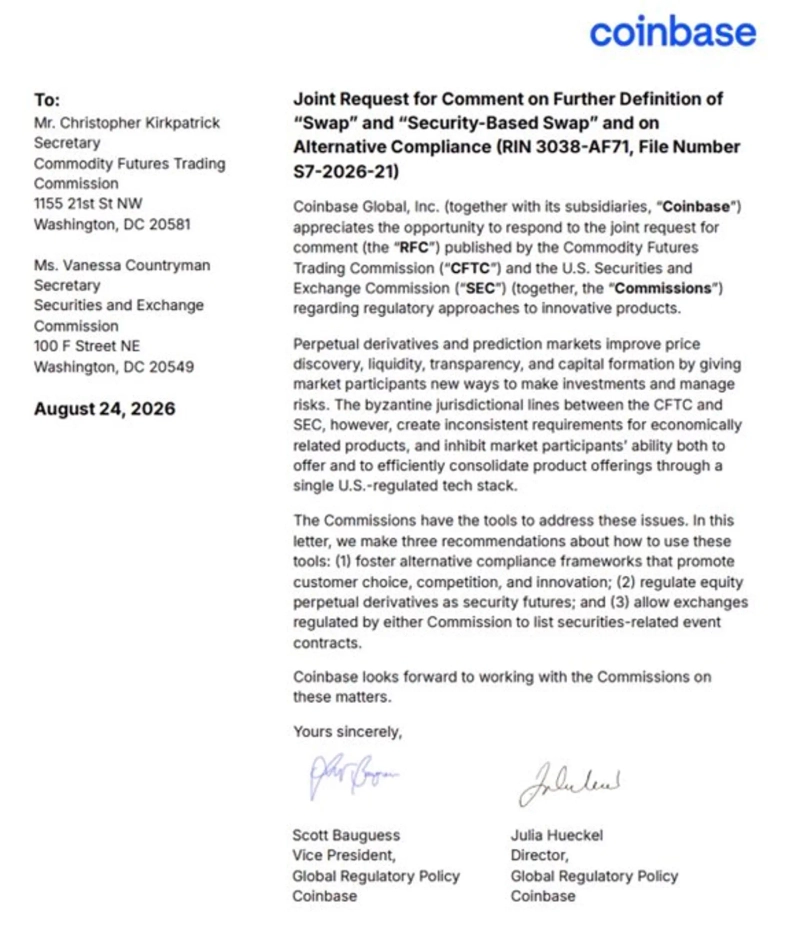
Coinbase, the largest cryptocurrency exchange in the US, called on regulators to eliminate overlapping oversight between the Securities and Exchange Commission and the Commodity Futures Trading Commission to help expand perpetual futures and prediction markets in the country.
Faryar Shirzad, Coinbase’s chief policy officer, wrote in a post on X on August 25 that the company had submitted a response to the SEC and CFTC’s joint request for comment on the definition of perpetual derivatives as commodities and alternative approaches to regulatory compliance.
Coinbase’s recommendations included creating a regulatory framework that promotes consumer choice, market competition and innovation; classifying equity-based perpetual futures as security futures; and allowing exchanges regulated by either the CFTC or the SEC to list stock-related prediction market products.
Coinbase said it already offers perpetual futures and prediction market products, but overlapping SEC and CFTC jurisdiction has subjected them to conflicting rules. The company argued that regulators should clarify the legal definitions of those products and the scope of each agency’s authority to reduce regulatory uncertainty.
Shirzad said resolving the tangle of product definitions and overlapping jurisdiction is critical. He added that doing so would help bring related trading activity into US markets and safely offer investment opportunities to American consumers within a regulated framework.
He also said overseas markets have already established a sizable innovation lead in perpetual derivatives, making a clearer regulatory framework necessary for the US to remain competitive.
