US, China Said to Favor One-Year Extension of Trade Truce; Xi May Bring Business Delegation to Washington
Forecast Trend Report by Period


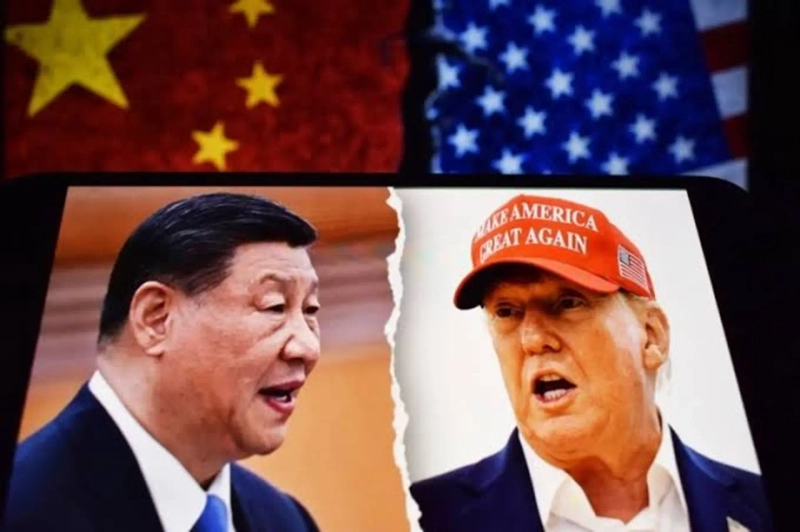
The US-China trade truce appears headed for another one-year extension, as both sides judge it in their interest to preserve the existing framework and avoid fresh clashes.
Chinese officials are also discussing having leading executives accompany President Xi Jinping on his September trip to the US. The move would underscore an effort to channel ongoing tensions over advanced technology and trade into a more manageable form of competition.
The South China Morning Post reported on Aug. 28, citing several people familiar with the negotiations, that Washington and Beijing have formed broad consensus around extending the trade-war truce they reached in Busan last year.
Xi is set to meet President Donald Trump in Washington on Sept. 24. Under the Busan agreement, the US lowered some tariffs on Chinese goods and postponed additional restrictions on Chinese-linked companies. China agreed to suspend some rare-earth export controls for one year. The two sides also agreed to cooperate on purchases of US soybeans and controls on fentanyl precursor chemicals.
The key issue at next month's summit is shaping up to be the length of the extension. China prefers a longer rollover that would preserve the current deal through the end of Trump's term, while the US wants another one-year extension. One person familiar with the matter told SCMP that China views the current agreement as favorable and wants to lock it in for a longer period. For now, a one-year extension is viewed as the most likely outcome.
The US and China are coalescing around a plan to renew the trade-war truce they reached in Busan last year for another year ahead of next month's summit, in a sign both sides want to avoid additional friction.
The US and China are coalescing around a plan to renew the trade-war truce they reached in Busan last year for another year ahead of next month's summit, in a sign both sides want to avoid additional friction.
Xi may also be accompanied by a large group of Chinese business leaders. Trump brought the chief executives of Tesla, Apple, Nvidia and Boeing during his May trip to Beijing, and some officials see a Chinese business delegation as a reciprocal step. Accounts differ, however, on which side first raised the idea.
Beijing is particularly interested in including companies looking to invest in the US. That reflects an effort to restart talks on an investment committee agreed at the May US-China summit that have since stalled.
That, in turn, has fueled speculation that Chinese companies under consideration for a trade committee initiative could be included in the delegation. The committee is discussing tariff cuts for non-sensitive sectors and products.
Even ahead of next month's summit, low-level friction between the two countries has continued. The US recently banned imports and sales of new foreign-made robots and power inverters, sectors where China is strong, and added more than 40 Chinese companies to the Uyghur Forced Labor Prevention Act list.
China has also tightened export controls on drones and imposed sanctions on seven US companies. SCMP reported that both countries appear to be managing individual disputes in trade and technology separately from summit diplomacy, and that existing and new frictions are unlikely to derail broader efforts to stabilize ties.
Kim Eun-jung, Beijing correspondent, Korea Economic Daily, kej@hankyung.com

Korea Economic Daily
hankyung@bloomingbit.ioThe Korea Economic Daily Global is a digital media where latest news on Korean companies, industries, and financial markets.