Trump Posts AI Video Claiming Iran’s Kharg Island Is ‘Being Blown to Pieces’; No Attack Confirmed
Summary
- Iran’s Kharg Island was a critical energy hub that handled about 90% of the country’s oil exports before the war began.
- The Strait of Hormuz was a key energy shipping lane that carried about one-fifth of global crude oil and LNG shipments before the war.
- The US said it could announce new secondary sanctions every week to pressure Iran, with initial measures focused on the banking sector.
Forecast Trend Report by Period


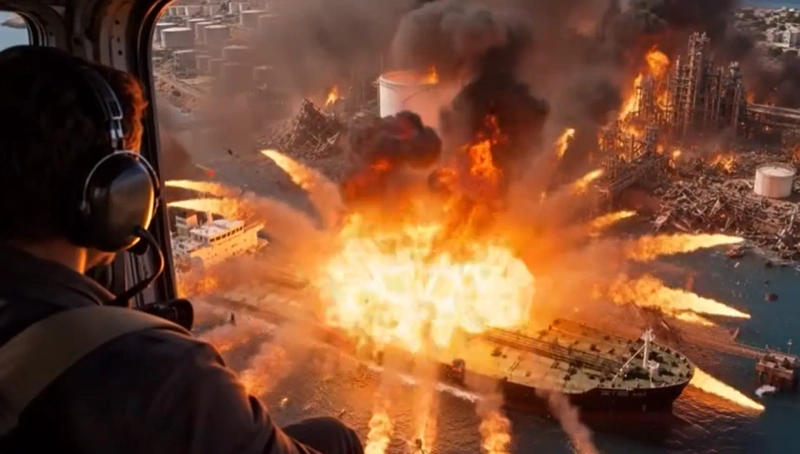
President Donald Trump posted on social media that Iran’s Kharg Island, the country’s main crude export hub, was under attack, but there was no confirmation that any strike had taken place.
Reuters reported on August 31 that Trump shared a short post saying Kharg Island was “being blown to pieces,” along with a video showing a massive explosion. Before the war began, the island handled about 90% of Iran’s oil exports and served as a critical energy hub.
Reuters said it found no independent evidence that Kharg Island had actually been attacked. Trump did not identify who carried out the alleged strike, when it occurred or the extent of any damage. The White House and the Pentagon did not immediately respond to requests for comment.
The video Trump posted was likely generated by artificial intelligence rather than authentic footage. Reuters said software used to detect AI-manipulated images indicated the clip was highly likely to be synthetic.
Kharg Island plays a central role in Iran’s energy industry. Before the war began on February 28, after US and Israeli attacks on Iran, about 90% of the country’s crude exports passed through the island. A real strike on Kharg Island could deal a major blow to Iran’s oil exports and broader economy.
Trump’s post came just after military clashes between the US and Iran resumed following a lull of about a month. Earlier, US forces struck two Iranian rocket launchers on Larak Island in the Strait of Hormuz, about 660 kilometers east of Kharg Island. It was the first direct US strike on Iran since late July.
The US said Iran’s Islamic Revolutionary Guard Corps, or IRGC, had been preparing rocket launches from those sites to deploy naval mines into the Strait of Hormuz. US Central Command said it carried out a “limited and precise” strike on the IRGC’s mine-laying capability tied to an imminent threat in the waterway.
Iran later retaliated by firing ballistic missiles at two US military bases in Jordan. Jordan’s military said on state television that it intercepted eight missiles that entered its airspace. The IRGC said several soldiers and civilians were killed or wounded in the earlier US strike and signaled further retaliation.
As military tensions rose again, shipping through the Strait of Hormuz also dropped sharply. Shipping data showed the number of commodity carriers confirmed to have passed through the strait over the weekend fell to about five a day. Actual traffic may have been higher because some vessels switched off their automatic identification systems, or AIS, to avoid attack.
The US also plans to intensify economic pressure on Iran alongside military action. Treasury Secretary Scott Bessent told Reuters in an interview that Washington could announce new secondary sanctions every week to increase pressure on Tehran, with initial steps focused on the banking sector. He also raised the option of fully cutting financial institutions off from the dollar-based financial system.
Before the war, the Strait of Hormuz carried about one-fifth of global shipments of crude oil and liquefied natural gas. Iran is OPEC’s third-largest oil producer, and markets are watching closely for confirmation of any strike on Kharg Island and for further military action around the strait.
