Lee So-young Signals Need to Slow Kosdaq Delisting Overhaul, Says She’d Debate FSC Chief
Summary
- Lee signaled that a slower rollout may be needed for tighter delisting standards and the introduction of a tiered market system on the Kosdaq market, citing the need to protect small and venture companies and existing investors.
- She said the Ministry of SMEs and Startups should actively weigh in on financial-regulatory policy, and if necessary debate the chair of the Financial Services Commission, because the Kosdaq market is crucial for growth-capital fundraising and as an exit market for venture investment.
- Lee said she wants to increase long-term inflows from institutional investors and other sources through greater private risk-capital inflows, restoring trust in the capital market, and a review of Commercial Act revisions and possible exceptions to mandatory treasury-share retirement.
Forecast Trend Report by Period


Lee So-young, nominee for SMEs minister, visits Korea Venture Business Association
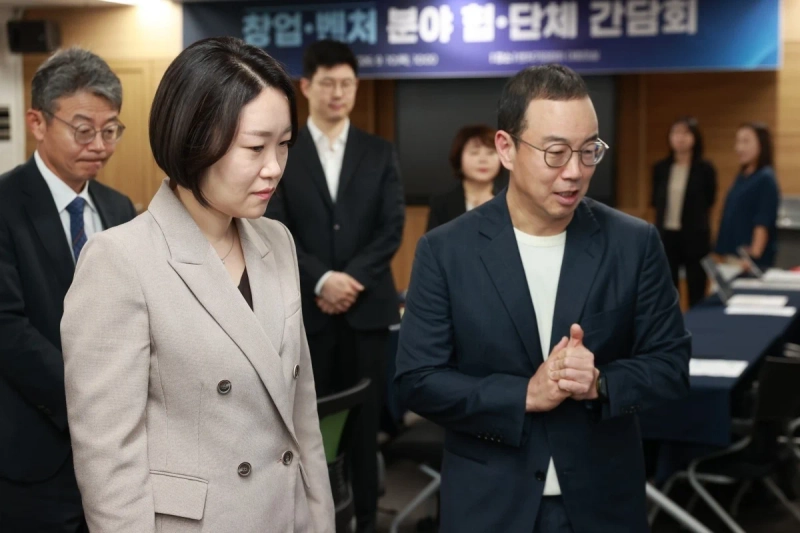
Lee So-young, South Korea’s nominee for minister of SMEs and Startups, signaled that financial authorities may need to slow the pace of tougher delisting rules for the Kosdaq market and the planned introduction of a tiered market system. While she endorsed the broader direction of the overhaul, Lee said policymakers need to determine whether small and venture companies, as well as existing investors, can withstand the changes. If necessary, she added, she is prepared to debate the chair of the Financial Services Commission.
Lee made the remarks to reporters on Sept. 10 after a tea meeting with industry officials at the Korea Venture Business Association in Seoul’s Guro district. “Even if the broader direction of stock-market and capital-market policy is right, the pace and the specific method matter a great deal,” she said. “There are points that need to be reviewed, including whether the speed and method of tighter standards introduced in January are at a level the market can bear, and whether protections for existing shareholders are being considered sufficiently.”
Financial authorities are tightening delisting standards to remove weak listed companies from the Kosdaq market more quickly in a bid to bolster confidence in the bourse. Lee said she agrees with that overall goal. Still, she said policymakers also need to consider the risk that healthy companies could be pushed out if the changes come too quickly, since smaller firms, unlike large corporations, face greater difficulty lifting corporate value or market capitalization in a short period.
“Stricter delisting standards and a tiered Kosdaq system have a direct impact on small and venture companies, and the issue of protecting existing investors follows as well,” Lee said. The Financial Services Commission may have prepared policies in its role as the ministry overseeing financial markets, she said, but the Ministry of SMEs and Startups also needs to speak up on the concerns of small and venture companies and on what is needed to protect investors in listed firms. She added that she would not leave the matter unattended simply because it falls under another ministry, and would debate the FSC chair if needed.
Lee also argued that capital-market policy, including for Kosdaq, has largely been shaped from the perspective of financial authorities, with the focus on market stability and investor protection. Because Kosdaq serves as both a fundraising channel for growth capital and a key exit market for venture investment, policy should also reflect the perspective of corporate growth, she said.
“The Kosdaq market is absolutely critical for the growth of small and venture companies,” Lee said. “I will be a minister who speaks up on the Kosdaq market and a Ministry of SMEs and Startups chief who makes her voice heard on capital-market policy.” She added that such a role would probably be unprecedented. Her remarks suggest she intends to move beyond the ministry’s traditional stance of treating capital-market policy as the domain of financial regulators and become more active in the Kosdaq overhaul process.
Lee also said she wants to draw more private capital into the venture market. “The figures may look favorable, with venture investment reaching a record high, but it is also true that government-led fiscal spending has driven much of that movement,” she said. “Fundamentally, there needs to be a larger inflow of private risk capital.” She said regulatory and institutional changes are needed to encourage more venture investment from private funds.
She pushed back on industry concerns that revisions to the Commercial Act could undermine fundraising for venture companies. Lee said restoring trust in the Kosdaq market by improving transparency in corporate decision-making would help attract more long-term capital, including from institutional investors. At the same time, she said mandatory retirement of treasury shares may require exceptions for venture companies that hold such shares to compensate executives and employees, and added that she would review whether those carve-outs need to be supplemented.
On the venture industry’s long-standing call to ease working-hour regulations, Lee said she would take an open approach in reviewing whether the rules can be rationalized to reflect the nature of the work.
Lee Gwang-sik, Hankyung.com reporter bumeran@hankyung.com

Korea Economic Daily
hankyung@bloomingbit.ioThe Korea Economic Daily Global is a digital media where latest news on Korean companies, industries, and financial markets.