Trump’s Clout Unlikely to Fade After US Midterms; Korea Urged to Speak Up
Summary
- Speakers said President Trump’s power is unlikely to weaken sharply even after the US midterm elections, and that the trends toward America First policies and a rightward shift in US politics will continue.
- They said South Korean companies’ investment in the US and trade operations could be directly affected as the president’s unilateral powers over tariffs, sanctions, and diplomacy and security grow stronger.
- They said Korean companies need to expand their networks with the US Congress, state governments, and the political establishment, warning that unless they push for tariff cuts and take part more actively in the policymaking process, the result will be policies that benefit only US companies.
Forecast Trend Report by Period


Seminar Hosted by the Korean American Chamber of Commerce in the US
'2026 US Midterm Election Outlook and Response Strategies for Korean Companies'
Kim Dong-seok, Head of the Korean American Voters Council
'America First to Outlast Trump'
Jeh Hyun-jung, KEI Senior Fellow
'If Companies Don’t Speak Up, Only US Firms Benefit'
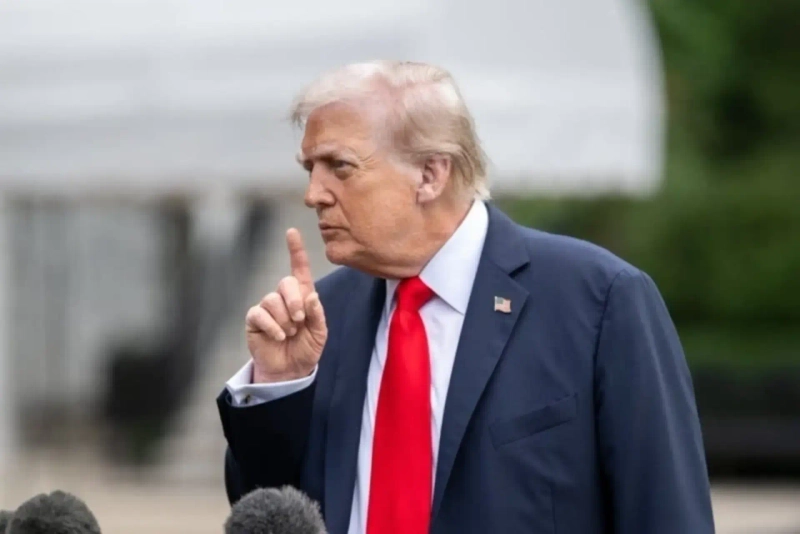
"Donald Trump’s power will not suddenly evaporate after the midterm elections," said Jeh Hyun-jung, a senior fellow at the Korea Economic Institute.
"South Korea needs to prepare for a president who may clash with Congress while aggressively using his authority over tariffs, diplomacy and security," said Kim Dong-seok, head of the Korean American Voters Council.
Even if Democrats win a majority in the House in the November US midterm elections, Trump is poised to continue wielding executive power aggressively, speakers at a seminar said. They added that the US turn toward America First industrial policy and a broader rightward political shift will likely continue to strengthen. Korean companies investing in the US need to make their voices heard with both the administration and Congress, while Korean Americans should broaden their political ties to minimize potential damage.
On September 10, the Consulate General of the Republic of Korea in New York, the Korea International Trade Association and the Korean American Chamber of Commerce in the US jointly held a seminar at the Teaneck Marriott Hotel in New Jersey titled '2026 US Midterm Election Outlook and Response Strategies for Korean Companies.' The event was designed to analyze Trump’s midterm election strategy, review trends in US trade policy and examine how conditions could change after the vote. Attendees included Consul General Kim Sang-ho, KOCHAM Senior Executive Vice Chairman Kwak Do-young, who also heads LG Electronics’ North America business, Paik Ji-min, chief of KITA’s New York office, Englewood Cliffs Mayor Park Myung-keun, and executives and staff from KITA and KOCHAM member companies.
Kim delivered a presentation titled 'The 2026 Midterms and the Final Two Years of the Trump Presidency.' The Korean American Voters Council, which he founded in 2013, serves as a bridge to more than 200 US federal lawmakers and aides on issues affecting the Korean American community.
Kim said Democrats have a chance to retake the House by a narrow margin. The US would then shift into 2028 presidential-election mode, though a Democratic victory in that race is far from certain. He laid out a scenario in which Democrats win 222 to 223 House seats and reclaim the chamber, while Republicans retain control of the Senate with 51 to 52 seats.
If Democrats take the House and Republicans keep the Senate, Trump’s power would not simply weaken, Kim said. Its form would change. A legislative presidency focused on making laws may lose strength, but an executive presidency centered on issuing orders, enforcing policy, vetoing measures and pursuing litigation could grow stronger.
Trump’s aggressive campaigning is another variable. Kim said the president had vowed to keep visiting 35 districts without pause. Although forecasts still generally favor Democrats, he said hearing Trump’s stump speeches, including a pledge of $5,000, made him wonder whether Republicans might even hold the House.
Regardless of the election outcome, Kim said the America First policy direction set in motion by Trump will continue. The tolerance the US once showed the rest of the world is fading, and that trend will persist whether or not Trump stays in power. For Korean Americans, he added, an even more urgent concern is that the racist undertone in Trump-era politics could worsen. Even a narrow Democratic takeover of the House would matter.
Kim also said the US shift to the right could persist for a considerable period. He pointed to the widening fundraising gap between the two parties. Total contributions from the top 20 donors to Republicans were four times those to Democrats, he said, adding that US politics is likely to keep moving right.
In Kim’s view, tariff pressure would not disappear quickly even if Democrats strengthen their hold on the House. A Democratic House could step up oversight of the administration through budget reviews, legislation, hearings and subpoenas. But the president would still retain substantial unilateral authority over tariffs, sanctions, diplomacy and national security. If Congress finds it harder to pass legislation, the White House could lean more heavily on existing laws and executive orders.
Kim said that shift could directly affect countries highly exposed to US policy. This midterm election will not determine the end of Trump’s power, he said. Instead, it will move that power from the legislative sphere to the executive branch. For South Korea, trade deserves especially close attention. Rather than relying on the White House or a single part of the administration, Seoul should build a multilayered network spanning the Senate, the House, state governments, companies and civil society. He also cited Michigan, Alabama, Georgia and Texas, where Korean corporate investment is concentrated, and said Korean companies should deepen ties with political leaders in those states.
Jeh then presented on changes in US trade policy. Trump’s trade policy is difficult to predict even one step ahead, she said, adding that Trump himself may not know what comes next.
Jeh identified China as the main reason the WTO-centered global trading order has broken down. Since joining the WTO in 2001, China has continued to develop under its own distinct system, she said. As China has become capable of obstructing decision-making inside the WTO, the US has moved away from the multilateral trade framework it once spent years building. The world is now in an era of industrial policy, she said, with countries returning to a more every-country-for-itself approach.
Jeh said the current rivalry with China is fundamentally different from the Cold War with the Soviet Union or Japan’s rise in the 1980s. China is a different class of competitor, she said, one large and resilient enough to make the US feel real pressure. The current moment is an inflection point in deciding how to contain a new kind of China that defies easy definition. Even so, she said, it will not be easy for the US to keep strong pressure on China indefinitely.
For Korean companies, tariffs were cited as the most immediate variable. About 50% of South Korea’s exports to the US are subject to Section 232 tariffs, while about 20% are affected by Section 301 tariffs. The scope could widen beyond automobiles, semiconductors and critical minerals to include derivative products containing copper and aluminum.
Jeh said Korean companies need to take a more active role in the US policymaking process. In the US, companies help shape policy and law, she said. If Korean businesses do not speak up, the result will be policies that benefit only US companies.
She argued in particular for lowering tariffs on imported factory equipment. The many machines installed at US plants are assets tied to investment in the US, she said, and should not be subject to tariffs. South Korea faces high tariffs on intermediate and capital goods, she added, and tariff cuts or special measures are needed.
Hwang Jung-su, New York correspondent, hjs@hankyung.com

Korea Economic Daily
hankyung@bloomingbit.ioThe Korea Economic Daily Global is a digital media where latest news on Korean companies, industries, and financial markets.