Altman Joins Calls to Pace AI Development, Says Progress Can Be Slowed for Safety
Summary
- Sam Altman said AI development needs pacing to ensure safety, alignment, and monitoring during the development process.
- He said OpenAI can slow the pace of technological progress if needed while prioritizing safety concerns, and confirmed it will not pursue an initial public offering (IPO) in 2026.
- As calls for pacing AI development spread, SoftBank Group shares tumbled 13%, while Samsung Electronics and SK Hynix each fell more than 4%.
Forecast Trend Report by Period


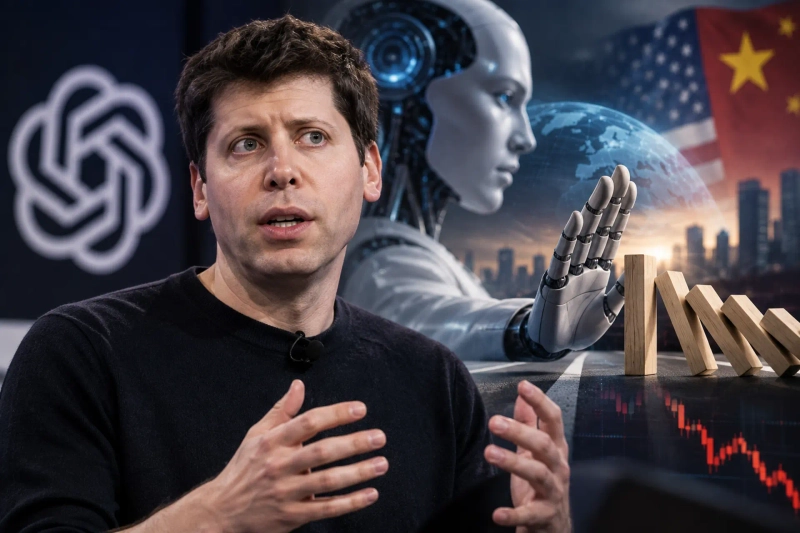
Sam Altman, chief executive officer of OpenAI, backed calls to pace artificial intelligence development so the technology does not outstrip humanity’s ability to control it.
Bloomberg reported on September 14 that Altman wrote on X a day earlier that AI development needs “pacing” to ensure safety. His comments echoed recent calls by Anthropic CEO Dario Amodei and Elon Musk, the head of xAI, to put the brakes on AI development.
No matter how intense competitive pressure in the US becomes, it does not justify reckless development or allowing AI capabilities to move ahead of alignment and monitoring capacity, Altman wrote. He added that pacing does not mean a halt, drawing a line between slowing development and stopping AI progress altogether.
He also stressed that any costs tied to prioritizing safety are worth bearing if they help preserve trust that US companies are developing increasingly advanced AI responsibly.
Earlier in September, Altman told OpenAI employees that the company could slow the pace of technological progress if needed to better understand the risks of advanced AI. He also confirmed that OpenAI will not pursue an initial public offering in 2026 as it puts safety concerns first.
As calls to pace AI development spread, related stocks also weakened. In Japan, shares of SoftBank Group, a major OpenAI investor, tumbled 13% on the day. In South Korea, Samsung Electronics and SK Hynix each fell more than 4%.
Altman also reaffirmed his support for a US federal framework for AI regulation. He stressed that Washington’s backing is needed for international coordination, given concerns that Chinese rivals may not slow development even if US companies do.
