Samsung, SK Hynix Retail Investors Frustrated as Shares Stay Rangebound
Summary
- Brokerages said Samsung Electronics and SK Hynix face limited upside and advised investors to refrain from additional buying, citing a ceiling on memory prices and the impact of rising interest rates.
- All three major investor groups — retail, foreign and institutional — were heavy net sellers of SK Hynix and Samsung Electronics over the past month, with a demand vacuum reinforcing the stocks’ rangebound trade.
- Still, some analysts said this is a stretch where reward outweighs risk, citing an expected memory chip shortage next year, expanding HBM demand, and attractive valuations.
Forecast Trend Report by Period


Brokerages Say Upside Is Capped, Advise Against Further Buying
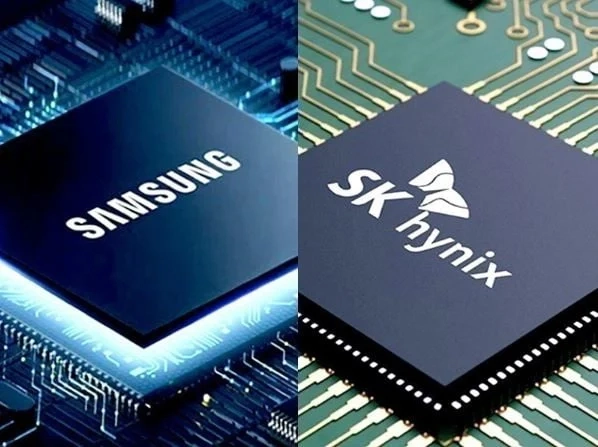
Brokerages are turning cautious on South Korea’s two leading chipmakers, Samsung Electronics and SK Hynix, with some advising investors to refrain from additional purchases. The view is that memory chip prices are unlikely to rise much further for now, while higher interest rates are likely to keep the stocks trading in a range.
Lee Min-hee, an analyst at BNK Investment & Securities, said on September 16 that past cycles of oversupply and shortages were always caused not so much by supply itself as by faulty demand forecasts. The macroeconomic backdrop is becoming more uncertain, he said, while memory prices are struggling to rise further and demand elasticity is weakening.
He added that chip stocks have gradually rebounded since becoming oversold in July, supported by valuations, expectations for large-scale shareholder returns and strong AI server shipments. Still, with demand elasticity slowing as memory costs approach their limit and interest rates continuing to rise, upside for the shares will likely remain capped.
Lee cut Samsung Electronics to hold from buy and maintained a hold rating on SK Hynix. In effect, he is recommending against further buying.
Samsung Electronics and SK Hynix have in fact traded within a range since last month. The dominant view is that their fundamentals, including still-solid earnings, remain intact. But macro concerns including renewed armed conflict in the Middle East, higher oil prices and worries about further rate increases have weighed on the shares.
As of 2:20 p.m. on September 16, Samsung Electronics was up 1.61% from the previous day, while SK Hynix had risen 2.84%. Samsung has been moving in a range of 230,000 won to 274,500 won, while SK Hynix has mostly traded between 1.65 million won and 1.85 million won, excluding a drop of more than 10% in early August.
The rangebound moves have been driven in large part by a vacuum in investor demand.
According to the Korea Exchange, retail investors were net sellers of about 6.005 trillion won of SK Hynix over the month from August 15 through September 15. That was the largest net sale among all stocks during the period. Samsung Electronics ranked next, with retail investors selling a net 1.5481 trillion won.
Foreign investors moved in the same direction. Over the same period, they sold a net 10.0953 trillion won of SK Hynix, the biggest net sale of any stock, and a net 4.6895 trillion won of Samsung Electronics, placing it near the top of the list.
Institutions also sold both companies during the period, unloading a net 4.443 trillion won of SK Hynix and 2.2891 trillion won of Samsung Electronics. That made SK Hynix the top net-sold stock for each of the three main investor groups: retail, foreign and institutional.
In effect, SK Hynix was the most heavily sold stock in the domestic market over the past month across all three investor categories. Most of the shares they offloaded were absorbed by other corporations, which are believed to be linked to SK Hynix’s share buyback program.
As sharp price swings faded and the shares settled into a range, retail investors have grown increasingly frustrated. On online stock message boards for Samsung Electronics and SK Hynix, shareholders posted comments such as, “When it falls, at least bargain buyers step in, but this is not a good level to buy near the bottom of the range,” “With earnings like this, it’s a mystery the stock isn’t rising,” and “More shareholder returns are needed.”
Still, many analysts see current prices as attractive from a valuation standpoint, given expectations for a memory chip shortage next year.
Intel Chief Executive Officer Lip-Bu Tan said at the AI Infrastructure Summit 2026 at the Santa Clara Convention Center in California on September 16 that memory had become a major bottleneck, just as he had expected last year, and that the problem would be even worse next year. He added that it is hard to sustain a situation in which 70% to 80% of costs must be spent on memory.
Ryu Hyung-geun, an analyst at Daishin Securities, said excess demand is being confirmed, with some customers indicating demand for more than 40 billion gigabytes of high-bandwidth memory by 2028. He added that some customers in long-term contract talks have also begun asking for contract periods of more than five years. At current levels, he said, chip stocks remain in a zone where reward outweighs risk.
Noh Jeong-dong, Hankyung.com reporter dong2@hankyung.com

Korea Economic Daily
hankyung@bloomingbit.ioThe Korea Economic Daily Global is a digital media where latest news on Korean companies, industries, and financial markets.