Kashkari Says US Inflation Is Spreading Beyond Oil Prices Across Economy
Summary
- Minneapolis Fed President Neel Kashkari said US inflation pressures are spreading beyond oil prices into broader parts of the economy, including services.
- He said the Fed's recent 0.25 percentage-point increase in its benchmark interest rate was intended to curb inflation, which remains above 2%.
- Kashkari said he is concerned that high inflation could become entrenched, though he also said the US economy and labor market remain resilient.
Forecast Trend Report by Period


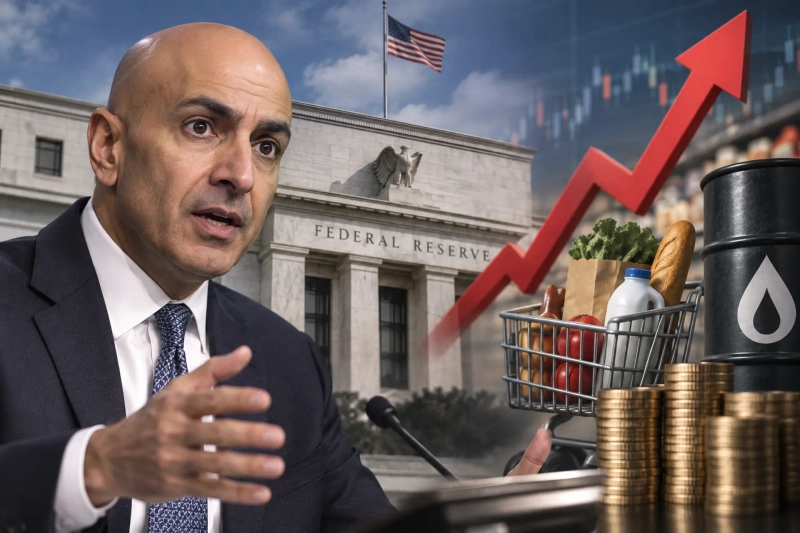
Minneapolis Federal Reserve President Neel Kashkari said inflation pressures in the US are spreading beyond the oil shock caused by the Iran war and into broader parts of the economy, including services, underscoring the need to restore price stability.
Bloomberg reported on September 20 that Kashkari told Fox News' "Sunday Morning Futures" that "the inflation Americans feel every day is not limited to oil prices, but stretches across every part of the economy."
The Federal Reserve unanimously decided at its September 15-16 Federal Open Market Committee meeting to raise its benchmark interest rate by 0.25 percentage point. It was the first rate increase since 2023 and was aimed at curbing inflation, which has remained above the Fed's 2% target for more than five years.
Concern has recently grown inside the Fed that price pressures are not limited to items directly affected by conflict in the Middle East or by tariffs. Kashkari also said inflation pressures are emerging in the services sector.
He said bringing inflation back to target is the Fed's job and emphasized that policymakers have the tools to achieve it.
Kashkari was one of three officials who dissented in favor of a rate increase when the Fed left rates unchanged in July. At the time, he warned that waiting too long to raise rates risked entrenching high inflation and could force the Fed into even more aggressive tightening later.
He was relatively upbeat on the US economy, saying it has remained resilient despite geopolitical tensions and trade issues and that the labor market is still solid.
"I hope that as some conflicts ease, growth gains real momentum while inflation comes down at the same time," he said. "If disinflation takes hold, the Fed's job will become much easier."
