PiCK
US Inflation, China Growth in Focus as Global Stocks Face Key Market Tests
Summary
- This week, New York stocks are likely to be guided by follow-up announcements on the U.S.-China trade talks, along with the PCE price index and the jobs report.
- A higher-than-expected PCE price index could weigh on technology and growth stocks by increasing the likelihood of additional rate hikes, pushing up U.S. Treasury yields and strengthening the dollar.
- In China, investor sentiment toward cyclical shares and exporters may be shaped by the September manufacturing PMI and details of the U.S.-China trade talks.
Forecast Trend Report by Period


U.S. PCE, jobs data; China PMI, trade talks
Inflation or growth? Key indicators for New York and Shanghai stocks
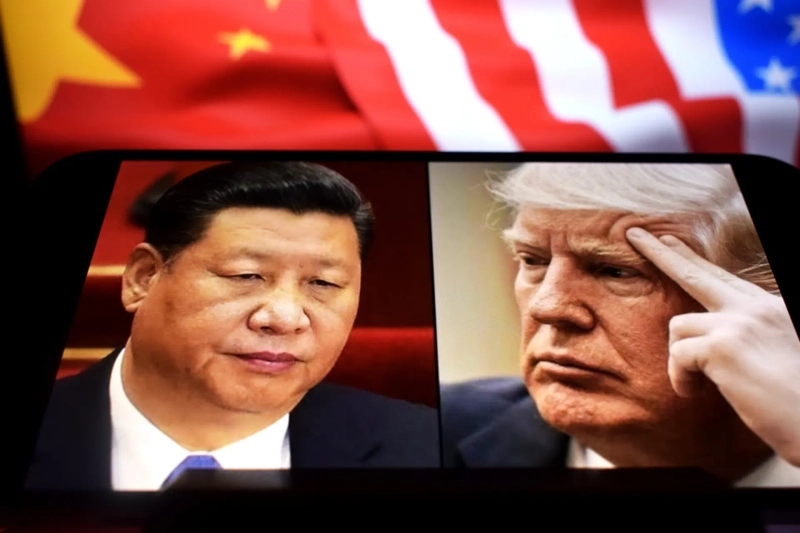
U.S. stocks this week, from Sept. 28 to Oct. 2, will likely take their cue from follow-up announcements tied to the U.S.-China summit, the August personal consumption expenditures price index and the September employment report.
The United States is set to release additional details on Sept. 28 on the outcome of its trade talks with China. Investors will be watching which non-sensitive goods are included in the mutually agreed tariff cuts on $30 billion of trade, when those cuts will take effect, whether market access for agricultural products will be expanded and whether China will move ahead with plans to buy U.S. coal.
Among economic indicators, the Sept. 30 PCE price index will be a central focus. The PCE price index is the Federal Reserve's preferred inflation gauge. Economists expect the August reading to rise 0.3% from a month earlier and 3.7% from a year earlier. Core PCE, which excludes volatile food and energy prices, is forecast to increase 0.3% on the month and 3.3% on the year.
The main question is how far the data deviates from forecasts. If the PCE reading comes in above expectations, concerns could grow that inflation pressures, which have picked up again recently, are becoming entrenched. That could sharpen expectations for additional interest-rate increases.
A hotter-than-expected PCE print could also drive U.S. Treasury yields higher and strengthen the dollar, weighing on technology and growth stocks.
The September employment report, due Oct. 2, is another major event for investors. The unemployment rate is forecast at 4.1%, while nonfarm payrolls are estimated to have increased by 80,300 from the previous month. In August, nonfarm payrolls jumped by 162,000, underscoring the labor market's resilience.
If September job growth significantly exceeds market expectations and the unemployment rate holds at 4.1% or lower, investors may interpret that as a sign the labor market remains solid. That would give the Fed more room to keep its focus on curbing inflation.
In China's stock market, the biggest point of interest is the September manufacturing purchasing managers' index, due Sept. 30. China's manufacturing PMI rose to 49.8 in August from 49.2 the previous month.
If the September PMI rises above 50, that could be taken as a signal that China's manufacturing sector has returned to expansion. If new orders, output and export orders all improve together, investor sentiment may recover, particularly in cyclical shares, industrials and materials stocks.
By contrast, if the PMI slips back to the low-49 range or new orders weaken, worries about a delayed recovery in domestic demand could intensify. That could revive expectations for additional stimulus.
As in New York, details of the U.S.-China trade talks due Sept. 28 will be a key variable for the short-term direction of Chinese stocks. If tariff cuts cover a broader range of products than expected, take effect sooner and include concrete plans to expand trade in agricultural products, energy and consumer goods, sentiment could improve, especially for exporters and other cyclical shares.
If the announcement amounts only to a reaffirmation of the existing agreement, or if there is no progress on core issues such as rare earths and advanced-technology restrictions, disappointment-driven selling could emerge.
Meanwhile, China's stock market will be closed for the National Day holiday from Oct. 1 through Oct. 7.
Kim Eun-jung, Beijing correspondent kej@hankyung.com

Korea Economic Daily
hankyung@bloomingbit.ioThe Korea Economic Daily Global is a digital media where latest news on Korean companies, industries, and financial markets.