Takaichi Vows to Deliver Strong Economy, Sustainable Public Finances
Summary
- Prime Minister Takaichi said she would deliver both a strong economy and fiscal sustainability while strengthening market confidence.
- She said fiscal management, including government bond issuance, would focus on lowering the debt-to-GDP ratio and keeping annual bond issuance under control.
- The government said it would continue crisis management and growth investment across 17 sectors and 62 products, while pressing ahead with the Japan Growth Strategy Action Plan to sustain domestic investment.
Forecast Trend Report by Period


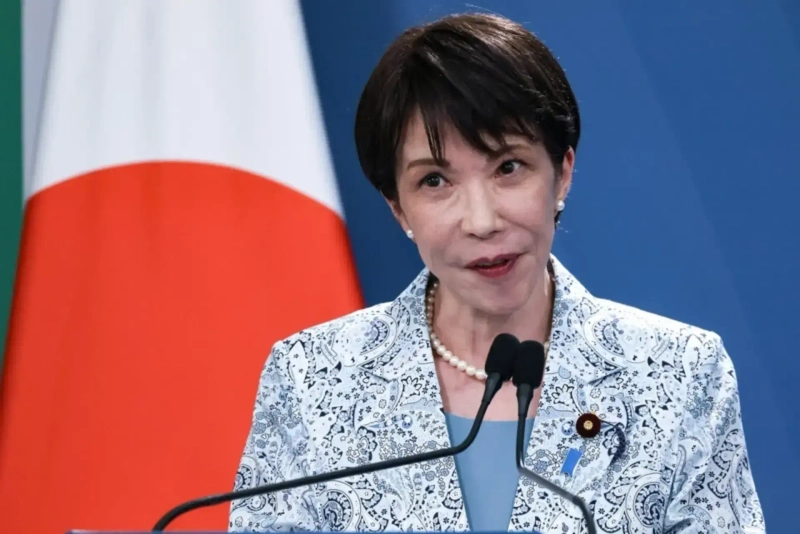
Japanese Prime Minister Sanae Takaichi said she will pursue both a “strong economy” and “fiscal sustainability,” signaling to financial markets that her government will maintain an active spending stance while managing bond issuance and preserving market confidence.
In a policy speech to the 222nd extraordinary session of the Diet on October 5, Takaichi said she would “deliver both a strong economy and fiscal sustainability without delaying necessary policies and reforms.” She added that the government would build trust in its policies through full explanations of implementation and results.
Takaichi described her economic policy approach as “keisei saimin,” a phrase referring to governance aimed at improving people’s livelihoods. She said the government would pursue both higher take-home pay and sound public finances, calling that combination the essence of “responsible active fiscal policy.”
The government will also continue its “crisis management and growth investment” initiative covering 17 strategic sectors and 62 products. It plans to formulate a “Japan Growth Strategy Action Plan” by year-end to set the direction of domestic investment over the next five years. Needed investment will not be delayed, while low-effectiveness projects will be phased out and deregulation will be pushed ahead, she said.
On fiscal management, Takaichi set a key goal of steadily lowering the ratio of combined central and local government debt to gross domestic product. The government will comprehensively assess the economy, inflation, tax revenue, interest rates, debt-servicing costs and market conditions while keeping annual government bond issuance under control.
She also said the government would respond nimbly after analyzing any impact if the economy or markets move differently from expectations. The remarks appeared aimed at addressing market concerns that an expansionary fiscal stance could drive up government bond yields and weaken the yen.
To address inflation, the government will pursue measures to ease the consumption-tax burden on food and provide support payments based on income levels. Takaichi said the funding would not rely on special deficit-financing bonds. “I want to create even a little more breathing room for households,” she said. “We will secure funding in a way that can earn the market’s trust.”
Takaichi also identified the falling birthrate and population decline as core challenges. The government plans to compile a “Comprehensive Population Strategy” by the end of the year, including demographic projections and broad policy responses. Japan must reverse the falling birthrate while building a new national model suited to a society with a shrinking population, she said.
On foreign policy, she stressed the need to uphold an international order based on the rule of law. Referring to China, with which relations have cooled, Takaichi called it an “important neighboring country” and said Japan would continue dialogue to protect its national interests and build a constructive and stable relationship. She also urged lawmakers to advance bipartisan discussions during the current Diet session on the number of seats in the House of Representatives and constitutional revision.
Choi Man-su, Tokyo correspondent, Korea Economic Daily, bebop@hankyung.com

Korea Economic Daily
hankyung@bloomingbit.ioThe Korea Economic Daily Global is a digital media where latest news on Korean companies, industries, and financial markets.