Summary
- Rep. Lee Kang-il said delays in South Korea’s digital-asset framework have led about 63 trillion won in capital to leave the country, and urged faster rulemaking for won stablecoins and tokenized assets.
- Lee said surging trading volume in dollar stablecoins and yen stablecoins, along with growth in the global RWA and tokenization markets, underscores the problem that South Korea still has not finalized the issuer structure and licensing framework for won stablecoins.
- Lee raised concerns that a possible tie-up between Naver Financial and Upbit, as well as Toss’s expansion of its stablecoin payment network and payments and lending businesses, could distort market dominance and competitive order, and urged the Financial Services Commission to prepare a virtual-asset exchange licensing framework and measures to prevent market concentration.
Forecast Trend Report by Period


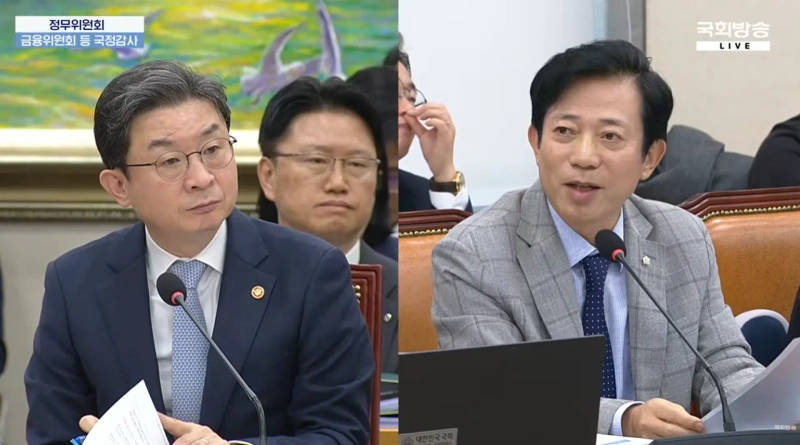
Lee Kang-il, a lawmaker from the Democratic Party, said delays in South Korea’s digital-asset framework are driving capital to overseas markets and urged faster rulemaking for won-denominated stablecoins and tokenized assets.
At an Oct. 8 parliamentary audit of the Financial Services Commission, Lee cited the US GENIUS Act and CLARITY Act, as well as the European Union’s Markets in Crypto-Assets regulation, or MiCA. Major economies are competing to set standards for digital-asset markets, he said, while South Korea has yet to produce even a basic blueprint.
Lee singled out delays in institutionalizing won stablecoins. Domestic trading volume in dollar-denominated stablecoins exceeded 6 trillion won ($4.3 billion) in June alone, and cumulative volume reached 80 trillion won ($57.8 billion) through July this year, he said. He also cited data showing that about 54% of global trading in a yen stablecoin listed in South Korea took place in the Korean market.
South Korea, by contrast, has yet to finalize even the issuer structure and licensing framework for won stablecoins, Lee said. He argued that the government can no longer delay putting rules in place, with overseas corporations already issuing won-based stablecoins and pursuing partnerships with Korean companies in payments and gaming settlements.
Lee also pointed to a regulatory vacuum in tokenized assets. The global market for tokenized stocks has grown to about 4 trillion won ($2.9 billion), while tokenized Treasuries and money-market funds total about 22 trillion won ($15.9 billion), and on-chain real-world assets about 55 trillion won ($39.7 billion), he said. In South Korea, however, policy discussions on the tokenization of listed shares have been slow.
Citing his own tally, Lee said about 63 trillion won ($45.5 billion) had flowed overseas through September this year. With domestic investor demand shifting to offshore digital-asset and tokenization markets, South Korea needs to speed up the institutionalization of won stablecoins and related financial products, he said.
The possibility of tie-ups between virtual-asset exchanges and major platforms also came under scrutiny. Lee mentioned a potential combination of Naver Financial and Upbit and said such a tie-up could lead to an excessive concentration of market power.
He also took aim at Toss’s business expansion. Efforts to dominate stablecoin payment rails and expand its payments and lending businesses could undermine competition in the small-business finance market and the broader fintech industry, Lee said, calling on financial authorities to prepare countermeasures.
Lee asked the Financial Services Commission to submit a written position on the issuance structure for stablecoins, the direction of licensing for won-based exchanges, the approval framework for virtual-asset exchanges, measures to prevent concentration if major platforms combine with exchanges, regulation of fintech companies’ market power, whether licenses for won-based exchanges and over-the-counter brokerage exchanges should be separated, and the scope and timing for allowing tokenized securities, real-world assets, virtual-asset derivatives and stablecoin products.
In response, Financial Services Commission Chairman Lee Eok-weon said the details had already been prepared and were in final consultations. Rules tied to the Basic Digital Asset Act and the stablecoin framework are now at the interagency consultation stage, he said.
He added that authorities would devise ways to keep pace with global trends while proceeding safely and securely.
