IMF Says Tokenized Stocks Are 1.5 Times More Volatile Than Traditional Shares, With Thinner Liquidity
Summary
- The IMF said tokenized stocks are about 1.5 times more volatile than traditional shares and have markedly weaker liquidity.
- The IMF said tokenized stocks have positive effects in terms of investment accessibility, including 24-hour trading and fractional investing.
- The IMF said the tokenized asset market remains small in size, but stressed the need to establish legal standards, liquidity safeguards, interoperability and settlement systems before further expansion.
Forecast Trend Report by Period


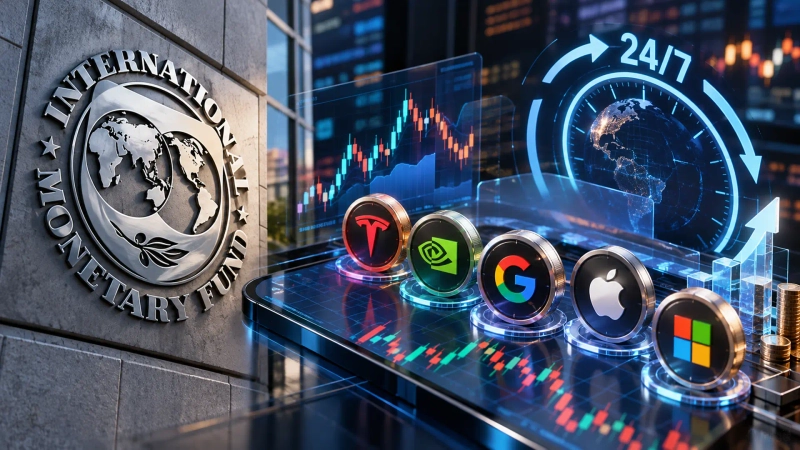
Tokenized stocks offer advantages such as 24-hour trading and fractional investing, but they are more volatile than traditional shares and suffer from thinner liquidity, according to an International Monetary Fund analysis.
CoinDesk reported on October 11 that the IMF reached that conclusion in its latest Global Financial Stability Report after analyzing the five most actively traded U.S. tokenized stocks, including Tesla (TSLA), Nvidia (NVDA) and Alphabet (GOOG). Price volatility in tokenized stocks was about 1.5 times that of conventional shares, while market liquidity was markedly lower.
The report also found benefits for investor access. More than half of tokenized-stock trading took place outside regular U.S. stock market hours, and about 80% of all trades were for less than one share. More than 85% of price moves during overnight trading were reflected in traditional stock prices within five minutes of the U.S. market open. The IMF said that showed investors were making practical use of 24-hour trading and fractional investing.
The market for tokenized assets is growing quickly, though it remains at an early stage compared with the broader financial system. The IMF estimated the tokenized real-world asset market at about $65 billion as of July 31. Of that, tokenized stocks accounted for only about $2.3 billion. That remains marginal compared with the roughly $160 trillion global stock market capitalization recorded last year.
The IMF said tokenization could automate functions such as dividend payments and collateral transfers while reducing transaction costs and processing times. It also cited limits, including a lack of compatibility among issuers, investors, trading platforms and settlement systems. In particular, the IMF warned that the combination of 24-hour trading, automated margin calls and forced liquidations could allow market shocks to spread quickly.
The IMF said risks to the broader financial system remain limited for now because the tokenization market is still small. But it stressed that legal standards for asset ownership, liquidity safeguards, interoperability across platforms and settlement systems should be put in place before the market expands more fully.
