Rep. Lim Yi-ja Urges One-Year Delay to Crypto Tax; NTS Chief Says He Will Follow National Assembly Decision
Summary
- Rep. Lim Yi-ja said the planned crypto taxation rollout in January should be delayed for another year, citing insufficient preparation of the tax standards and computer systems needed for enforcement.
- Rep. Lim Yi-ja said detailed tax standards have yet to be prepared for transaction types including staking, airdrops, hard forks and DeFi, including rules on the timing of income recognition, valuation prices and deductible expense calculations.
- Rep. Lim Yi-ja raised concerns about tax blind spots tied to overseas exchanges, decentralized exchanges (DEXs) and offshore perpetual futures trading, and said the burden could fall disproportionately on domestic exchange users, while the National Tax Service said it is preparing CARF and related computer systems to improve information gathering and verification.
Forecast Trend Report by Period


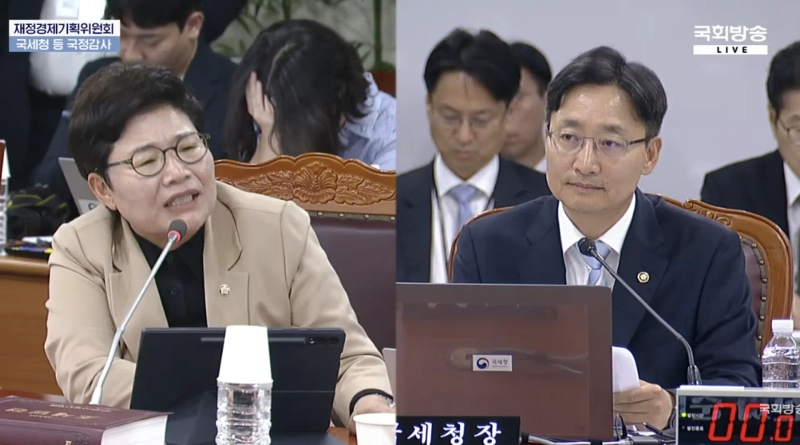
Rep. Lim Yi-ja of the ruling People Power Party called for South Korea to delay the planned January implementation of cryptocurrency taxation by another year, citing unclear tax standards and inadequate preparation of the computer systems needed to enforce it.
Speaking at an Oct. 13 parliamentary audit by the National Assembly’s Strategy and Finance Committee, Lim said crypto taxation should be postponed for about one more year. She said the system is not fully ready and should be introduced only after sufficient testing and pilot operations.
Lim said authorities should first secure transaction data from domestic cryptocurrency exchanges and repeatedly test the tax system based on that data. The government should gather the data in advance, run simulations and stabilize the system through pilot operations before enforcement begins, she said, warning that moving ahead too quickly could trigger backlash from taxpayers.
Lim Kwang-hyun, commissioner of the National Tax Service, said the agency is responsible for enforcing tax law and will prepare to carry out whatever legislation the National Assembly passes. He indicated the agency will continue necessary preparations depending on parliament’s decision on when the tax takes effect.
Lim also argued that tax standards remain unclear for different types of transactions. She said detailed rules have not been prepared for complex activities such as staking, airdrops, hard forks and decentralized finance, including when income is deemed to arise, how assets should be valued and how deductible expenses should be calculated. She also called for clearer guidance on the legal definition of crypto lending, how to distinguish rewards from principal repayments, and how such transactions differ from DeFi activity.
The tax chief said taxation would be determined based on the economic substance of a transaction rather than its label. He added that some cases, including staking, remain ambiguous and require further consultation with relevant ministries.
Another issue was the difficulty of tracking transactions conducted through overseas exchanges and personal wallets. Lim said tax blind spots involving decentralized exchanges, DeFi and offshore perpetual futures trading could leave users of domestic exchanges bearing a disproportionate share of the tax burden. The NTS chief also acknowledged limits in securing transaction data from overseas exchanges, but said conditions for obtaining such information could improve once the Crypto-Asset Reporting Framework, or CARF, is implemented.
Lim also said the government needs to thoroughly test a system that can automatically compare data submitted by exchanges with taxpayers’ filings on Hometax, the National Tax Service’s online filing platform, and correct errors. Lim Kwang-hyun said related systems are being prepared.
